December 2017 Journal
WORDS is a monthly journal of Bitcoin commentary. This issue collects the December 2017 writing in the WORDS archive. For the uninitiated, getting up to speed on Bitcoin can seem daunting. Content is scattered across the internet, in some cases behind paywalls, and content has been lost forever. That’s why we made this journal, to preserve and further the understanding of Bitcoin.
Against on-chain governance
By Vlad Zamfir
Posted December 1, 2017
Refuting (and rebuking) Fred Ehrsam’s governance blog
I’ve been thinking about blockchain governance for a long time, and recently my understanding of the process has become (I think) a lot more clear.
I was (and still am) working on a blog post titled “Blockchain Governance 101”, which I hope will share some basic language for reasoning about governance.
Before I managed to finish (the research is ongoing, and it’s not my top priority), Fred Ehrsam published a blog post “Blockchain Governance: Programming Our Future”, framing the discussion as a primarily design problem.
I really don’t think blockchain governance (or governance in general) can be understood as a design problem. I think it’s almost always a mistake to imagine that you can design and institute a governance process, especially for an existing blockchain community with existing processes, and especially without adequate knowledge of the existing governance processes.
This blog post is not an introduction to blockchain governance (that is still in the pipeline) and won’t give an overview of key concepts, issues or questions. Nor will it provide any blockchain governance solutions or suggestions. It is instead refutation of core positions that Fred takes in his blog, along with a warning about the dangers of suggesting that people should try to institute their favorite formalized governance model without clear regard for the existing blockchain governance processes.
I think that Fred’s intentions are good, and the views he expressed in his blog post are understandable. But I also I think the blog is missing important concepts and context to the point that I consider it harmful, warranting a long-form response (i.e. a response outside of Tweet storms).
Blockchain governance is not a design problem
Fred and I agree that blockchain governance is extremely important. I think it’s the second (rather than first) most important factor that will determine whether blockchains end up being a public good, or a menace to the public. Second only after the shared purpose of the blockchain community (a purpose that legitimate governance presumably is supposed to bear out).
There is no question that governance decisions matter, and big time. And the structure of a blockchain governance process can dramatically effect governance outcomes. However, this does not make blockchain governance a design problem.
Governance is a process. It involves players who participate in that process to produce decisions that affect the governed resources. These decisions can have a lasting impacts on many stakeholders.
The participants coordinate around this process, and they build knowledge about the governance processes, about each other, about their incentives and about their states of knowledge. This knowledge can be tacit or formal, it can be local knowledge or it can be common knowledge. Participants can develop strong norms(e.g. no contentious hard forks).
The information and incentives of participants constrains their participation, and they need to be understood in the context of the underlying culture, as well as their individual contexts. The information and incentives of participants can change over time, but they don’t change instantly, nor do they change independently of each other’s incentives and states of knowledge. The process of changing the way that something is governed is not magic, and in our case it’s also very human.
So even if it was possible to come up with an ideal solution to “the governance design problem”, it might not be possible for the participants to adopt it. There are pre-existing constraints on participants’ ability to coordinate to adopt any proposed governance solutions. And these constraints can even be entirely in their heads, in the form of local or tacit knowledge, or norms and common knowledge.
So when you make a governance proposal, the participants in the current governance process are going to ask themselves “is this a significant improvement over the process we are using now?”, “Will the other participants in the process think so, too?”, “What will it take to switch from our current process to this one?”, and “Is it worth the disruption to existing processes?”
Even if you somehow come up with an ideal governance design, you haven’t “solved governance” for anyone until it is successfully adopted.
Fred seems to have missed the fact that information is just as important of a “critical component of governance” as incentives or “mechanisms for coordination” (which is a subset of a broader “critical component” called “governance structure”, from my point of view). Not a huge deal!
Look at the system before you call for revolution
When you propose an alternative governance process, and especially when you suggest that we need an alternative process, you’re proclaiming “the existing governance processes are not good enough” and you’re begging the question of “are the existing processes legitimate?”. You’re a stone’s throw away from advocating for revolution; a replacement of the existing governance processes.
Revolution isn’t easy or risk-free, and forking means that you will leave some of your peers behind. When you are advocating for revolution, you had better be sure that the revolution will succeed, and that the new process will be effective and legitimate
Fred’s blog post showed no almost acknowledgement of the existence of functoning blockchain governance processes in either Bitcoin or Ethereum. He dismissed them out-of-hand with little consideration, perhaps because Fred knows that the reader likely already assumes that Bitcoin governance is broken and that Vitalik controls Ethereum governance.
He showed very little knowledge about how the Ethereum governence process works. That’s fair enough, because the Ethereum governance process are not very well documented, and it’s hard to understand them without actively participating in them. They evolved over time, and are not an institutionalization of a formal model, and therefore have no inherent reason to be easy to identify or communicate.
No one has full information about the structure of the processes involved. Partly because documenting reality is hard work, and so is communication and education. Partly because the processes are still evolving. And also partly because people only inevitably learn about the processes that they participate in themselves. Most observers don’t participate, and can’t be expected to understand the process, at least until clear documentation is available.
To clear up some of the misinformation about Ethereum governance shared in Fred’s blog: Proof-of-stake will not change the Ethereum governance processes at all, and miners do not have a significant influence on the governance process today. Moreover, Vitalik does not have nearly the amount of power to influence governance outcomes that Fred (and lots of other people) assume that he does. The structure of the governance processes limit Vitalik’s power, just as it limits everyone’s power.
Unfortunately for the curious reader, documenting the Ethereum governance process is out of scope for this blog. Stay patient! :)
Against on-chain governance
“On-chain governance” refers to the idea that the blockchain nodes automatically upgrade when an on-chain governance process decides on an upgrade and that it’s time to install it. No hard forks required.
Adopting on-chain governance is incredibly risky because it always represents a revolution. It’s not necessarily a revolt against the governance processes that merge code into software repositories (as those could conceivably be encoded on-chain, though this notably isn’t normally what is proposed), but a revolutionthat overthrows the processes that govern full nodes.
With off-chain governance (the current norm), a node operator has to consciously decide whether to install a hard fork to have his node be consensus-compatible with the nodes of operators who also decided to install that hard fork.
With off-chain blockchain governance, node operators’ decision processes are absolutely necessary parts of blockchain governance, and therefore node operators are necessary participants in blockchain governance.
On-chain governance makes node operator participation in governance completely unnecessary.It makes it so that a node operator, making no decision, follows the decisions made by the on-chain process. Defaults are incredibly powerful: The more nodes follow the default, the less feasible it is for a concerned node operator to refuse to install a hard fork. (Technically, it’s not actually a hard fork or a soft fork, though the upgrade would have been a hard or soft fork in an off-chain governance model.)
Why is this a big deal? Well,the protocol doesn’t have ananti-Sybilmeasure on node operators (or on their users). This means that node operators (and therefore users) will necessarily be robbed of their participation in governance, by any on-chain governance proposal.
The role of full nodes in off-chain governance provides an important check to balance against the power of processes that make changes to software. On-chain governance removes that check, and the balance it provides.
Unless there are governance processes that get Sybil-resistant input from node operators, on-chain governance therefore has always has the potential to disenfranchise node operators (and users) of the blockchain. If you are a blockchain node operator (or user), or if you care about blockchain node operators (or users), then I hope you will learn to regard on-chain governance proposals with extreme apprehension.
Against plutocracy and all of its infinite variants
Coin holder interests and user interest are not naturally aligned. Users have to buy coins from coin holders to use the blockchain. Coin holders would prefer if users had to pay more. While users would prefer if they had to pay less.
It is critical to recognize that “user” and “coin holder” are roles that have distinct incentives corresponding to their roles. Just because you’re both a user and a coin holder, or even if most users today are also coin holders, does not mean that we should design our blockchain protocol or our blockchain governance processes to favour coin holder interests over user interests.
The market between blockchains is absolutely not perfectly competitive. It is highly oligopolistic because blockchains have strong network effects (obviously because they are p2p protocols, and more subtly because different blockchain communities have different cultures). So it’s very risky to assume that coin holders want what’s good for users because the price of coins will go down as a result. That will only happen if the users bear sufficient cost. And that cost might be high, and even if it isn’t, any cost is something I wouldn’t wish on all of the users of the blockchain.
If on-chain governance is a big risk to node operators and users, then plutocratic on-chain governance is at least as risky. And any on-chain governance proposal that is driven by coin holder votes has this problem. Yes, even if it’s based on prediction markets (futarchy), and even if the coins are locked up.
Not only is on-chain coin-based governance inconsistent with user interests, it is also antithetical to the ethos of public blockchains. The blockchain is for the public, to serve the public interest. It isn’t for cryptocurrency whales to get more rich. Cyptocurrency holdings (like wealth in global society) is highly concentrated in the hands of a very small number of people. The blockchain isn’t supposed to be owned by anyone… nevermind by a small group of superrich individuals.
Blockchain governance is too important for us to let a small handful of cryptocurrency whales make arbitrary decisions.
Caveats
I agree with Fred that the blockchain itself is a tremendously valuable tool for experimenting with governance tools and processes. I am a fan (in theory) of on-chain tools that are in smart contracts but aren’t part of the blockchain protocol.And I think we should experiment with that. I also agree that off-chain tools can be extremely valuable as a way for participants to signal to each other.
These kinds of tools can provide a signal to node operators that actually helps them make a decision, as opposed to on-chain processes that make their decision unnecessary. These tools can also help participants in the governance processes that affect changes to software repositories.
If we find that we can build useful blockchain governance tools using the blockchain, that’s great! However, overthrowing the processes that govern the software implementations of the blockchain, or the processes that govern full nodes is most probably not well-advised.
Last words (Conclusion)
Blockchain governance is not an abstract design problem. It’s an applied social problem. It’s a problem that is defined in the context of existing governance structure, and in the context of the current information and incentives of today’s participants in today’s governance processes.
We need to look very carefully at the blockchain governance processes that we already have before we declare that they don’t exist, are illegitimate, propose alternatives, fork, or advocate for revolution.
It is your right to propose the institutionalization of your favorite formal governance modelas a replacement to the existing structure of governance, of course.
However, consider that insodoing you may be sabotaging the legitimacy of the existing governance process. The existing process may have evolved over time and may not be well understood or documented. Replacing something you don’t understand with something you do has obvious appeal, but it is reckless. So maybe hold off until recklessness is the only tenable option?
Please be careful. The effectiveness and legitimacy of our blockchain governance processes are critically important. Don’t needlessly put them at risk! Treat your articulation of governance problems and proposals as a loaded weapon and don’t shoot in the dark.
Bitcoin and Virtue Part 4: Fortitude
By Jimmy Song
Posted December 4, 2017
In the previous three parts of this series, we examined how Bitcoin creates positive incentives. Specifically, people are motivated to plan for the future, find the sweet spot between lazy and greedy, and finally trade fairly.
In this article, I’ll examine how Bitcoin and sound money encourage bravery, grit, courage, or what ancients called fortitude.

Rent Seeking vs Producing
One of the realities of a fiat-based economy is that the government can produce money at any time. If this sounds like a big responsibility, it is. Making sure that nobody abuses this power to enrich themselves can itself be a big bureaucratic mess.
Preventing abuse of power is hard enough as it is. When enhanced with the power to print money, the potential for abuse of power gets multiplied that much more. To prevent abuse, more bureaucracy needs to be added. Indeed, most government bureaucracy jobs essentially start as some way to prevent some form of fraud.
Unfortunately, a larger government also means a larger rent-seeking opportunity — rent seeking here broadly means changing government policy for profit to a specific group. Most businesses and certainly the bureaucrats themselves largely engage in some form of rent-seeking.
What’s terrible is that rent-seeking doesn’t actually add anything to the productive capacity of society. Such efforts stifle innovation and keep bloated bureaucracies (in both government and industry) alive through subsidies.
Sound Money
Under a sound money system, the power of government to dictate economic policy, and to grant rent-seekers what they want, is limited. This is by no means an absolute rule, but sound money prevents the most egregious abuses of allowing businesses and individuals to rent-seek.
Furthermore, as the status quo players are not subsidized by government backed fiat money, innovation isn’t stifled as much. This means that the risk to creating a new business isn’t nearly as much — the red tape that is typically meant to hinder them isn’t as prevalent. There is simply less friction in a sound money system to innovating.
Opportunity and Innovation
More opportunity, and less friction, for innovation means that the threshold for trying something new is lower. That means that more people can and do try new businesses and ventures in a sound money system. Because the market, not government, chooses the winners and losers, more people are incentivized to try.
In a sense, having a fairer market encourages more participants. Instead of a fatalistic world view (everything is rigged and my idea won’t be allowed to work even though it’s good), more people have hope (if people like this, I can make some money) and that causes more people to innovate and create.
This is not to say that nobody innovates in a fiat-money system or that all people would innovate in a sound-money system, but certainly, the incentives are greater for starting something new in a sound-money regime.
Innovation and Fortitude
More people innovate when given a fairer market. What’s more, the people that do the innovating, what we call entrepreneurs, take on a lot of risk. The ability to take on risk while also bearing the cost of failure is what we call courage, guts or fortitude.
Like most virtues, fortitude increases the more it’s exercised. When a person practices prudence, they become more prudent. When a person practices fortitude, they become more courageous and gutsy.
From a market perspective, what we get as a result of sound money is a more level playing field that creates the conditions for more people exercising the virtue of fortitude.
Sound money exposes rent-seeking behavior is in many ways the coward’s way out. The rent-seeker is afraid of real competition, of a fair fight. Perhaps they suffer from some form of impostor syndrome, thinking that there’s no way they could be successful in something without the backing of the government.
Fortitude and Culture
In many ways, we’ve become a rent-seeking culture. Not only are governments bloated and full of bureaucrats that don’t add significant value to society, but a whole class of companies exists to rent-seek from these bureaucrats. More people are concerned with “keeping their job” than figuring out how they can provide something of value to others.
We’ve been raising a generation of people with the ideal of a steady job of doing the same thing for one company for 30 years and retire with a nice 401k. We’re raising a bunch of wimps and cowards who feel entitled to things provided ultimately from a fiat-backed daddy government.
Contrast that with the attitude of the latter half of the 19th century where so many took risks and ultimately contributed to society. The self-made man is an archetype from that era where many people were able to find a way to innovate and provide value for others. The culture of that era was to seek opportunity and create value, not fear innovation and rent-seek.
Conclusion
Under a fiat-money system, people are incentivized to seek rent. If you think of a pie, people in a fiat-money system are incentivized to get as large a piece of the slow-growing pie as they can. This is ultimately because the government has the ability to print money and whatever value created can and will be usurped by government through inflation or taxation.
Under a sound-money system, people are incentivized to innovate. Essentially, people are growing the pie, though they may have lesser piece of the pie, the absolute piece they gain is greater. This is ultimately because they can keep the wealth that they work hard to gain due to sound money.
As Bitcoin becomes more prevalent in society, we can expect to see more innovative behaviors that ultimately result in a more courageous and gutsy culture.
Are you a developer that wants to get into Bitcoin and blockchain? Sign up forProgramming Blockchain Seminarin Austin, Charlotte, London, Amsterdam or Seoul!
Want to get curated Technical Bitcoin News?Sign upfor the Bitcoin Tech Talk newsletter!
“Regrettable That This Society Has Chosen Suicide”
By Beautyon
Posted December 4, 2017

The title of this piece is a line from “Mirror Mirror” an episode of the original series of Star Trek. It is appropriate, given the inevitable outcome of the British government rejecting the truth about Bitcoin, and what is going to happen to Britain as Bitcoin becomes the world-changing global standard for e-commerce.
In a parallel universe, coexisting with ours in the same space, the law is logical. There is a distinction between packs of cards, poker chips, hamburgers, SMS credits or video games that feature an in-game money mimicking points system and money; money is something that you use to buy those things, and things are things, not money. A thing cannot suddenly become money just because someone says so.
In this universe however, the one that you unhappily inhabit, there is no distinction between money and randomly selected things; anything can be declared money by consensus. And this money by fiat phenomenon is the problem and grave danger you are facing.
There is a belief in this universe that Bitcoin, because its designer cast it in the role of money, is actual money, and not just data, which it actually is, indistinguishable from any other form of data.
Essentially, what a small number of governments in a King Cnut fashion are attempting to do, is stop the flow of progress and history, rather than surf its inevitable once in a century tsunami wave. They are the same as loom smashing Luddites, who want all progress to be stopped. The Luddites failed and no one who is rational thinks that it is a bad thing they were defeated with 20/20 hindsight.
Bitcoin, like any other data, can spread globally unrestricted. This is going to happen, no matter what anyone wants. It is now universally conceded without uncertainty, debate or doubt that on a technical level Bitcoin actually works as described. This is a sea change in opinion; for a long time (as measured on the internet), there were doubts among many people that Bitcoin could do what its users demonstrated it was doing. Now that these doubts have evaporated (without any additional proof that the detractors can understand), the fear of Bitcoin as advertised, which is the fear of the new and unfamiliar, is setting in as the scale of potential disruption begins to dawn on anyone who can think. That this disruption is entirely beneficial is irrelevant to these people; they are terrified of any change to their routine.
The fact that data is frictionless and fluid, means that anyone anywhere can send and receive it. Data flowing everywhere is a fait accompli. The only thing the State can do to “address” Bitcoin’s spread is to integrate with it fully as a peer on the network. They are already doing this with other internet tools. They act as peers on the network by using the web to communicate their messages and (badly) administer their compulsory services. Integrating Bitcoin for them means accepting it as settlement for taxes, and allowing all Bitcoin businesses free reign to develop their software and products in their jurisdiction. There is no other rational option for them.
There are some interesting ideas floating around about Bitcoin, and how it should be addressed as a matter of law. There is however not much variation to these ideas; they all revolve around a small set of mistaken ideas or themes, and they all are essentially interchangeable, as are the people who say them.
I will address some of these ideas now.
Bitcoin “Regulation”
Some men are claiming that there can be such a thing as “Sensible Bitcoin Regulation”. This is a non sequitur; Bitcoin regulation is not at all and cannot ever be “sensible”. There is nothing sensible or rational about it, from the standpoint of Bitcoin’s nature, from its absolutely identical form to other accounting methods on other platforms that don’t attract the idea of regulation, and from the practicality of trying to control how people use it. All of these things make controlling Bitcoin impossible as well as being unethical and irrational, so it is absolutely not sensible to try and regulate Bitcoin. This is a fact.
There is no such thing as “light touch regulation”. What one person believes is a light touch, is a death blow to another. It simply is not ethical to regulate something that it is your right as a human being to do, and in the case of Bitcoin that means transmitting and making speech, by performing mathematical calculations. In the thinking of these men, it would be illegal to use a spreadsheet to do a government restricted calculation. This is precisely what they are advocating; some forms of math are to be made illegal to perform without a license.
You should be aware by now of Brainwallets, and how they work. A light touch regulation of Bitcoin actually means implementing RIPA for all people who will not release their Brainwallets on demand. That means for those of you who are not familiar with “The Crypto Wars”, you will be locked up until you divulge your Brainwallet pass phrase. This is an unambiguous and unacceptable violation of your fundamental rights.
This is the end game of “light touch” Bitcoin regulation; the imposition of some of the worst laws ever enacted. As I write this, encrypted email has heavier penalties attached to it than Bitcoin; do you really imagine that the State is going to allow this glaring disparity to persist? If they are willing to interfere with freely available encryption tools, and your use of them, they will certainly extend this same power to Bitcoin, without a doubt, absent a eureka moment revelation and the enacting of special rules that exempt Bitcoin from RIPA and other bad legislation, which they are clearly not minded to do.
Razzle Thinking
There is another gaping hole in the “light touch” mind set. To say that fiat to Bitcoin should be subject to KYC/AML but not crypto to crypto is illogical. If you are asserting that Bitcoin is money, then whether or not exchanges are crypto to crypto is irrelevant; Bitcoin is money, and Anti Money Laundering laws should apply to it by your own logic, whether you are doing crypto to crypto or fiat to crypto.
Bitcoin does not change its nature just because you are not “touching fiat” this sounds like the off the cuff determination of a lawyer, and not original thought or an opinion based on the spirit of the law. Bitcoin is still usable as money for all purposes even in the crypto to crypto application. This very wrong headed idea exposes the incomplete “Razzle Thinking” that is swirling around Bitcoin. (Note: “Razzles” are an American confection that when it is consumed, starts off as a hard candy, but then transforms itself into chewing gum. Two candy characteristics in one sweet. Is it a candy, or a gum? Who decides? Time to form “CandyCenter” to tell us how to think!)
Then there is the mistaken idea that regulation will spontaneously cause banks to allow Bitcoin businesses access to their services. Essentially its adherents believe this law will transform bankers into Bitcoin advocates. This is a painfully naïve opinion. Banks are the direct competitors of Bitcoin businesses, and they do not want Bitcoin to succeed. Secondly, there is nothing in these proposals that puts any obligation of any kind on banks to offer accounts to Bitcoin businesses. It is pure magical thinking to imagine that banks will suddenly welcome Bitcoin businesses if light touch regulation is enforced.
Legitimizing Math and Logic
I have said before, and it bears repeating; Bitcoin is legitimate by default. It is math, and nothing more. No other software technology or internet messaging service needs to be “legitimized” or licensed, they just need to work. Twitter, Facebook, Gmail and every other service works, does not need to be “legitimized”, and they are used by hundreds of millions without any problems. The word “legitimized” is nothing more than a Pavlovian response to stock questions about what Bitcoin needs to succeed. It is false, and only offered by people who don’t have a complete understanding of how software products and services spread now or how they have spread historically.
By their logic, every piece of software sold should be subject to light touch regulation, “to keep people safe”. Microsoft Windows is the cause of billions in losses due to hacking and intrusion, and yet, that software is not subject to any regulation of any kind. Why is it that using Bitcoin, which is only software just as Windows is, should be subject to regulation, but not Windows? If consumer protection is the motivating idea behind the move to regulate, then there can be no argument against regulating all operating systems. After all, they are the universal access points to all commerce, and key infrastructures in the economy, are they not? Insert the sound of chirping crickets here.
Anyone who is sensible will agree with the suggestion of “reasonable guidance” but that guidance should not ever and literally cannot come from the State. Every IT system they have ordered is broken, and just recently there has been yet another abandonment of a hugely expensive government IT system, this time, the software tool used to process EU subsidy payments, that simply did not ever work:
Are you really going to attempt to claim that the State, that can’t procure even the most simple IT service, that is tiny in scale compared to Bitcoin, Facebook or Twitter, which all work perfectly on a global scale, with stellar up times (the amount of time the service is “up” without interruption or failure) has the knowledge and expertise to determine what is best for Bitcoin or any other software based service? The answer is that they cannot possibly know what the correct approach is, and this fact is indisputable.
It is one thing to waste the scant money that the State has in its own coffers on IT fiasco’s but it’s quite another to put irrational restrictions on the innovators in the private sector, who know what they are doing, and who are able to make a profit and serve the public doing it.
Legislation Cannot Write Software
Best practice standards emerge from collaborative software development, not from irrational bureaucrat drafted arbitrary rules that are not expressed in software. The Linux Kernel is a world class example of this. No government anywhere is involved in managing, specifying, aiding or guiding the Linux Kernel development. and the entire process and product produced by it works perfectly.
Bitcoin Multisignature Transactions (Multisig) is a perfect example of this. Multisig could not have come from the State or any of its software contractors, quangos, bureaucrats or advisory boards; it has come from the market solving its own problems, and it did so elegantly and very powerfully. You need no other example than Multisig to demonstrate that regulation and “Government Help” is not needed.
The limited resources of Bitcoin companies mean that any expense that is not directly related to security and software is wasted money. To mitigate this, the logical move is to incorporate in another jurisdiction, and avoid those toxic countries where irrationality is the law. It will give the companies that move a great advantage, as they can pour resources into software development, that in other companies is being wasted on filling out forms and collecting and storing worthless data.
The time and cost of maintaining records and processing users will make the UK unattractive as a place to run a Bitcoin business. HMG has openly admitted this in its proposal to create Bitcoin “Start Up Sandboxes” where the proposed rules will not apply while new software is being written. What they have admitted with this absurd “Start Up Sandbox” idea is that the burdens of regulation make it impossible to start a company when they are in force. If this were not so, and they really were “light touch”, sandboxes would not be needed at all. They are making the argument against regulation, whilst calling for it!
Any company that Sandboxes in the UK, upon completion of the software and successful field trial and VC funding will immediately make an assessment of whether or not they will gain more money and grow faster if they incorporate in another jurisdiction. I am sure that many will move jurisdiction, rather than accept the unnecessary burdens, but will physically remain in the UK as a developer base. They will rent offices, which is perfectly legal, staff it with developers, which is perfectly legal, and the business will be incorporated in another country. Which is perfectly legal.
This will mean that another jurisdiction will benefit from British innovation. A sad and tired story that we have seen repeated again and again over the 20th century, and now into the 21st.
Another downside of the ridiculous KYC/AML requirements is the effect it will have on customer satisfaction. Businesses that incorporate in the UK will be slow and unresponsive compared to services offered from outside it. You will download your Bitcoin client, and then wait three weeks to be “verified”. This is not an exaggeration. And it is absurd. Furthermore, any new software that enhances Bitcoin security with new ground breaking features like Multisig will inevitably be subject to a “compliance impact review”, wasting yet more time and resources. Companies not burdened by British regulation will simply innovate and be first to market with better security and features, beating companies in the UK.
The Pure Play Can’t Stay Exempt
The motion away from involving the money of the State as a solution to the imaginary “fiat touching crypto” problem is interesting and a short term solution. The current superstition is that if a business does not touch fiat, it is not subject to any laws. This is patently absurd of course, since the same people are making the claim that Bitcoin is money. If Bitcoin is money, then its treatment under the law does not change simply because you are not exchanging it for another type of money.
Eventually the State must come after “pure play” crypto to crypto Bitcoin business models because Bitcoin is being used to buy goods in the real world. Indeed, this has already happened, where Bitcoin was silently declared money in a criminal case. The same restrictions and rules will be held to be applicable to these pure play services, and the boosters of the absurd crypto to crypto fallacy will not be able to explain why this particular money should not be regulated in the “pure play” context.
This problem is the direct result of the mischaracterisation of Bitcoin from the root. If Bitcoin had been characterised correctly, as we have done, then none of these logical culs-de-sac could emerge. Bitcoin messages would be simple texts and Bitcoin companies nothing more than another Twitter, Telegram or WhatsApp, sending messages to and fro without restriction. This is the only way to defeat the inevitable legal attack on pure play business models. And the incentive to attack them is very large. These businesses are frictionless, have the potential to go viral and be extremely disruptive.
Part of the problem here is an inability to define words correctly. The government is not “supporting” Bitcoin by regulating it, it is harming it. The same misuse of words is responsible for calling Bitcoin money, and is the source of the problem; without a correct characterization of Bitcoin it is impossible to think about it correctly and determine how it should be treated under the law.
For the record, Bitcoin companies should be subject to the law, just like any other service provider is. When you buy a piece of wrapped Brie de Meaux and take it home to find cheap Cheddar, you have been defrauded. All the existing laws to do with fraud and misrepresentation are not made moot by Bitcoin, and they are sufficient to cover every possible contingency and criminal use of it.
Now here is a really wild one. There is an idea that new regulations will remove the necessity for compliance officers and legal advice. There is nothing more absurd than this, in both universes. New regulations will in fact, make compliance officers mandatory for all Bitcoin businesses based in the UK. This means another exorbitant salary for a highly trained and completely superfluous legal practitioner, making it even more difficult to profit. Quite how anyone gets to, “compliance is now a legal requirement, therefore there will be no need for compliance officers” is anyone’s guess.
Clearly as Multisig and Linux has demonstrated, voluntary standards set by the industry itself is the best way to mitigate risk. The State’s abysmal record with IT projects shows that they have zero expertise in the area, and cannot possibly add anything useful. The conclusion to this report is a clear demonstration of their hammeresque, “Every problem is a nail” approach to Bitcoin.
Self regulation (also known as “The Market”) will promote innovation, better software, satisfied consumers, and a thriving ecosystem in the UK, and the recent seeing off of several attempts to subvert and co-opt the Bitcoin network with poison clients (BTC1, Bitcoin Classic, Bitcoin Unlimited) show just how powerful the market, and Bitcoin are.
It’s Already Too Late
Finally, everything you need to know about this is made crystal clear by the official statement of a bank mimicking company that wants to pull the ladder up so that no agile start up can threaten them. If anyone can start a Bitcoin software company and release a service without permission, this makes the landscape extremely precarious for incumbents. At any moment, an upstart can enter the market and wipe them off the face of the map, which today, means a rectangle the size of an iPhone screen.
Two Bitcoin apps can coexist on the same iPhone. If one of them is more expensive, slower or artificially restricted in any way, all you have to do is move your Bitcoin from the bad service to the good service inside the same phone. In ten minutes, you will have a new Bitcoin service that respects your rights and which has no restrictions.
This is why the incumbents, the Crony Capitalists, want BitLicense and BritBitLicence. With these heavy restrictions in place, it will be much more difficult for their positions to be successfully challenged.
We have seen that the banks did not suddenly open their doors to businesses that threaten to destroy their remittances revenue, and the State has failed to step in and legislate that banks must serve Bitcoin business. Bear in mind also, that even without the imposition of illogical Bitcoin specific rules, companies (even ones that have nothing to do with Bitcoin or even software) are avoiding the UK and incorporating in places like Ireland thanks to the toxic and swinging UK taxation regime, so there are many reasons not to incorporate in the UK even without “BritBitLicense”, and not so many to do so. Bitcoin companies from Turkey to Thailand to Spain are operating customer facing services that do no KYC/AML and are opening thousands of outlets. Other countries are already racing ahead of Britain and this will accelerate should they not reverse course.
The facts remain the same. The world is changing, and there is nothing anyone can do to stop it. There is essentially no more bad news to be had, especially now that SegWit has activated and the aggressive, dishonest and deceptive 2X is all but dead. Bitcoin’s revolution and spread is inevitable and unstoppable, just as BitTorrent has forever changed the way people obtain and consume and think about movies and music. No one thinks twice about copying music and films; it’s completely normal and accepted. BitTorrent takes up an extremely large amount of the internet’s bandwidth. No one talks about this; it just is. The same thing will happen with Bitcoin; it will become a fact of life. Bitcoin will become as normal as email and file sharing and this hysterical and illogical KYC/AML fad will be silently dropped, just as people have stopped talking about “Blockchain without Bitcoin” and just as France quietly dropped its crypto restrictions in the 1990s. No cheering or applause, it just happened, and became the new reality.
An absence of irrational Bitcoin specific regulations can still make the UK at least somewhat attractive in the near term, and signal that it is ready to lead the world in the coming transformation to a Bitcoin mediated internet commerce standard. The alternative is other jurisdictions “hoovering” up all the profits, entrepreneurs, side effects and benefits.
Nabeyaki Udon, Grilled Mackerel, Sake, Tskune, Shisomaki ↴

Why Token Velocity Matters
By Eden Dhaliwal
Posted December 5, 2017
First published onHacked.com*****
These are still the early days in understanding token based crypto-economies. Whilst many of the principles of economics used aren’t new; the ability to hardcode rules into a system offer unparalleled opportunities to experiment with behavioural economics and game theory to try to make markets behave in certain ways.
At Outlier Ventures, we work with our partners at Imperial College London’s Business School and computer science department, to assist the open source projects we invest in, to design sustainable, efficient and orderly digital economies. This is the first in a series of regular posts where I, as Head of Cryptoeconomics, and the wider Outlier team will share with you some of the principles and learnings from this work.
Whether it’s designing token economies for implementation or evaluating cryptoassets for investment,token velocity is a key factor in guiding our thinking on the future value of tokens. This post aims to introduce token velocity as a principle and discuss some of its implications for economic design and valuation.
The Basics: MV = PT
Today, most tokens aim to represent a network-based medium of exchange. This means a network is created whereby sellers can offer digital services to buyers interested in acquiring them. A token is issued as a means of value in this digital economy and is required in order to facilitate the exchange of these services.
To begin understanding token velocity, we must refer to traditional economic concepts like the velocity of money and the equation of exchange:
Thevelocity of money, is the number of times money is exchanged from one transaction to another over a period of time, or in other words, how often money is turned over. This is important because velocity is useful for assessing the health of an economy.
Theequation of exchange, is used to demonstrate the relationship between money supply, velocity of money, price levels and an index of real expenditures on newly produced goods and services. It is expressed as:
MV = PT
where:
M = money supply
V = velocity of money
P = average price level of goods
T = index of expenditures (such as the total number of economic transactions) Note: As this is usually difficult to measure. it’s often substituted by Y=national income.
Connecting Token Velocity & Token Value
Likewise, for token economies, the velocity of a token offers us insight into the economic health of a network. Token velocity can inform the level of hoarding within a system, speculative trading, utility value of a token and the broad efficiency of the digital economy. For cryptoeconomies, token velocity can be determined through modifications of the equation of exchange (courtesy of Chris Burniske and Vitalik Buterin respectively).
Burniske has applied the equation of exchange for cryptoassets as such:
MV = PQ
where:
M = size of the asset base,
V = velocity of the asset
P = price of the digital resource being provisioned,
Q = quantity of the digital resource being provisioned
The token value would be determined by solving for M and dividing by the number of tokens in supply.
Meanwhile, Vitalik has his alternate modification of the equation of exchange for medium of exchange tokens:
MC = TH
Where:
M = total money supply (or total number of tokens),
C = price of the currency (or 1/P, with P being price level),
T = transaction volume (the economic value of transactions per time),
H = 1/V (the time that a user holds a token before using it to make a transaction)
To determine token value, one must solve for C in this case.
The implied takeaway from these different equations is that token velocity has an inverse relationship with the value of a token. More succinctly, the longer participants hold onto their tokens, the higher the price of their tokens.
Layered Economics
When examining token economies, we essentially look for the merged optimization of two sets of economics:
- ledger layer economics
- market layer economics
As the market exchanges digital services, the ledger layer is where key attributes of each transaction need to be verified and simple contracts need to be executed. The main goal of the ledger layer is to drive costs of verification to as low a level as possible, ideally as near to costless as possible. Cost reduction and disintermediation is the primary advantage of blockchain based services over traditional intermediary or audit based economies where substantial value is lost in the process. Common examples of where a token is used to facilitate low cost transactions for digital resources in payments, computation, and data storage are Bitcoin, Ethereum and Filecoin, respectively. We can associate this layer of economics more closely to protocol tokens.
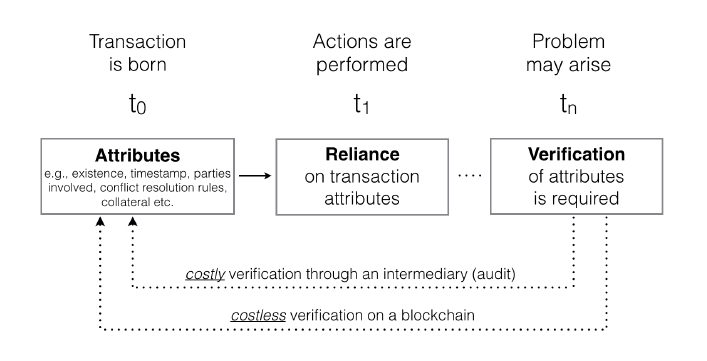
Source: ‘Some Simple Economics of the Blockchain’ — https://papers.ssrn.com/sol3/papers.cfm?abstract_id=2874598
Christian Catalini, MIT & Joshua Gans, University of Toronto, Rotman School of Management
At the market layer, economics are designed to realign the distribution of value to achieve a more efficient market that also leverages powerful network effects. The token is used as an incentive or disincentive to participants to behave both in their best interest and the greater good of the economy at large. This layer is generally exhibited as an app token.
An example of market layer economics is illustrated below by the Basic Attention Token (BAT), where users, publishers and advertisers are re-aligned to disintermediate middlemen, eliminate the economic waste and generate new value. In this blockchain based digital advertising market, the Brave browser blocks ads to the user and records where users spend their time.
Meanwhile, BAT is used as a unit of account between advertisers, publishers and users and to directly measure, exchange and verify attention.
The result is a system that is transparent and efficient. Publishers generate more revenue because middlemen are removed. Users that opt in receive fewer, better targeted ads (with far less malware). Lastly, advertisers receive better data for their spend.
Basic Attention Token (BAT)
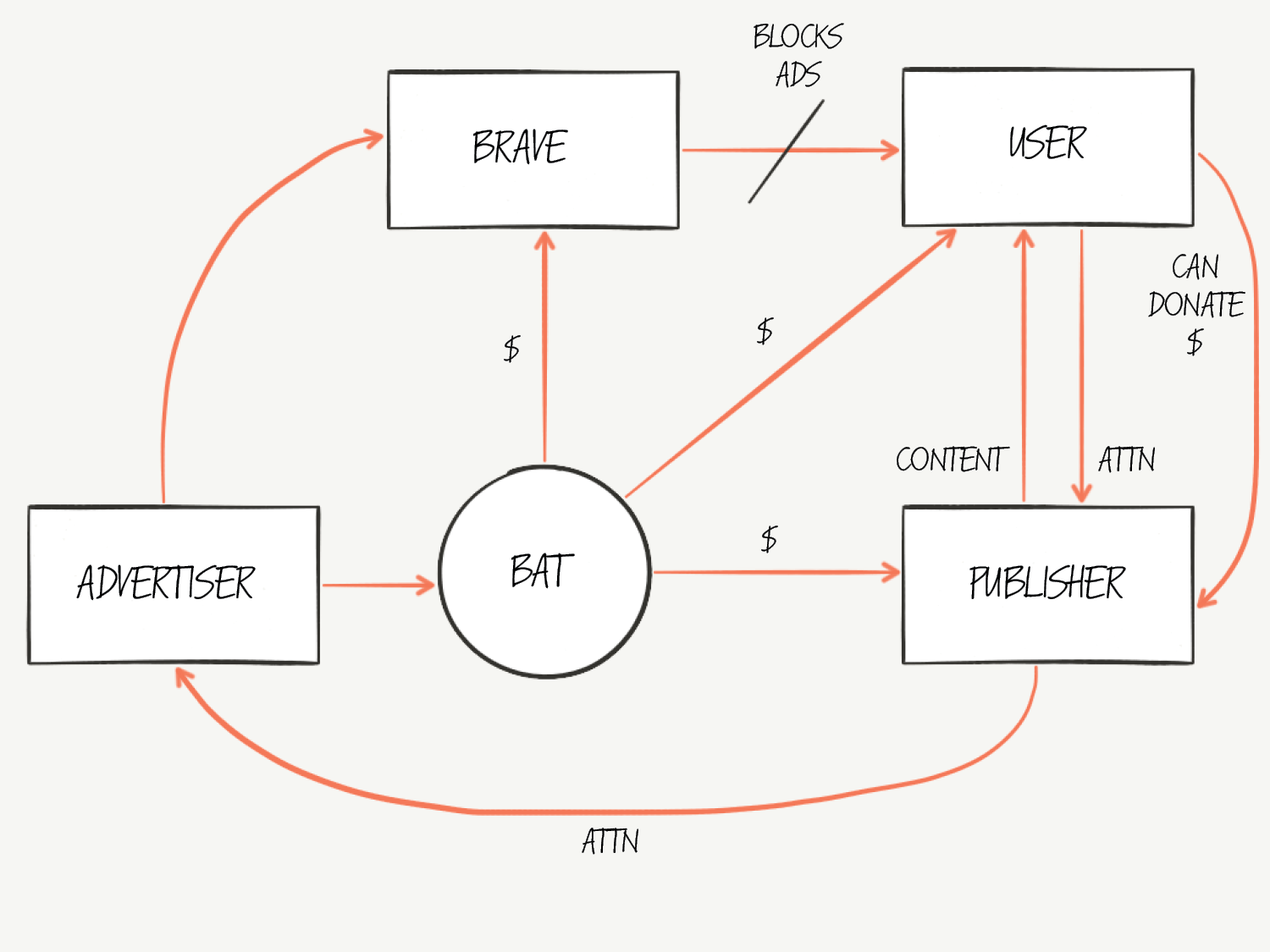
Basic Attention Token: https://basicattentiontoken.org/BasicAttentionTokenWhitePaper-4.pdf
Economic Implications of Token Velocity
Velocity can have significant impact on the economics layers of a token economy, based on the following:
Ledger Performance: If a ledger is suboptimal in facilitating exchange because of low throughput, latency, etc, this can cause service providers to become unmotivated to leverage the ledger for their offerings. Such problems can be particularly exacerbated, when transaction volumes are high but token holders are also hoarding for speculative purposes. This results in transaction verifiers suffering by being required to complete more costly work at a slower pace, thereby limiting their economic gains. As shown below, the Bitcoin network has been attempting to deal with these important scalability issues for some time now.
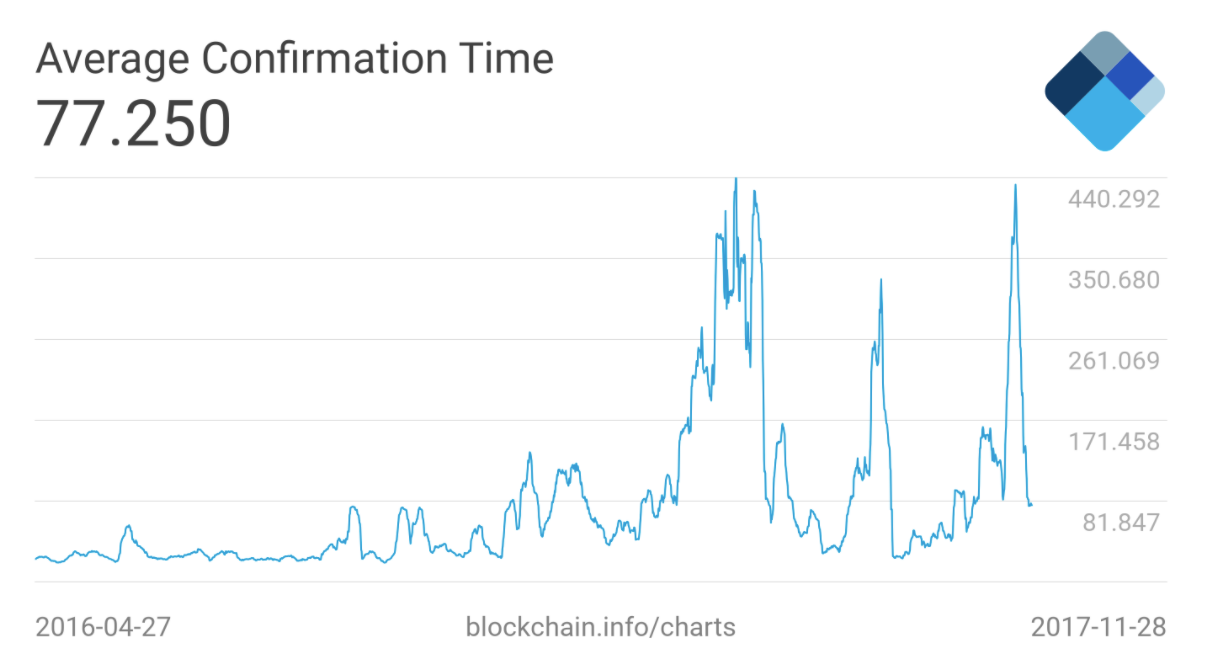
Source: https://blockchain.info/charts/avg-confirmation-time?timespan=1year&daysAverageString=7
Speculative Holding: When too many tokens are held by purely speculative investors (otherwise known as Hodlers), tokens generally do not get utilized within the market for their designed purpose. Instead, investors are simply waiting for the right time to sell off tokens for profits, and this causes low velocity in the system. Furthermore, speculative holding affects the system’s throughput, latency, etc putting pressures on the ledger layer as less tokens are available to facilitate transactions.
Note: Early on, a healthy amount of speculation is often advantageous in generating network effects and rewarding early adopters and contributors. In fact, what makes token economies so ripe with potential, is that they combine the two most powerful examples of network effects, financial exchanges and software, within a new digital economy.
New Equilibrium:As token economies progress or regress, new price equilibriums are set through behavioral feedback loops that are ultimately driven by token price itself. As Ethereum’s Vitalik points out, when the token price starts to increase, crypto traders begin to acquire and hold tokens based on expected returns, which are assumed to be higher than other cryptoassets. This increases the price of token and often closely resembles**Elliott’s Wave Theory (a form of technical analysis) in setting a new token price equilibrium.
Provided the ledger layer can efficiently verify transactions, a price increase could also greatly benefit the market layer economics by making fees cheaper and further stimulating the economy. Both of the above positive feedback loops create a new token price equilibrium.
This chart of Monero illustrates new equilibriums in July ’17 and again in October ‘17.
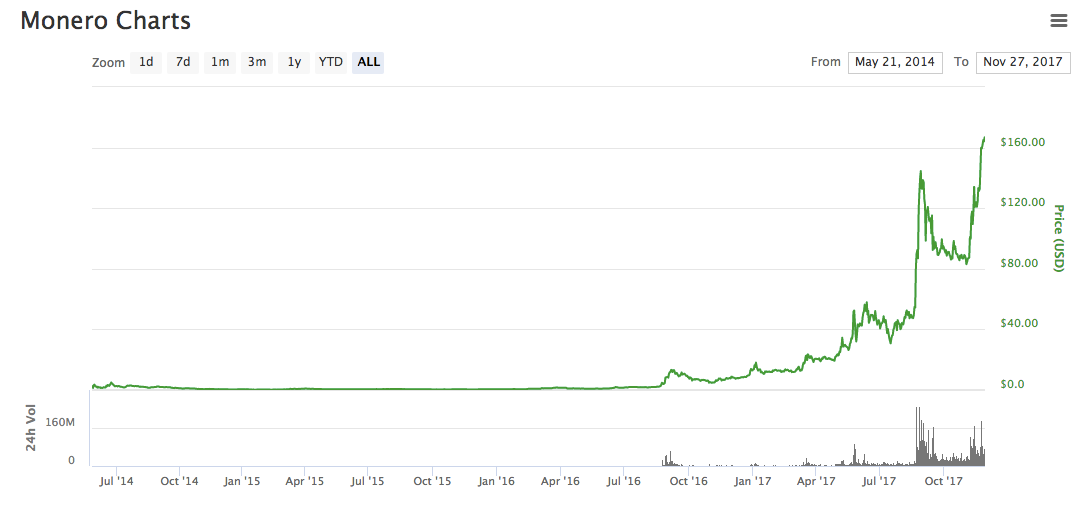
Source: https://coinmarketcap.com/currencies/monero/
Conversely, if the token price starts to decline, the token suffers as an opportunity cost to other seemingly more attractive tokens investments. As the sell off continues, the further the token price decreases, this time suffering from a negative feedback loop.
Stagnant Utility: Early adopters of a token will often hold the belief that a given decentralized market will be able to offer unique value propositions for digital services yet to be developed. If these services are too limited, tokens will be exchanged at a substandard velocity. Although the equations above suggest lower velocity would increase the value of the token, in this case, declining transaction volumes will lead to economic collapse and token price crash.
Another scenario derived from lack of utility, is when a token serves as an optimal medium of exchange for a dominant, high-demand service between a buyer and seller, where neither party has any motivation or incentive to keep the token for further use. Instead, opting to convert into a more desirable speculative or usable currency (like fiat). In these cases, velocity of a token would be high and drive down the price of the token, which further reinforces this behavior.
Fundamental challenges with public blockchains
By Preethi Kasireddy
Posted December 10, 2017

Source: http://www.englishblog.com/2012/02/cartoon-murdoch-walking-on-thin-ice.html#.Wi17n7A-d24
There’s no question that blockchain technology has enormous potential.
Decentralized exchanges, prediction markets, and asset management platforms are just a few of the exciting applications being explored by blockchain developers.
Exciting enough, in fact, to raise over billions in ICOs and drive massive price rallies throughout 2017. The hype is real.
Don’t get me wrong. I love the fact that blockchain “hype” is helping popularize it with mainstream users. Finally, I don’t get blank stares from people when I say “Bitcoin” or “Ethereum”.
However, there’s a flipside to this story that isn’t getting enough attention: blockchains have several major technical barriers that make them impractical for mainstream use today.
I believe that we will get there, but we need to be realistic as developers and investors. And the reality is that it could be many years before trustless systems are ready for mainstream use at scale.
Some of these technical barriers include:
- Limited scalability
- Limited privacy
- Lack of formal contract verification
- Storage constraints
- Unsustainable consensus mechanisms
- Lack of governance and standards
- Inadequate tooling
- Quantum computing threat
- … and more.
In this post, I’ll walk through these technical barriers and share examples of solutions for overcoming them.
As developers, I believe it’s critical that we shift some of our focus away from shiny new ICOs to the real technological challenges standing in our way.
NOTE: There’s no way I can cover every problem and every solution out there, but I covered the ones I’m most familiar with. Please refrain from too harshly criticizing me for not including something. I’d love for you to post anything I missed in the comments and I’ll add it if I see fit :) … And if I’ve made any mistakes or wrong assertions, please let me know!
1. Limited scalability
Currently, all public blockchain consensus protocols have a challenging limitation: every fully participating node in the network must process every transaction.
Why? Well, recall that blockchains are fundamentally “decentralized” — which means that no central party is responsible for securing and maintaining the system. Instead, every single node on the network is responsible for securing the system by processing every transaction and maintaining a copy of the entire state.
While a decentralization consensus mechanism offers us the core benefits of blockchain that we all care about — security guarantees, political neutrality, censorship resistance, etc. — it comes at the cost of scalability, since decentralization by definition limits the number of transactions the blockchain can process to the limitations of a single fully participating node in the network.
Two practical implications here:
- Low throughput: Blockchains can only process a limited number of transactions
- Slow transaction times: The time required to process a block of transactions is slow. For example, Bitcoin block times are 10 minutes, while Ethereum block times are around 14 seconds. These times are even take longer during peak moments. Compare that to the nearly instantaneous confirmations you get when using services like Square or Visa.
As a result, public blockchains are forced to make a tradeoff between low transaction throughput and high degree of centralization.
In other words, as the size of the blockchain grows, the requirements for storage, bandwidth, and compute power required by fully participating nodes in the network also increase. At some point, it becomes unwieldy enough that it’s only feasible for the few nodes that can afford the resources to process blocks — leading to the risk of centralization.
At that point, we’ve made a full 360-degree turn and gotten back to a centralized system that requires trust in a few big players, whereas what we want is a system that handles thousands of transactions per second with the same levels of decentralization that cryptocurrency originally promised to offer.
Scalability Solutions
Ideally, we want a blockchain design that has similar or better security properties to Bitcoin and Ethereum, while being able to function without every single node having to process more than a certain percentage of the total transactions in the network. In other words, we need a mechanism to limit the number of nodes that need to validate each transaction, without losing the network’s trust that each transaction is valid and authentic. It might sound simple in words, but is technologically very difficult.
Scalability is a large roadblock to the future success of the platform. There are a few proposed solutions that are currently being worked on by various development teams in the ecosystem. I’ve written about this topic extensively in a previous post, which I recommend you read if you’re interested. For a brief summary of some of the current solutions, see below:
Off-chain payment channels
The idea behind a micropayment channel network is to keep most transactions off the blockchain. It’s essentially a mechanism by which blockchain interactions that would normally occur on the blockchain instead are conducted off of the blockchain. The blockchain is used purely as a settlement layer to process the final transaction of a series of interactions for the final settlement, which helps lifts the burden from the underlying blockchain.
This solves the throughput problem we discussed above because now the blockchain can scale to magnitudes of larger transaction volumes. Moreover, because a transaction happens as soon as the payment channel processes it s and not when a block gets confirmed, micropayment channels solve the transaction speed problem, eliminating the typical latency.
Some examples of micropayment channel networks in the ecosystem includeRaiden Network and Lightning Network.
Sharding
The concept behind sharding is that the overall state of the blockchain is separated into different “shards,” and each part of the state is stored and processed by different nodes in the network. Each shard only processes a small part of the state and does so in parallel. Blockchain sharding is similar to sharding in the traditional database world, except with the extra hard challenge of needing to maintain security and authenticity amongst a decentralized set of nodes.
Off-chain computations
This is similar to state channels, except larger in scope. The idea is to execute computations (and not just token transfers) off-chain that would be otherwise prohibitively expensive to execute on-chain, in a way that is secure and verifiable. Moving the computations and verification process off the blockchain into a separate protocol, can achieve high transaction throughput. An example of this for Ethereum is TrueBit.
DAGs
A “DAG,” short for Directed Acyclic Graph, is a graph data structure that has vertices and edges. (A vertex is a point on the graph, and an edge is the path from one vertex to another.) DAG guarantee that there is no way to start at any vertex and follow a sequence of edges that eventually loops back to that vertex again (i.e. no loops). This allows us to have a sequence of nodes (or vertices) in topological order.

DAG
The premised behind DAG-based protocols, such as IOTA’s Tangle, for example, is to ditch the global linear blockchain altogether, and instead use DAG data structures to maintain the state of the system. To secure the network, these protocols rely on their own novel approaches that don’t require every node to process every transaction in a linear fashion.
Another DAG-based approach, SPECTRE protocol, for example, uses Direct Acyclic Graph (DAG) of blocks and mines DAG blocks in parallel to allow for more throughput and higher transaction times.
I hope to write more about DAG-based approached in future posts; the reality is that these protocols, still in very early days, have yet to be implemented and used at scale. Frankly, they have some fundamental limitations / weaknesses that have yet to be addressed to be considered viable scalable solutions.
For a more detailed overview of these scalability solutions as well as a few others, I suggest you read the post I wrote before on scalability.
2. Limited privacy
Given that blockchain transactions are not tied directly to your identity, they may appear more private. Anyone in the world can create a new wallet anonymously and transact using it.
However, it’s not quite that simple.
On one hand, it’s certainly true that the great promise of this technology is pseudonymity: transactions are recorded and stored in a public ledger, but they are linked to an account address comprised solely of numbers and letters. With no real-world identity attached to this address, the transaction’s originator seems impossible to track.
However, this appearance of total security is misleading. It’s true that a person can preserve his or her privacy as long as the pseudonym is not linked to the individual, but as soon as somebody makes the connection, the secret is revealed. One instance of such an occurrence was revealed when law enforcement agencies admittedthat they were able to identify specific Bitcoin users during investigations, thus ‘deanonymizing’ them and breaking with the overall premise of a blockchain’s total transactional invisibility.
How was this accomplished?
Web trackers and cookies on merchant websites make it incredibly easy to leak information about a transaction onto the Web, where anyone, including governments, law enforcement agencies, and malicious users can readily make use of that information.
Furthermore, with a blockchain platform like Ethereum, users are interacting with smart contracts that handle more than just simple value transfers. All the details about these smart contracts are public on the Ethereum blockchain, including senders and recipients, transaction data itself, the code executed, and the state stored inside the contract.
Uploading critical business data into a blockchain where hackers, competitors, or other unauthorized parties can view the information is simply not an option for most companies. Consider:
- Electronic medical records, which are extremely private and sensitive information. It’s unacceptable to ever have that information publicly visible on public blockchains, thereby jeopardizing patient confidentiality.
- Identity verification datasuch as**social security numbers cannot be openly stored in a public smart contract.
- Credential management such as passwords and keys have no place in an open, ultimately unsecured smart contract.
- Financial documents such as e capitalization tables or employee salaries should never be publicly associated with addresses that are easily traceable.
- The list goes on.
Privacy remains a fundamental hindrance for individuals, organizations, and industries that care about privacy and individual sovereignty. Many of us who are obsessed with blockchain and cryptocurrency have a concerted interested in enabling a trustless and censorship-resistant system that brings financial empowerment to the individual. Paradoxically, we’re using a public, easily traceable ledger to do so. (Makes my head go sideways when I think about it!)
Privacy solutions
Here are a few examples of solutions that different development teams have been working towards.
Elliptic Curve Diffie-Hellman-Merkle (ECDHM) addresses
To understand ECDHM addresses, you need to understand Diffie-Hellman Key Exchange. The idea behind a Diffie-Hellman Key Exchange is that it establishes a shared secret between two parties. This can then be used to exchange messages privately over a public network.
How?
The sender and receiver can share ECDHM addresses publicly, then use their shared secret to derive anonymous Bitcoin addresses. These Bitcoin address can only be revealed by those in possession of the secret. The only thing publicly visible is the reusable ECDHM addresses. Therefore, a user doesn’t have to worry about transactions being traced.
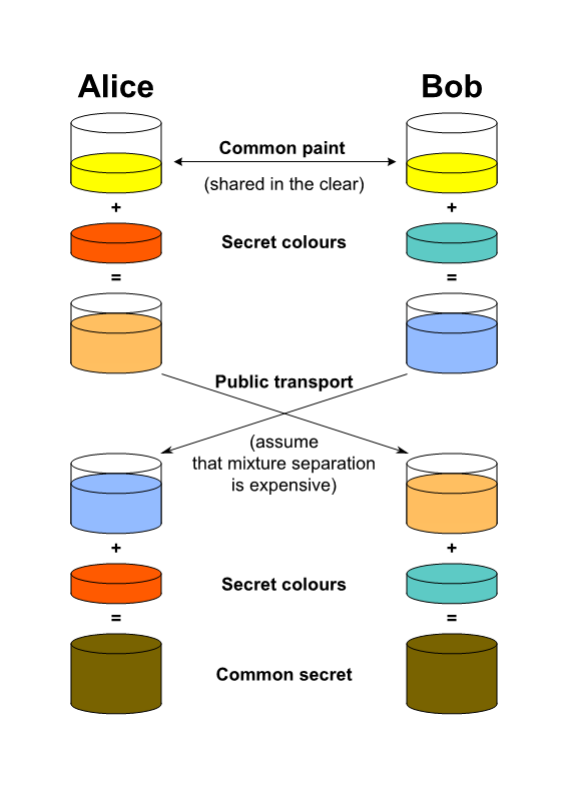
Conceptual diagram that illustrates the general idea of the key exchange by using colors instead of very large numbers (Source:https://en.wikipedia.org/wiki/Diffie%E2%80%93Hellman_key_exchange)
Some examples of ECDHM address schemes include Stealth Addresses by Peter Todd, BIP47 reusable payment codes by Justus Ranvier, BIP75 Out of Band Address Exchange by Justin Newton, and others. However, working implementations and actual use of these such schemes is scarce.
Mixers
The idea behind a mixer is that a group of people can combine their payments into one pool, keeping track of debts in a private ledger. Then, when funds from the pool are spent, the origins of each payment are obscured. Anyone observing the blockchain can see the amounts paid, along with the recipients, but theoretically, the person who specifically authorized the payment can’t be traced. An example of a mixing service is CoinJoin.
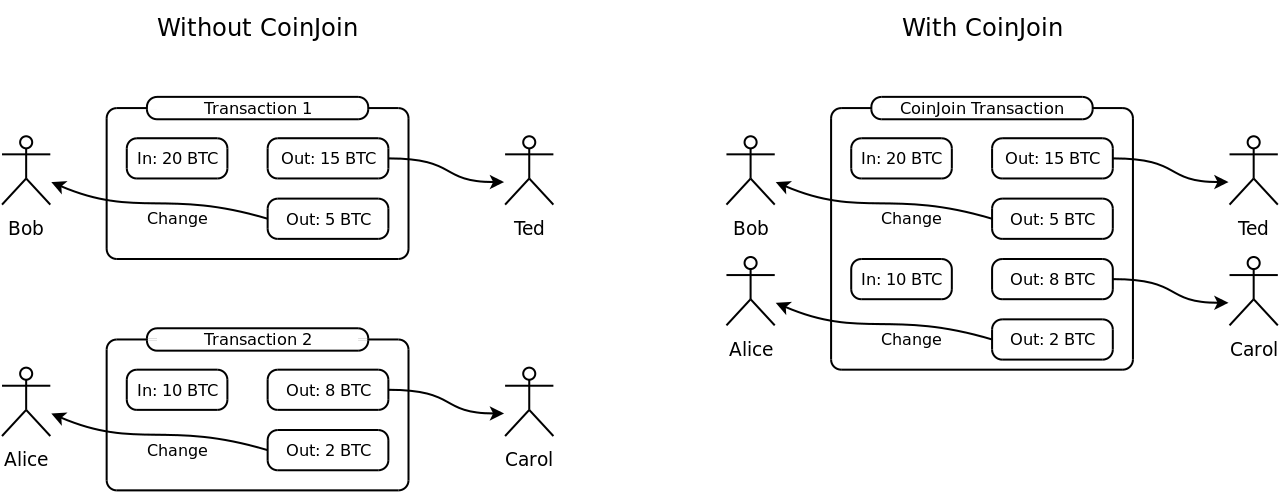
Source:https://en.wikipedia.org/wiki/CoinJoin
Unfortunately, mixers have proven to be an unreliable solution. For example, researchers were able to easily identify CoinJoin transactions and proved that by spending just $32,000, an attacker can unanonymize transactions with 90% success. Moreover, researchers also proved that mixers provide little protection against Sybil attacks and Denial-of-Service attacks.
Even more disconcerting is the fact that a mixer’s purportedly private ledger needs to be managed by some central entity, which means it requires a trusted third party to “mix” transactions.
Since CoinJoin is a solution that users opt into using, rather than a default methodology, very few people have historically been involved in these types of mixers’ pools, making the anonymity set too small. Therefore, it’s easy to identify whether a particular output originated from one of those few people.
Another example of a mixing solution is CoinShuffle, which is a decentralized mixing protocol developed by a group of researchers at Saarland University in Germany. CoinShuffle tried to improve upon CoinJoin by not requiring a trusted third party to assemble the mixing transactions.
Monero
Another way to tackle privacy is to create a cryptocurrency that’s private by default, such as Monero. Unlike many altcoins, Monero isn’t a fork of Bitcoin. Instead, Monero is based on an alternative protocol, CryptoNote.
The primary feature that Monero offers is an alternative “ring signature” scheme.
Ring signatures are a type of group signature, and each signer in the group has a secret and public key. Unlike traditional cryptographic signatures that prove that a transaction was “approved” by a single signer using a said private key, a group signature proves that one signer from a fixed group approved a transaction, without exposing who.
Zero-knowledge proofs
A zero-knowledge proof is when a prover convinces a verifier that they have some secret knowledge, without revealing the knowledge directly. In other words, a program can have secret inputs and the prover reveals nothing to the verifier. Zero-knowledge proofs provide fundamental primitives that can be used to build privacy-preserving mechanisms. Examples include:
Example 1: Challenge / response games
In computer security, challenge-response authentication is a family of protocols in which one party presents a question (“challenge”) and another party must provide a valid answer (“response”) to be authenticated. This “game” can be used on the blockchain to verify transaction. If a particular transaction is invalid, another node can choose to “call attention” to the invalidity. This then requires that a verifiable proof is provided, confirming that a transaction is invalid. Failing that, a “challenge” is produced that requires the originator of the transaction to produce a “response” proving e that the transaction is valid.
Let’s look at an example: Say “Bob” has sole access to some resource (e.g. his car). Alice now wants access to it as well so she can use it to go to the grocery store. Bob issues a challenge, perhaps “52w72y.” Alice must respond with the one string of characters which fits the challenge Bob issued. The only way to find the answer that is by using an algorithm known only to Bob and Alice. Moreover, Bob issues a different challenge each time. Knowing a previous correct response therefore doesn’t give Alice any advantage.
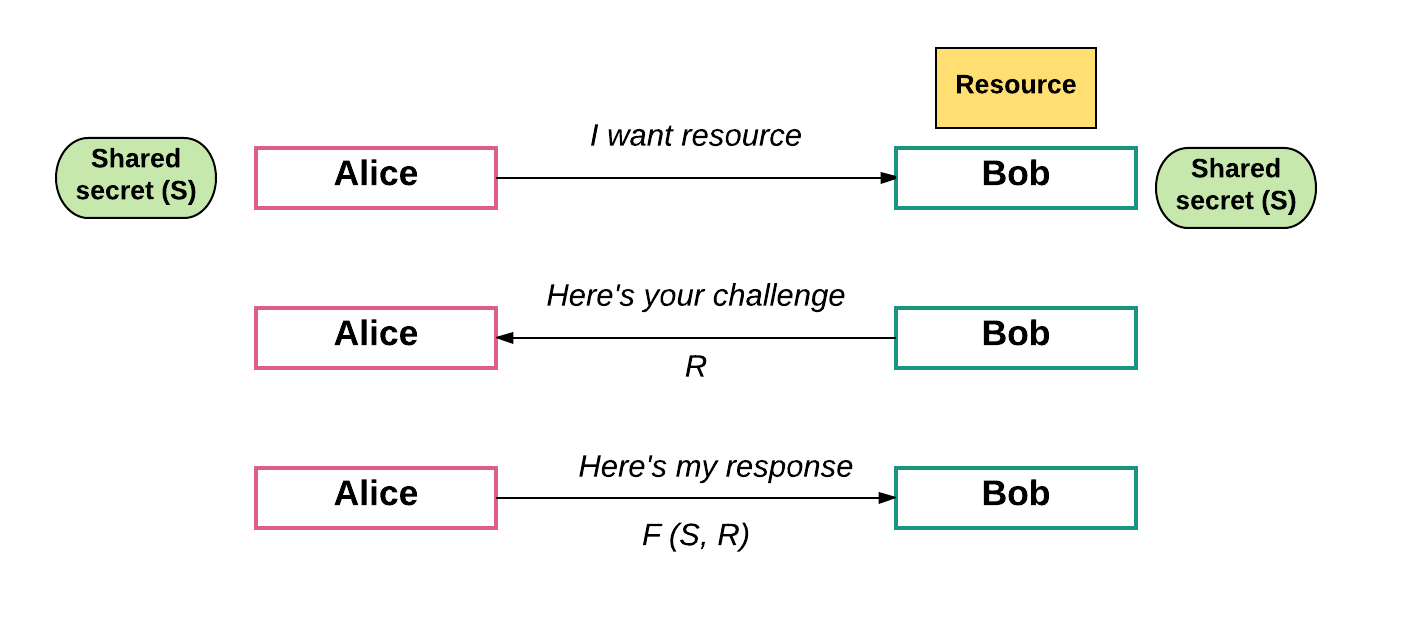
Challenge / response games are already in use in blockchains like Ethereum. However, we need libraries and tools to make these types of authentication schemes much, much easier to use.
Example 2: zkSNARKs
What exactly are zkSNARKs? Let’s break down the definition:
- zk = zero-knowledge. Doesn’t require knowledge of the information to prove that the information exists
- SNARK: SuccinctNon-interactiveAdaptiveARgument ofKnowledge.
- “Succinct” means a succinct proof that can be verified quickly.
- “Non-interactive” means doesn’t require the verifier to interact with the prover. Instead, the prover can publish their proof in advance, and a verifier can make sure it’s correct.
- “Adaptive argument of knowledge” means a proof of knowledge of some computation.
While I hope to one day cover zkSNARKs in a post, I’ll skip the technical details here. zkSNARKs are an exciting and promising privacy-building block, with a few caveats:
- SNARKs are resource intensive.
- SNARKs allows a user to prove they have access to a secret, but the user is held responsible for maintaining the secret and having it available when needed.
- SNARKs have a setup phase during which the circuit, or computation you want to prove, is fixed. This phase needs to happen in advance among a private trusted group of people. This not only requires you to trust the people preparing the setup, but also means that SNARKs aren’t a good fit to run arbitrary computations since there’s always a preparation phase required.
Example 3: zkSNARKs + Zcash
Zcash is a privacy-preserving cryptocurrency based on zk-SNARKs. Zcash has what are called “shielded transactions,” where there is an anonymity set spanning every coin used. Shielded transactions use “shielded addresses,” which require the sender or receiver to generate a zero-knowledge proof that allows others to verify a transaction’s encrypted data without it being revealed.
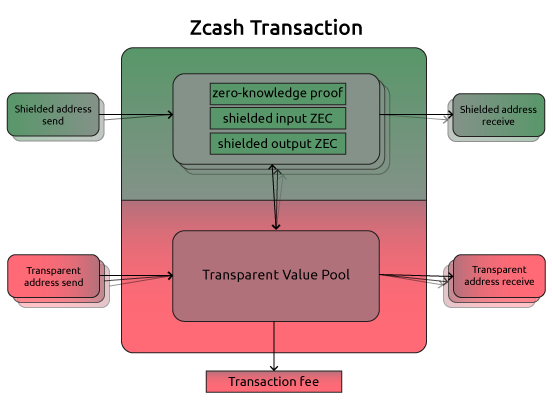
Zcash transaction diagram
Zcash is definitely an interesting project that is worth keeping an eye on.
Example 4: zkSNARKs + Ethereum
In Ethereum’s next protocol upgrade, Metropolis, developers will have the ability to efficiently verify zk-SNARKs on-chain.
What can we do with a SNARKs-enabled Ethereum? Certain contract variables can be effectively made private. Instead of storing the secret information on-chain, it can be stored with users, who prove they’re abiding by the rules of the contract using SNARKs. Each of these users require their own trusted setup, which adds a bit of preparation overhead. But once a circuit exists, it can be used for as many transactions as needed.
What you can’t achieve with SNARKs on Ethereum, however, is autonomous privacy,separate from a user. Since SNARKs on Ethereum rely on a user to maintain the secret off-chain, without that user, there’s nowhere to keep track of the secret.
Example 5: zkSTARKs
ZK-SNARKs have a newer, shinier cousin: ZK-STARKs, with the ‘T’ standing for “transparent.” ZK-STARKs resolve one of the primary weaknesses of Zk-SNARKs: its reliance on a trusted setup. They’re also simpler because they rely purely on hashes and information theory, and are more secure against quantum computers since they don’t use elliptic curves or exponent of exponent assumptions.
Overall, despite the amazing progress we’ve made on the privacy front with some of the zero-knowledge proof based approaches mentioned above, there’s still a lot of work to do. Zero-knowledge proof libraries need to be substantially researched, battle-tested, and matured. zkSNARKs and zkSTARKs need to be experimented with on various public blockchains. Zcash needs to prove out use cases at scale in real world scenarios. We’re still a ways away from all that.
Code Obfuscation
Another privacy mechanism is code obfuscation. The goal is to find a way to obfuscate a program P such that the obfuscator can produce a second program O(P) = Q, such that P and Q return the same output if given the same input, BUT Q reveals no information about the internals of P. This allows us to keep hide private data inside of Q, such as passwords, social security numbers, etc., but still make use of it within programs.
While researchers claim that total black box obfuscation is impossible, there is a weaker notion of obfuscation, known as indistinguishability obfuscation, that researchers say is possible. The definition of an indistinguishability obfuscator O is that if you take two equivalent programs A and B (i.e. same inputs to either A or B produce the same outputs) and calculate O(A) = P and O(B) = Q, then there is no computationally feasible way for someone who doesn’t have access to A or B to tell whether P came from A or B.
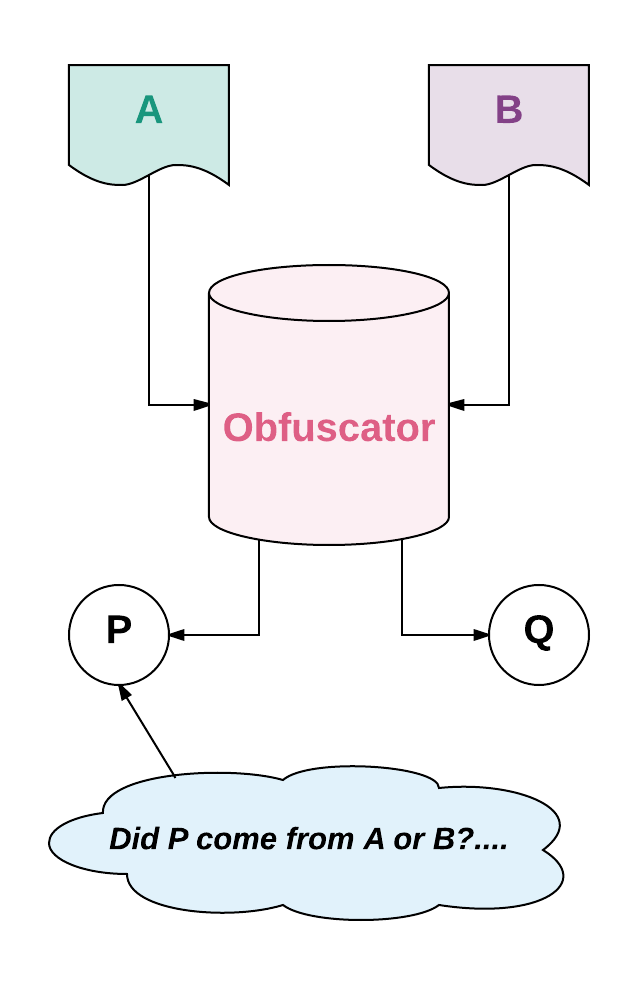
Recently, researchers Craig Gentry, Amit Sahai, et al. were able to accomplish indistinguishable code obfuscation. However, the algorithm comes with high computational overhead.
If this construction can be improved upon, the potential benefits are massive. The most interesting possibility in the world of cryptocurrency is the idea of an on-blockchain contract containing private information.
For example, we can imagine an Ethereum contract which contains a user’s password to Coinbase. Then we can write a program such that if certain conditions of the contract are satisfied, the contract will initiate an HTTPS session with Coinbase using some intermediary node, log in with the user’s password, and make a trade. Because the information in the contract will be obfuscated, there will be no way for the intermediary node, or any other player in the blockchain, to modify the request in-transit or determine the user’s password.
Oracles
In the blockchain space, an oracle is a party which relays information between smart contracts and external data sources. It essentially acts as a data carrier between smart contracts on the blockchain and external data sources off the blockchain. So one approach to keeping information “private” is simply to use oracles to fetch private information from an external data source.
Trusted Execution Environments
Trusted Execution Environment (TEE) is a secure area of the main processor. It guarantees code and data loaded inside is protected with respect to confidentiality and integrity. This trusted environment runs in parallel with the user-facing operating system, but is intended to be more private and secure than the user-facing OS.
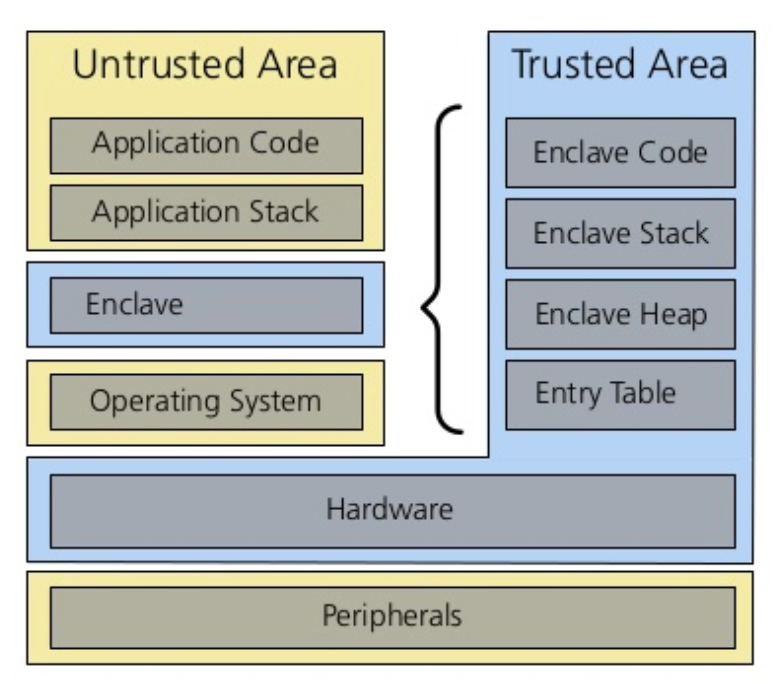
Source:https://www.slideshare.net/JavierGonzlez49/operating-system-support-for-runtime-security-with-a-trusted-execution-environment-phd-thesis
There’s early research and development going on into TEEs to determine how they can be used to enable privacy on the blockchain. I’m personally very excited for more security experts to tackle these solutions. We definitely need more experts looking into this.
3. Lack of formal contract verification
Formal verification of smart contracts remains a HUGE unsolved problem. First, let’s understand what it even means to “formally verify” a contract by understanding what a “formal proof” is. A “formal proof” in mathematics means a mathematical proof that has been checked by a computer using the foundational axioms of mathematics and primitive inference rules.
More broadly, formal verification in relation to a software program is a methodology to determine whether the program behaves according to a specification. In general, this is done with a concrete specification language used to describe how the inputs and outputs of functions should relate. In other words, we first state an invariant about the program, and then we are obliged to prove that statement.
One example of a specification language is Isabelle, which is a generic proof assistant that allows mathematical formulas to be expressed in a formal language and provides tools for proving those formulas in a logical calculus. Another specification language is Coq, which is a formal language to write mathematical definitions, executable algorithms, and theorems.
So why is it important to do formal verification for programs encoded within smart contracts?
For one, smart contracts are immutable, meaning you can’t update or fix them once they’ve been deployed onto the main Ethereum network. So that means we need to get everything right to the tee before we can deploy and use those contracts in real-world applications. Moreover, smart contracts are publicly accessible and anything stored within smart contracts is open for anyone to view; anyone can also call into the public methods of smart contracts. While this provides openness and transparency, it also makes smart contracts very attractive targets for hackers.
The reality is that writing trustworthy smart contracts that are bug-free is difficult, regardless of much how many precautions you take. Moreover, with Ethereum, for example, verifying EVM code is incredibly difficult because of the way the EVM instructions are designed. This makes building formal verification solutions for Ethereum even more difficult.Regardless, formal verification is a strong approach to reducing the risk of bugs and attacks. They provide a higher guarantee of correctness than traditional approaches (e.g. testing, peer reviews, etc.) and we desperately need better solutions.
Formal verification solutions
I wish I had more publicly available solutions to show off in this section, but unfortunately there aren’t many. One very early set of examples I found was done by Yoichi Hirai, who is a formal verification engineer for the Ethereum foundation. He was able to produce early results for verifying several smart contracts, including a small “deed” contract. Although very small, this is the first “real” contract that I’ve seen analyzed in a theorem proving environment.
As Yoichi himself says…
“The verification result is far from perfect. I am still finding more problems in the verification setup than in the verified contracts. The EVM (Ethereum Virtual Machine) implementation is not tested against others! I am making this public already because this project makes a good example on the amount of work (and the level of detail) required to verify a smart contract using the machine-assisted logical inference. At this point already, if I were to implement a smart contract that holds more than 100k dollars, and if I am in charge of the schedule, I would consider this kind of development (the other option is to try the contract with smaller values first).”
There are other teams like Tezos which are completely forgoing using Solidity as the language and the EVM as the VM, and instead are building their own smart contract programming language and VM that facilitate formal verification.
Whatever the right approach, whether it be overhauling the EVM to make it easier to formally verify or building a whole new language that is inherently easier to verify, we need more work put into this effort. We need more researchers and developers working on formal verification. We need formal verification libraries and standards in every possible programming language.
4. Storage constraints
Most applications that get built on a public blockchain will require some sort of storage solution. (User identities, financial information, etc.).
However, storing information on a public blockchain database means that the data is:
- Stored by every full node in the network.
- Stored indefinitely since the blockchain database is append only and immutable.
Therefore, data storage imposes a huge cost on a decentralized network where every full node has to store more and more data into infinity. As a result, storage remains a huge hurdle for any realistic application that gets built on the blockchain.
Storage Solutions
There are several early projects that are using various strategies for splitting up the data into shards and storing it in a distributed fashion across participating nodes (i.e. distributed storage). The basic premise here is that instead of every node storing everything, there are a set of nodes that split or “distribute” the data among themselves. A few example of projects include:
- Swarm: Swarm is a peer-to-peer file sharing protocol for Ethereum that lets you store application code and data off the main blockchain in swarm nodes which are connected to Ethereum blockchain. You can later exchange this data on the blockchain.
- Storj: A solution where files and data are first sharded, encrypted and then distributed to multiple nodes such that each node only stores a small portion of the data: hence, “distributed storage.” Then theStorj Coin (SCJX) is used to pay for storage and acts as an incentive for nodes that store a portion of the user’s files or data.
- IPFS: An alternative p2p hypermedia protocol that provides a high throughput, content-addressed block storage model, with content-addressed hyperlinks. Essentially, it allows files to be stored in a permanent and decentralized fashion, while providing historic versioning for files and removing duplicates.
- Decent: Decent is a decentralized content sharing platform which allows users to upload and monetize/share their work (videos, music, ebooks, etc.) without relying on a centralized third party. Users can access content in a more affordable way by skipping these intermediaries while the nodes that host the content are rewarded with fees.
- … and more.
5. Unsustainable consensus mechanisms
Blockchains are “trustless”. Users don’t have to trust anyone else with their transactions. Not needing to trust anyone else affords users attractive properties such as autonomy, censorship resistance, authenticity, and permissionless innovation.
The mechanism used over time to enable a trustless blockchain, not easily subverted by attackers, is called a “consensus protocol.” Consensus protocols are not new to Bitcoin and other blockchains. For example, in 1992, Dwork and Naor created one of the first “proof-of-work” systems where one could generate cryptographic proof of computational expenditure to get access to a resource, without having to rely on trust. This system was used to combat junk mail. Adam Back later created a similar system called Hashcash in 1997. Then in 2003, Vishnumurthy et al. used proof-of-work to secure a currency for the first time, except in this case, the token was used not as a general currency but to maintain a peer-to-peer file trading system.
Five years later, Nakamoto came out with proof-of-work as a mechanism to secure a value token, Bitcoin. This underlying consensus mechanism allowed Bitcoin to become the first widely adopted global decentralized transaction ledger.
Proof-of-work consensus
Proof-of-work is a scheme that consists of solving problems that are difficult to solve, but easy to verify. Miners carry out computationally expensive calculations using their compute power, and the Bitcoin system rewards miners that present such solutions with new Bitcoins and transaction fees. The more compute power a miner has, the more “weight” they have on deciding on the consensus.
Proof-of-work consensus allowed Bitcoin to become the first truly widely adopted form of decentralized digital currency. It solved the “double-spend problem” without requiring any trust third party. However, proof-of-work isn’t perfect, and there’s still a great deal of research and development required to build a more viable consensus mechanism.
What are the issues with proof-of-work?
1. Specialized hardware has an advantage
One downside of proof-of-work is the use of specialized hardware. In 2013, devices called “application-specific integrated circuits” (ASICs) were designed solely for the purpose of mining Bitcoin, providing a 10–50x rise in efficiency. Ever since, mining with a regular computer’s CPU and GPU has become completely unprofitable, and the only way to mine is with ASICs that you manufacture yourself or buy from an ASIC manufacturer. This is far from the “decentralized” nature of the blockchain, where everyone has the opportunity to contribute to the security of the network.
In order to mitigate this issue, Ethereum has chosen to make its PoW algorithm (Ethhash) sequentially memory-hard. This means that the algorithm is engineered so that calculating the nonce requires a lot of memory AND bandwidth. The large memory requirements and high bandwidth requirements make it difficult for even a super-fast computer to discover multiple nonces simultaneously. This reduces the risk of centralization and creates a more level playing field for the nodes that are doing the verification.
Of course, that’s not to say that there won’t ever been an ASIC for Ethereum in the future. Specialized hardware remains a huge risk for PoW algorithms.
2. Mining pool centralization
The concept behind a mining pool is that instead of each user mining on their own and having a tiny chance of earning the block reward, they mine for a pool.. The pool then sends them a proportionate, consistent payout. The problem with mining pools is that since they have more “weight” in the network, large mining pools have less variance in their returns than a single user. Over time, a few pools start to control the majority of the network and the concentrated set of pools continue to gain more power over time. Right now, for example, the top five mining pools own close to 70% of the total hashrate. Scary, to say the least.
3. Energy waste
Miners spend massive amounts of compute power to run the computations that solve the proof-of-work algorithm, but unfortunately, all of this computational work has no value to society. According toDigiconomist’s Bitcoin Energy Consumption Index, Bitcoin’s current estimated annual electricity consumption stands at 29.05TWh, which represents 0.13% of total global electricity consumption. To give you context on how much that really is, Bitcoin mining is now using (read: wasting) more electricity than 159 individual countries.
As public blockchains like Bitcoin that use proof-of-work consensus continue to scale, increasingly, more energy will be wasted. If the goal is for the public blockchain to scale to millions of users and transactions,the unsustainable wasted energy and computation costs of proof-of-work are not conducive to this outcome.
Consensus Solutions
Useful proof-of-work
One way of solving the energy waste problem is to make the proof-of-work function solve something which is simultaneously useful. For example, imagine a scenario where miners are spending their compute power to solve difficult AI algorithms, instead of solving a random SHA256 problem required by proof-of-work.
Proof-of-stake
One approach to solving the mining centralization problem is to abolish mining entirely and move to some other mechanism for counting the weight of each node in the consensus. That is what proof-of-stake aims to do.
Instead of miners putting in compute power, they put in a “stake” (i.e. money). As Vitalik notes, instead of “one unit of CPU power, one vote” it becomes “one currency unit, one vote.”
Proof-of-stake eliminates the need for hardware and is therefore immune to the hardware centralization concerns discussed above. Moreover, since miners aren’t required to expend massive amounts of energy to compute solutions to proof-of-work algorithms, proof-of-stake is inherently more energy efficient.
However, as with any technology, there’s no free lunch. Proof-of-stake algorithms have their own fundamental challenges. More specifically, these include:
- Nothing-at-Stake problem: With proof-of-stake, when there is a fork in the chain, whether the fork is accidental or malicious, the best strategy for any node that is validating a transaction is to “mine” on every chain. They can do this since they aren’t expending physical computational effort and are only voting with their dollars. This means the miners in proof-of-stake will be rewarded regardless of which chain wins (i.e. “nothing is at stake” to prevent them from mining on every chain).
- Long-range attacks:When there is a fork in proof-of-work chains, a miner will start a fork a few blocks behind the current head of the main chain. The further back a miner gets in the chain, the more difficult it becomes to catch up to the main chain since it requires the compute power of over half the network to do so. However, with proof-of-stake, a miner can start a fork thousands or millions of blocks back, since the only thing required is stake, or money. This means a miner can easily block millions of blocks onto a new chain, making it difficult for users to know which blockchain is the “correct” one.
- Cartel formation: In a decentralized system that is governed by economic incentives, a very real risk is the formation of coordinated efforts and oligopolies. As Vlad Zamfir, an Ethereum researcher, notes, “Cryptocurrency is incredibly concentrated. So is mining power. Oligopolistic competition is the norm in many ‘real-life’ markets. Coordination between a small number of relatively wealthy validators is much easier than coordination between a large number of relatively poor validators. Cartel formation is completely expected, in our context.”
In order to viably replace proof-of-work with a new consensus mechanism like proof-of-stake, we need an algorithm that solves the nothing-at-stake problem and long-range attack problems, without introducing new collusion risks.
A good amount of progress in resolving this problem has been made by teams like Tendermint and Ethereum. Tendermint was one of the first to adapt traditional BFT research to blockchains by building a viable proof-of-stake consensus engine for blockchains. However, Tendermint has its own flaws (a topic for another post). Similarly, Ethereum has made great progress with their implementations of proof-of-stake, but the reality is that there’s nothing running on a live network at scale today.
Unlike proof-of-work, proof-of-stake is unproven and far less understood. Understanding the different trade-offs of various designs requires further research and experimentation. As such, there’s a strong need to collaborate in creating a more efficient, fast, and secure consensus systems based on these early works.
6. Lack of governance and standards
It goes by without saying that a public, decentralized blockchain has no central authority or organization making decisions. While on one hand, this affords us the dream we all are after — a completely trustless, open, and permissionless system — on the other hand, there literally is no safe upgrade path for the protocol, and no one responsible for setting and maintaining standards.
While we definitely want to keep the development of blockchain technology as decentralized as possible, we still need some organization amongst developers and others in the ecosystem to agree on new standards, features and upgrades. It’s unclear how you achieve this without leading to at least some centralization (e.g. The Ethereum Foundation).
The current status quo in Ethereum, for example, is that there are typically one or two developers who are leading the effort on specific standards or features. While this works for now, this model has flaws. For one, it’s not efficient — if the developer(s) leading the effort get busy, or forget to respond for a few days, or weeks, the progress on the standard just stalls, regardless of how important the standard is for everyone building on the public blockchain. Defining a standard without clear leadership is chaos and makes it impossible to quickly reach a consensus on timely issues, especially as the community gets bigger.
Another approach is to leave it completely open and decentralized. However, this has shown to be ineffective, leading to multi-year debacles.
There needs to be a better way.
Tezos is one example of a public blockchain that aims to create the ability to upgrade the protocol from within the protocol using on-chain governance, although it’s still very much an idea and not live or proven out.
Overall, Blockchain governance is an incredibly tricky problem and finding a balance between centralized and distributed control will be key to keeping development on the right path.
7. Inadequate tooling
Adequate tooling is essential to developers’ jobs, especially if said developers want do their work effectively and efficiently. Terrible tooling breeds horror stories.
It goes without saying that the developer tooling currently available for the blockchain ecosystem is unacceptable.Developing a functional protocol or decentralized application on the blockchain is a daunting task even for today’s most seasoned developers.
As a Solidity and blockchain developer, here’s what I’ve personally found missing from the tooling ecosystem:
- An IDE that has good linters and all the necessary plug-ins for effective smart contract development and blockchain analysis.
- A build tooland compiler that is well-documented and easy to use.
- A deployment tool that doesn’t suck.
- Technical documentation that actually exists or is not completely out of date for various APIs and frameworks.
- Testing frameworks that aren’t lackluster. There are a few tools for Ethereum like Truffle which are passable, but more options and experimentation around testing frameworks are badly needed. I’ve seen too many smart contracts go completely untested out in the wild while moving millions of dollars. A lack of testing is not acceptable under any circumstances, but particularly not when such vast amounts of money are involved. For example,the BAT token sale smart contracts haveno test suite, yet those contracts were used to collect $36 million in 24 seconds.Any rational human knows that if a contract can move that much money around, it is subject to attack.
- Debugging tools. Oh boy. Debugging Solidity code is like searching for gold in a dark tunnel with a blindfold on. In my previous line of work, I was in web development, and being able to step through code line by line using a debugger was truly a lifesaver. Not having such a tool, or even one that comes remotely close, is incredibly frustrating and unproductive when developing in Solidity. We desperately need tools that make it easier to isolate and diagnose problems.
- Logging tools. Same as above.
- Security auditing. This is a big one. There’s just one notable security auditing service for Ethereum that I’ve heard of, Open Zepplin. While they are doing great work for the ecosystem with their auditing service, an industry that’s raising billions of dollars using smart contracts needs more than one lone startup. Companies and engineers need to create more advanced tools and services, and more security experts are necessary to help thoroughly audit smart contracts. The only time there’s any noticeable attention paid to smart contract security is after the fact, when attacks such as the two Parity hacks or the DAO hack occur. Then, of course, the blame is placed on the developers who wrote the smart contracts, or even worse, on the core Ethereum team. I think that’s unfair. Developers shouldn’t be responsible for knowing how to do security audits for their own code. That’s like asking Stephen Curry to do his own accounting. It doesn’t work that way. We desperately need the help and expertise of security engineers and researchers. We need investors to put their mouths where their monies are and fund efforts aimed at making smart contracts and blockchains more secure.
- Block explorers and analytics. For Ethereum, we have a block explorer called Etherscan. For Bitcoin, we have explorers likeBlockchain.info, Blockexplorer, orBlockcypher. These all are great community efforts. In fact, I use Etherscan extensively. But to do any kind of serious chain analytics, it’s nowhere near enough. There’s all sorts of interesting data we could and should be analyzing about public blockchains.
8. Quantum computing threat
One of the looming threats to cryptocurrency and cryptography is the issue of quantum computers.
Although quantum computers today are still somewhat limited in what types of problems they can solve, it won’t always be that way. The scary truth is that most popular public-key algorithms can be efficiently broken by a sufficiently large quantum computer.
It’s important that as we design and build the blockchain and the cryptography that underlies it, we need to be thinking about how to make these properties quantum-proof.
Quantum-proof solutions
While I am by no means an expert on this, my very limited understanding is that post-quantum cryptography research is currently focused on six different approaches: Lattice-based cryptography, Multivariate cryptography, Hash-based cryptography, Code-based cryptography, Supersingular elliptic curve isogeny cryptography, and Symmetric key quantum resistance systems like AES and SNOW 3G.
Regardless of the final solution, building cryptographic solutions that are quantum-proof is something that should be top of mind.
Miscellaneous challenges to keep in mind
- We need more robust solutions that are capable of inter-blockchain communication to allow multiple chains (e.g. Bitcoin, Ethereum, Litecoin, etc.) to communicate and transact with one another seamlessly.
- We need better key management systems built into the blockchain tooling, for the sake of applications built on top.
- We need more efficient signature schemes and other cryptographic systems that low-resource devices can handle without sacrificing security.
- … and more.
Conclusion
It’s unfortunate that so much of the mindshare and funding around blockchain is being pushed into ICOs. Meanwhile, a few researchers and developers are desperate to solve these problems but are starved of adequate resources.
Unfortunately, many are financially incentivized to ignore the problems — including some of the most influential developers and leaders in the space.
My goal for the coming year is to continue to:
- Increase awareness around these issues
- Pour as much of my time to contribute towards these solutions
- Help empower other researchers and developers to do the same
Regardless of whether or not the current investment climate turns out to be a bubble or not, I’m a firm believer in that the blockchain is here to stay. We just need to put in some elbow grease as developers to knock out the barriers holding it back from mainstream use. And we need investors to seek and fund these efforts.
Stablecoins are doomed to fail
By Preston Byrne
Posted December 10, 2017
A brief history of the stablecoin
Those of you who have been following this blog for awhile may recall my deep and enduring disdain for the “stablecoin” concept, that is, the idea that it is possible for “crypto-economic” magic and game theory to ensure that a cryptocurrency can be reliably pegged to the value of some real asset without requiring a bankruptcy-remote contractual mechanism to ensure convertibility of the crypto-asset into the real deal (something mainstream finance already does extremely efficiently).
The first of these “stablecoin” follies was the Bitshares project, back in 2014, which claimed that blockchain alchemy could create a stablecoin called BitUSD which was pegged to the dollar and indeed pegged to any other asset (gold, silver, marmots) which users of the system chose to create. I wrote at the time that the Bitshares “USD peg” system was doomed to fail, and sure enough, 100 hours after launch the thing fell flat on its face.
What can I say. I’m good at this.
I had thought that would be the end of it, either because the wider community learned from this project’s mistakes, or that some government agents would take notice of the fact that people were running around selling “shares” unconnected to a prospectus or actual shares.
None of that happened. So it was not the end.
In the intervening period, the “blockchain without Bitcoin” craze came and went and then, in early 2017, Ethereum (another scheme crafted by the hands of men) shot “to the moon,” with the coins – originally valued at something like $0.30 – shooting up to $450 a pop and a $30 billion market cap. The herd took notice and ICOs began to proliferate at an alarming rate.
By the time the SEC piped up, on 25 July, the gold rush was already well underway.
The promise of overnight riches was irresistible to both startups and their venture backers alike, legal consequences be damned, and soon afterwards startups everywhere, like untrained dogs, began leaving proverbial messes all over the field of financial regulation the world over.
In October, a scheme called Basecoin claimed to have re-discovered the philosopher’s stone of finance. As with Bitshares, the scheme creates a cryptocurrency instrument that is collateralized by itself and depends on an environment of ever-rising cryptocurrency prices and never-ending cryptocurrency collateral. I wrote about it. It’s a really bad idea.
Now we stumble upon MakerDAO. I paid very little notice to MakerDAO so wasn’t going to say anything about it, but then this happened:
Telling a reporter “Preston didn’t criticize [X] coin, which speaks volumes” is a great way to get me to speak volumes.
— Preston Byrne (@prestonjbyrne) December 1, 2017
That made marmot angry. You wouldn’t like marmot when he’s angry.

Scary marmot
On MakerDAO
Having taken fifteen minutes to review the MakerDAO paper, the Dai system is at its core a very simple cryptocurrency-collateralised derivate contract, with a lot of intermediate steps to confuse its buyers of the facts that (a) that contract is massively overcollateralized and (b) in the event of an Ethereum black swan event the value of the underlying collateral, and therefore the value of the stablecoin, will also be wiped out.
Speaking generally, the system requires someone who wishes to obtain $100 worth of Dai to post, say, $150 Ethers’ worth of collateral. This, of course, is insane, because it would be easier for the user to simply go to Coinbase and sell his Ether for actual dollars, and he’d have $50 worth of Eth left over to go spend on other things.
The system also assumes that overcollateralising will protect the value of the Dai. Not so; it simply increases a Dai holder’s exposure to the price of the underlying Ether. If Ether gets wiped out, the Dai collateral will be worthless, so the user will have lost $150 in an effort to create $100.
Put differently, this system makes zero sense and is broken to the core: it only works if the price of Ether goes up. Cognizant that the conventional wisdom is that the Ethereum “World Computer’s” price will always go up, and it has done nothing but go up for the last 18 months, I can see how this might make sense to the MakerDAO team.
Unfortunately for them, history shows that this investment thesis has been wrong 100% of the time, and Ethereum is as user-friendly and scalable as an angry rhinoceros experiencing heroin withdrawal.
Long story short
Crypto-collateralized stablecoins are the perpetual motion machines of modern finance.
I don’t blame the developers building these things; stablecoins are just a stupid meme invented by guys like Vlad and Vitalik back in the heady, schelling-point-heavy days of Ethereum Proof-of-Concept 3 et seq. that nobody in the community possessed the requisite experience or gravitas to refute.
I refute it now. It’s a terrible goddamned idea.
A stablecoin that is collateralized by itself is a complex and fragile Nakamoto Scheme doomed to fail.
A stablecoin that is collateralized by real assets and structured correctly is not a stablecoin, but a unit trust.
That’s all for now.
Postscript, 11 December 2017
I rest my case.
.entry-meta
.entry-content
Bitcoin Network Effects
By Elad Gil
Posted December 11, 2017
One force people underestimate are network effects. Network effects allowed Twitter survive its fail-whale period when the site was constantly down. Facebook destroyed international competition, and Airbnb and Microsoft all succeeded due to network effects. Open source examples like Ethernet survive to this day due to network effects.
In the crypto world, Bitcoin is perceived as slow to change, clunky technologically, and as having bad governance. While all these things may be true, Bitcoin has strong network effects that will maintain its status as the primary value store in the short to medium term. It is always possible Ethereum or another newer protocol will take over the value store use case in 5 to 10 years, but network effects decrease its likelihood in the short term.
Bitcoin’s network effects consist of:
1. User, fund and investor adoption. Bitcoin has the largest user base adoption, as reflected in its market cap. With millions of people now holding bitcoin, there is incentive for a large sub population to spread adoption. Additionally, large institutional holders have started to buy bitcoin and stand alone funds like GBTC have reached $1 billion in market cap holding bitcoin alone.
2. Exchange adoption & network liquidity: Bitcoin as the “reserve currency”. Bitcoin is listed by all the major exchanges, which in concert with its large userbase creates large scale market liquidity. This liquidity has caused additional large institutional investor to dip their toes into the crypto waters buy buying in and accelerating further liquidity.
Indeed, bitcoin along with fiat is the reserve currency of the crypto world. Prices on exchanges are often denominated in bitcoin. Bitcoin trades into other coin volume is the second highest after fiat.
3. Derivatives and other financial infrastructure.Once liquidity starts to be achieved in an asset class entrepreneurs start to build infrastructure to support it. Bitcoin is the first cryptocurrency to have derivatives, custody solutions, and vaults. These incremental solutions like derivatives will accelerate adoption by additional large scale financial buyers, pushing the network effect forward. Obviously, other cryptocurrencies will (or already) have financial infrastructure extended from bitcoin to them. However, the first mover effect by bitcoin will increase its market cap and liquidity further. 4. Mainstream press and attention. Bitcoins large userbase, fund investment, ongoing market cap increase, and financial infrastructure build out all contribute to ongoing press. Press coverage in turn feeds back to increase the user base and fund participation of bitcoin. In popular culture, bitcoin is now more or less synonymous with cryptocurrencies.
Reflexive Assets and Network Effects
Fundamentally, value stores like bitcoin and gold are reflexive assets- assets whose value grows because others value them. Store of Value is the ultimate coordination game and for reflexive assets, price itself is a network effect. As the virtuous cycle outlined above kicks in, the reflexivity of bitcoin accelerates its value. See Soros on reflexivity here.
Forks as Dividends
Because of bitcoin’s dominant position, over ten forks are planned next year for bitcoin. Barring a civil war in the bitcoin community, these are perceived by the investor community effectively as dividends. Bitcoin’s market dominance makes it a juicy target for airdrops, reenforcing its dominance with investor.
Is The Slow Change Of Bitcoin A Feature or a Bug?
One knock on bitcoin is the slow pace of iteration and technology advancement in its community. The argument made is that new forms of innovation will cause migration off of bitcoin to another blockchain for the value store use case. For example, privacy features provided by zk-SNARKs or STARKs, increased network scalability, or lower transaction fees should all drive people off of bitcoin to ethereum or some still to be defined protocol.
The central value store case (buy and hold) is a simple one. Privacy features are valuable for specific applications, and low fees make a big difference for specific use cases. For example, a payment network would need to be high scale and low cost. However, for the value store use case one can argue little additional innovation is needed for bitcoin outside of “don’t fall over on performance and don’t have a civil war”. Stability is a good thing when a lot of your money is tied up in something. Bitcoin perhaps should be more like C++ avionics software than a javascript social media app. “Measure twice cut once” vs “move fast and break things”[2].
Bitcoin Failure Modes
Given the network effects above, bitcoin is likely to fail for one or more of the following reasons:
(i) Network degradation due to bad software performance or fees. Given the slow pace of innovation in bitcoin its performance may suffer as it scales and eventually become so bad another coin takes over. Similarly fees may grow too large.
(ii) Attacks via internal civil war or external government action. The much anticipated Segwit2X fork failed to materialize in November. However, the doomsday scenario in bitcoin is a war between developers and miners with coordinated attacks on bitcoin infrastructure on one side of a fork or another. Similarly, a government actor could try to attack bitcoin nodes rendering the network ineffective.
Government attacks could come as regulatory action, cyberattack, or adding sufficient hash power to take over the protocol (for example if China nationalized its bitcoin miners).
(iii) Dilution of what “Bitcoin” means. With each subsequent fork the branding of bitcoin becomes more confusing. In a world of Bitcoin Cash, Bitcoin Gold, Bitcoin Diamond, Bitcoin Zero which is the real bitcoin? What if hash power gets diluted down with each fork as a subset switches over to mine the new coin?
(iv) Mining power centralization. Mining power continues to be concentrated in the hands of a small number of actors. If mining blocks surpass 50% of the bitcoin network a miner can abuse its position in the network. The extreme example would be a state actor taking control of the bitcoin network and seizing or freezing assets. A less extreme example would be a large mining company abusing its position to censor or modify the blockchain for its own gain. This may actually be the biggest threat to bitcoin in the medium term.
(v) Unkowns. Given how early we are in the evolution of this technology and market, there is still a lot of that could go wrong that we have not anticipated.
Unless one of the above happen, bitcoin should continue to thrive in the short term as the primary store of value in the crypto world. Twitter survived literal years of fail whale, and bitcoin can survive some rough patches of its own. In the long run, it is possible technological innovation by a new chain may allow bitcoin to be surpassed, but networks effects are tough to overcome.
What Would A Post-Bitcoin World Look Like?
While I do not believe bitcoin will be replaced for value store in short run, some possible candidates to displace bitcoin would be:
(i) A derivative of bitcoin. The most likely replacement for bitcoin as value store would be a fork of bitcoin. By airdropping the new chain to all bitcoin holders, a bitcoin fork may fix performance and governance in bitcoin while keeping its network effects. The best way to participate in a future fork of bitcoin is to hold bitcoin today.
(ii) Ethereum. Ethereum has enormous developer interest and the second largest market cap. It also has characteristics that could make it a good payment network. At a minimum, ethereum is a likely “silver” to bitcoin’s “gold” status. There are some scenarios where bitcoin collapses and ethereum takes over as primary value store.
(iii) Privacy tokens. Zcash and Monero have additional features for privacy and anonymity that bitcoin lacks. For some use cases this is an attractive feature. Some approaches like Bulletproofs may allow for anonymous transactions that are still auditable for tax and other business purposes-which are likely needed for mainstream adoption.
(iv) Stable coin. For payments you want stability in your currency. For value store, you want appreciation but may be happy with inflation-adjusted stability. Stable coin projects like Basecoin are working to create tokens whose price has minimized volatility.
(v) Parachain. Parachains such as Cosmos or Polkadot allow for cross chain transactions. If it is easy to move between bitcoin, ethereum, and other blockchains, each individual blockchain may cede value to the parachain.
(vi) Something that does not exist yet. The world changes fast.
Just as in the world of atoms there is gold, silver, and platinum - in the digital world there is likely to be more then one value store (although one will be dominant). As such, I am bullish on more then one token aggregating ongoing value in the coming years with bitcoin being the primary.
Thanks to Lucas Ryan, Matt Huang, Fred Ehrsam, Avichal Garg for comments on this post.
NOTES
[1] Infrastructure extends beyond financial derivatives and other products I mentioned. Bitcoin miners have custom ASICs to mine bitcoin that will not be as performant on other hash functions. This creates some stickiness to bitcoin mining, although given hardware turnover cycles it is not a long term effect of importance.
[2] The last two lines were taken verbatim from Matt Huang. I did not think I could state it better.
RELATED POSTS
Cryptocurrency Incentives and Corporate Structures
Cryptocurrency’s Netscape Moment
Defensibility and Lock-In: Uber and Lyft
Who Cares If Its Been Tried Before?
The Road To $5 Billion Is A Long One
What Is Your Startup Acquisition Really Worth?
5 Reasons To Sell Your Startup
The Power of Pseudonymity
By Jill Carlson
Posted December 12, 2017
Open to Interpretation
September 15, 2008 marked the height of turmoil for financial markets. The Dow plummeted 500 points. Oil dropped below $100 per barrel for the first time in a year. And Lehman Brothers, the 4th largest investment bank in the world, filed for Chapter 11 Bankruptcy Protection.
While hell broke loose on Wall Street, a shadowy character under the guise of a pseudonym posted to an internet message board. Though largely unnoticed by the mainstream at the time, this post, and the mystery of the persona behind it, would go on to become the stuff of internet legend.
I am talking about @dril. @dril (also known as ‘wint’) is the pseudonymous Twitter account that uncannily parodies everyone you’ve ever considered unfollowing on the internet. Firmly in the realm of the absurd, bordering on the unintelligible, @dril’s humor has reached cult status and has created an internet subculture unto itself: Weird Twitter.
What’s most incredible to me, however, is not the popularity of @dril (over 850,000 followers). Most astounding is that @dril has managed to remain masked.
Cursory research indicates that there has not been much serious attempt to reveal @dril’s identity. Whether consciously or not, @dril’s fans must know that the humor of their favorite Twitter account would be eroded if they knew who was behind it. So they don’t want to know. @dril’s tweets can mean anything to anyone in his (her? their?) audience. Pseudonymity allows the consumer to impose their own meaning, independent of the intent of the author or creator.
A few weeks after @dril’s initial post, another pseudonymous figure who would go on to attain cult-status emerged on a different forum.
The last day of October 2008 was a Friday. Traders, beaten from the last several sleepless weeks, went home that night hoping they would still have a job come Monday. It was the worst month on record for Wall Street. Three days earlier, the consumer confidence index had printed an all-time low.
That day, Satoshi Nakamoto posted a paper to the Cryptography Mailing List. The Bitcoin Whitepaper.
The breakthroughs of the Bitcoin Whitepaper need no retelling here. For the first time, thanks to Satoshi’s design, fully peer-to-peer electronic cash was possible.
The Bitcoin Whitepaper, without doubt, represented a technological leap forward. But, interestingly, many of the components of the protocol had been around for years by the time it was released.
The new combination of these various pieces is cited as the real differentiator and innovation of bitcoin. While (pretty much) all the pieces were there in 1998, it took ten years to assemble them correctly.
Or perhaps that was not really the hard part. Maybe Satoshi put those pieces together back in 1998 — and then spent ten years figuring out where, when, and how to successfully release the idea.
After all, in order for this new model to work, in order for this system to truly be decentralized, it could not have a long term figurehead. Trust in the technology (or lack thereof) needed to be based on objective assessment, not based on an individual or organization backing it. Trust in the asset, likewise, needed to respect the fact that value is a social construct. By publishing under a pseudonym, Satoshi Nakamoto enabled consumers to make their own judgments of the technology and determine the value of the asset independent from its creator.
Just as with @dril’s humor, pseudonymity allowed individuals to impose their own meaning on Satoshi’s creation. Incredibly, almost a decade later, Satoshi has also remained masked.
In order to pull this off, Satoshi needed to ensure that his identity would not be uncovered even when under scrutiny from the likes of journalists, security experts, and government agencies. This would have demanded consideration of not only technical problems of operational security, but would also have entailed composing his code and the language of the whitepaper such that semantics would not allow him (her? them?) to be traced. Discussing ideas related to bitcoin with family, friends, colleagues was to be scrupulously avoided, as was posting anything online that could possibly link his pseudonym to his real-world identity.
(For an example of how not to do this, one need look no further than one of the first major commercial adopters of bitcoin, Dread Pirate Roberts.)
But Satoshi was not only solving for how to keep his identity private. He was also solving for how to make sure the idea would end up in the right hands, would be implemented, and would gain adoption.
He had to craft a go-to-market strategy that would take care of itself, once set in motion. He had to figure out in what format to release the idea (whitepaper), in what forum (the Cryptography Mailing List), and at what time of day so that it would be picked up by the right people. He had to find a name to release it under, such that it would not be traced back to him or anyone else. A name that would be neutral. A name that would invoke trust.
But perhaps most of all, he had to consider the broader societal circumstances under which to release it. He must have waited patiently for a time when the world was doubting the structures that had held the global financial system in a precarious balance. Maybe he woke up that morning of September 15, when Lehman filed, and thought to himself: this is it. Maybe he spent the next six weeks getting organized.
The message Satoshi embedded in the bitcoin genesis block, the headline of the Times that day, is a pointer to this consideration. And was also a masterstroke of marketing. “Chancellor on brink of second bailout for banks.”
Banksy, the subversive, pseudonymous artist has said: “if you want to say something and have people listen then you have to wear a mask.”
It certainly seems to help with the listening. It also helps with the longevity. Only when separated from their creators can concepts, humor, inventions, and content be fully open to interpretation.
This is why bitcoin is so many different things to different people. This is why forks happen and why, with every forking debate, there is a vocal faction asking the question “What would Satoshi do?”
But this inefficiency is also one of the main value propositions of bitcoin. It does not have a leader who can answer that question, who can decide on forks, and who can steer the community or consumer. So the purpose of the network and the value of the asset remain uncorrupted by intent. Often cited as a problem, this may in fact be the feature that will ensure Bitcoin’s staying power.
Bitcoin Theory
By BTCtheory
Posted December 13, 2017
When I first started writing this blog, the price of a single bitcoin was around $230 or so. Today the price of a single bitcoin is beyond $17,000 along with a whole slew of new financial assets that have been created by no governments or bankers; but by cryptography, computers, and coders alone.
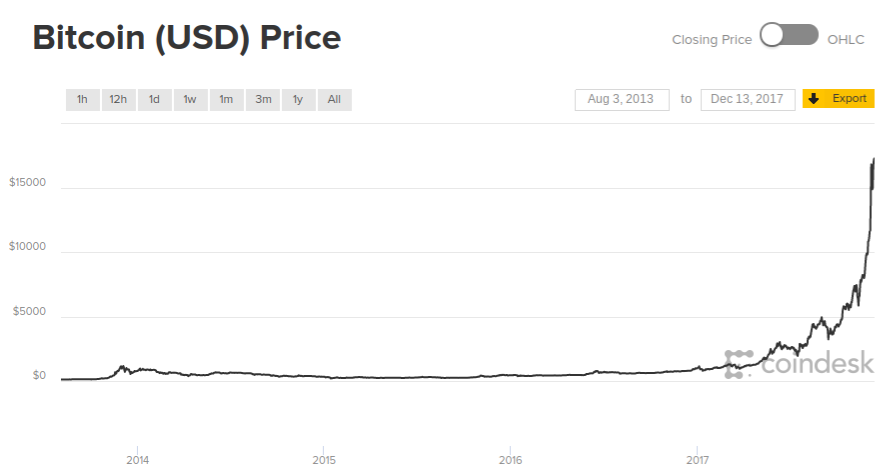
This new kind of money serves not the interests of the banking and corporate elites, or the corrupt government ministers who kowtow to them; but the people who control them alone.
We have seen Bitcoin become the most valuable financial asset in human history despite all of the harping of bankers, economist, and purported ‘experts’ of finance, economics, and money. They have declared bitcoin are a scourge, that it is ‘rat poison’ and is something to be detested. They say that bitcoin is a grievous wound against all of society, and it must be destroyed. Again and again we hear from them that bitcoin is a bubble, that it has no social value, and that it is going to ‘crash’–and yet we find that the honey badger of money continues its slog upward and to the right despite all of their raging cries.
This is by no mistake, as Bitcoin is fundamentally better at storing value than any fiat currencies in existence today. This is because of bitcoin’s fixed and known monetary supply and monetary inflation rates. More importantly however is the social consciousness and consensus that allows for bitcoin to exist and never be destroyed. People can now control their personal wealth with nothing more than the power of cryptography. Bitcoin is rewriting the entire way that money is understood and used, which will become a political conquest within the coming decades.
Saving in fiat money is for chumps
“Why would anyone outside of a lunatic asylum want to hold money? What an insane use to put it! For it is a recognized characteristic of money as a store of wealth that it is barren; whereas practically every other form of storing wealth yields some interest or profit.”
–John Maynard Keynes

Today, each and every form of fiat money is nothing more than a legal tender that holds value simply because governments command it. However, if we look over the course of history; again, and again, we see states fail, governments collapse, and their money always inflates to nothing. This is not by mistake, but by design. Just look at what has happened in Venezuela over the last few years.
What those in contemporary finance and government fail to see is that bitcoin radically departs from state-sponsored financial systems and the tyranny that they enable. For the better part of modern human history we have simply had to deal with the fact that government officials could show up at our places of business or our homes, rob us at gun point and call it legal. That governments everywhere could simply fictionalize up mountains of money and give it to their corrupt banking and corporate friends, and tell us it was for our own good.
Again and again, we see the powers-that-be prod us down the road to serfdom, and tell us it is the yellow brick road to the Emerald City. We have seen what happens to those who follow that path, and the poverty it creates for all of us.

The revolution that we have all been waiting for is finally here, and it is the radical divorce of state and money from each other. Governments were never entitled to steal the wealth of the world for themselves and for their barbaric and unholy purposes. We finally have a way to resist their tyranny and fight back with economic means alone. Just as we once saw the radical divorce of church and state fundamentally change society for the better, we will once again witness such a radical epochal change–but this time it will be from the separation of money from the state.
Those of us who hodl bitcoin know and understand that bitcoin has nothing to do with money. The true purpose of Bitcoin is to create a new form of economic power that will be the harbinger of a new society from which freedom and liberty are more than meager slogans. Bitcoin will empower a society where all economic power is outside and beyond the control of the state; and the monstrous banking and financial sectors will be vanquished from this earth once and for all. It is from this base of power that we are creating that a whole new society within the framework of the web that will allow for us to free ourselves from debt bondage, and corporate slavery forever.
Bitcoin will become the most value asset in history not only because it is a better form of money, but because of the astounding economic, social, and political power it creates. Through tearing out the economic base of the corrupt systems of fiat money; we can create a new and more egalitarian society using the power of the Bitcoin and cryptography. The banners we will raise in this new society will have the following inscribed upon them for all to see and choose to follow if they wish:
To each according to their code, to each according to their keys!
Mortgage Your House for Bitcoin
By Beautyon
Posted December 14, 2017


There are some stories floating around of people mortgaging their houses to buy Bitcoin. Does this make any sense? Are they insane? Maybe. Let’s look at it from their point of view.
Imagine this. You are a family man. You have a wife, four children, and a house with a mortgage 25% paid off. You are in a job that allows you to pay all of your bills and not very many savings, on which the interest is pitiful.
You’ve read about Bitcoin, which when you check the chart, you see is surging exponentially. You realise it actually is what it claims to be, and you understand that its size compared to the gold market is tiny.
You do the math.
Bitcoin at $16,000 could easily double; in fact there is no way that it cannot double if it fulfils just one of its potential use cases, never mind eBay and Facebook Messenger incorporating it for their hundreds of millions of users.
There is no way that Bitcoin is not going to reach $32,000. It is not possible that it doesn’t reach that number. If you mortgage your house now, at historic low rates, you will be able to pay off the loan in short order. Then you will have the Bitcoin you purchased debt free. If Bitcoin goes down after that, it doesn’t matter, because you have it free and clear. When it goes up again, you have nothing but gain.
When Bitcoin fulfils its promise, you’ll be able to pay off your mortgage, send your four children to Harvard, buy them each a house, and many other things, because you won’t be a nocoiner.

The price of a banana in Venezuela today. Their paper money is no different in nature to yours.
Remember this also. If Bitcoin does what everyone thinks it will do, in the end, fiat currency will become worthless. Paying off your mortgage will become more expensive for you when government set interest rates shoot up. As hyperbitcoinization starts, no one will want your fiat currency in exchange for Bitcoin at anything other than astronomical rates.
People who are very young, single, without any responsibilities or long term financial commitments can’t understand why someone would take what looks like a big risk by mortgaging their house for Bitcoin. They don’t have mortgages. They live out of rucksacks with just a laptop and a bag of nootropics in their pockets, and that’s perfectly fine. People with clear multi-decade burdens on the other hand, have a completely different perspective.
And they are not stupid either.
Am I telling you to mortgage your house for Bitcoin? Obviously not. I am simply explaining how other people are thinking, and why they are doing what they are doing. In a free society, people are at liberty to take risks and benefit or fail. In this case, the potential benefits are very great.
The price of Bitcoin at the time of posting this is $16,452.76 Lets see if the price doubles as I predict it will. If it does, and you’ve mortgaged your house for Bitcoin and survive hyperbitcoinization you owe me! ⤵

Fiatsplaining Bitcoin
By Elaine Ou
Posted December 16, 2017
People who summarily dismissed Bitcoin for the last eight years are suddenly super worried about weak transaction volumes. You see, no one is spending their bitcoin!
Bitcoin is in a weird position where the dollar-denominated price just keeps going…up. And because the price keeps going up, HODLers are reluctant to spend. And if no one is spending bitcoin, how can it become a currency?
This is problematic. Nobel Prize-winning blogger Paul Krugman explains why:
What we want from a monetary system isn’t to make people holding money rich; we want it to facilitate transactions and make the economy as a whole rich. And that’s not at all what is happening in Bitcoin.
Paul Krugman wants everyone to spend their money, because consumption creates wealth.
Seems reasonable, but here’s a contrarian take from Greek philosopher Dio Chrysostom:
Because of stupidity and self-indulgence, a certain people take that which they prize most highly, silver, and of their own volition send it over a long road and across a vast expanse of sea…
He’s talking about the Roman citizens, and their desire for cheap crap from China. It was the first century AD, and Rome was sending all its silver down the Silk Road in exchange for fancy clothes and rare spices. These indulgences, Dio felt, represented a huge moral failing.
Under ordinary circumstances, weaker states send silver to stronger states in the form of tribute. Paying tribute is a form of submission, it’s what happens after conquerors have vanquished your army. There was absolutely no reason for the Romans to voluntarily send silver to an inferior state, aside from sheer stupidity.
Over the centuries, the Roman Empire faced constant coin shortages as precious metals flowed east. The emperors took to repeatedly debasing the coinage until the finances of the empire collapsed.

Today we export massive amounts of money to China in exchange for consumer goods, but it’s no longer considered reckless to do so. In fact, central bankers encourage such behavior. That’s because we’re not sending China anything of value, like gold or silver. We’re sending them our own worthless dollars, ha ha!
Foreign countries use US dollars to buy up Treasury bonds, and as the bonds depreciate due to inflation, the US government effectively imposes seigniorage. Thus we exact tribute on our overseas bondhonders, without even resorting to the threat of violence.

Don’t try this at home.
When Paul Krugman says that transactions make the economy rich, he means that consumer spending makes the US government rich. The more we consume, the more debt we can sell to our trade partners, the more tribute tax we extract. There’s no limit to household consumption – if we run out of money, lenders are happy to step in. Whereas borrowers used to compete for loans on the basis of good credit, now the lenders market every opportunity to load up on subprime debt. Take out a mortgage to own the American Dream! Invest in your future with a six-figure student loan! Buy a car with 0 down! How bout financing some designer pants?
Got this ad on Instagram for $393 cotton pants available via subprime loan.
Tell me again, what are Millennials killing? pic.twitter.com/Z3YLlmCsjk
— Susie Cagle (@susie_c) June 16, 2017
Krugman refers to Bitcoin as “golden cyberfetters” because HODLers are locked into a virtuous cycle of saving and frugality (he calls it money-hoarding). Bitcoin, for all its features, has one fatal flaw: We can’t spend our way to imperial prosperity.
The New EU Attack on Bitcoin.
By Beautyon
Posted December 16, 2017


The EU has launched a new attack on Bitcoin, which is the direct result of a European Central Bank report released in 2012. Beneath is an analysis from that date, pointing out the flaws in the report. The EU is not philosophically, intellectually or technically competent to draft Bitcoin regulations, and of course, any such regulation is unethical and illegitimate by default.
Judith Sargentini who lead this absurd, disastrous and unethical push to regulate Bitcoin is a radical fundamentalist anti-capitalist, Green Left, Socialist Environmentalist, who is utterly predisposed to hating everything about Bitcoin, and will do anything to stop it.
She is also a vegetarian, which is anti-Bitcoin.¹
We can expect many attacks on Bitcoin from the parasitic class that feeds on the NGO ecosystem, that can exist only in a fiat currency world. What deluded and extremely violent women like Sargentini don’t understand, is that the Bitcoin world will be a 100% NGO world, and there is nothing she can do to stop it coming to pass. These people don’t understand economics, the market, software, capital, networks or how anything works; this is why they could never form a coherent plan to stop Bitcoin, even if it were possible to create one.
The European Central Bank Report on Bitcoin: You Can Smell Their Fear
Tuesday, November 6th, 2012
The European Central Bank is one of the most destructive entities ever unleashed upon the peoples of Europe. Its Keynesian fiat currency is backed by nothing, is defrauding millions, is by design stealing value from the people who are forced to use it under threat of violence, and is doomed to fail and collapse like all other fiat currencies before it. In the history of the world, there has not been a single fiat currency that has not collapsed, and the Euro will be no different. The average lifespan of fiat currencies has been 16 years, and the only exceptions to this are the currencies that have extra momentum for political reasons.
The so called ‘bailouts’ in the Eurozone crisis are nothing more than the theft of value from millions of people to prop up mathematically unsustainable socialist economies. Greece defaulting and the other bankrupt states that are sure to follow, are just the beginning of this process. Even now, central banks world-wide are repatriating their gold in the knowledge that gold is money, and an unprecedented collapse is about to unfold with all paper currencies going to hyperinflation. For an insight into this, I direct you to read, “The Case for a 100% Gold Dollar” by Murray Rothbard and “What Has Government Done to Our Money?”, also by Murray Rothbard. There you will find the history of the world wide emergence of worthless fiat paper currency pyramided on the unconstitutional, gold-free, privately printed US Dollar.
You should also look at the last speech by Margaret Thatcher given in the House of Commons as Prime Minister, where sheexplains to the collectivist dullards why Britain should not join the ‘ECU’. Of course, decades later, as the Euro implodes, this position is absolutely vindicated.
Now, with that background in hand, it is with a delicious feeling of schadenfreude that we read a PDF report released by the ECB on Bitcoin and the notional game money “Linden Dollars”. The fact that this report lumps together these two things demonstrates a fundamental misunderstanding of what Bitcoin is. If you replace the phrase ‘Linden Dollars’ with ‘Monopoly Money’, the logic remains intact. Bitcoin is something new, revolutionary, decentralised, uncontrollable, money like and almost uncategorizable if you take into account the differing opinions on its true nature. Linden Dollars are none of those things. More on that below.
We will now cherry pick the parts of this report that jump off of the screen. For sure, this report is one of the most serious ever written coming from a high level government entity. For certain, the penny has dropped in the circles of power about what Bitcoin means to the future of money and its potential threat. Without a doubt, they are thinking carefully about how to stop it. They must know that if they attack it, this will attract attention to it, and it could go viral and outflank them. They must have made the connection between BitTorrent powered pirated movies and Bitcoin, and the absolutely futile and useless struggle the Copyright lobbyists have been mounting against it. They know that the best they can do is put off mass adoption and try to inveigle their way into a position of intermediating transactions or vampirizing the in and out points as a way of remaining relevant. In the light of this, it should be absolutely clear that implementing anything that retards the flow of Bitcoin or the exchanging of fiat currency into it is insane, because it gives Leviathan more time to wake out of its ignorant stupor and mount a withering attack.
And now, on to the report.
A virtual currency can be defined as a type of unregulated, digital money, which is issued and usually controlled by its developers, and used and accepted among the members of a specific virtual community.
This is not correct. Virtual currencies are tightly regulated; by the market, and the software that orders those markets. This is the only regulation that matters. A more accurate description would be extralegal, since there is no law governing Bitcoin or systems like it. Bitcoin is usable not by a ‘specific virtual community’ but by everyone everywhere.
This might seem like nitpicking on the surface, but it is not. The definitions used to give meaning to things in the real world shape the perception of them and the ability of men to control other men. By calling Bitcoin a “virtual currency” or “money” you immediately set up the pretext that they should be regulated by the State. Even in absentia of actual laws controlling this new phenomena, the default position of some is that regulations, that do not exist, must be obeyed. This idea is completely false, and is a result only of the language used to describe Bitcoin, not the nature of Bitcoin itself, which is elusive. Bitcoin is outside of the law. There are no laws anywhere governing its use, and so there are no laws or even regulations to obey when you deal with it or trade in it.
Depending on their interaction with traditional, “real” money and the real economy, virtual currency schemes can be classified into three types: Type 1, which is used to refer to closed virtual currency schemes, basically used in an online game; Type 2 virtual currency schemes have a unidirectional flow (usually an inflow), i.e. there is a conversion rate for purchasing the virtual currency, which can subsequently be used to buy virtual goods and services, but exceptionally also to buy real goods and services; and Type 3 virtual currency schemes have bidirectional flows, i.e. the virtual currency in this respect acts like any other convertible currency, with two exchange rates (buy and sell), which can subsequently be used to buy virtual goods and services, but also to purchase real goods and services.
This is an error. The true classifications and important distinction between virtual currencies has to do with who controls them, how they are distributed and the software used to interact with them. This is why you cannot lump Linden Dollars in with Bitcoin. The two are incompatible and very different in architecture.
Bitcoin is unique, both in terms of how it works through distributed peer clients and its Austrian School inspired money supply limit. These are the only things that really matter, not what you can or cannot do with them. Linden Dollars are a threat to no one. Once Linden Labs is shut down and its owners get theBernard von NotHaus treatment the problem of Linden Dollars goes away. Locking up the developers of Bitcoin will, on the other hand, not stop Bitcoin any more than locking away movie pirateshas made a single dent in the level of BitTorrent traffic on the internet.
Virtual currency schemes differ from electronic money schemes insofar as the currency being used as the unit of account has no physical counterpart with legal tender status.
Not quite. The differences between virtual currencies and electronic money are as follows. Virtual currencies (like Linden Dollars) are made up of entries in a centrally controlled database saying who has a certain amount stacked against their user name. Electronic money is cash like in that it is made up of digitally signed certificates that can be transferred between individuals without reference to or permission from a central authority.
It’s also worth bearing in mind when thinking about electronic money schemes versus virtual currency in the terms set down in this paper, that the State has sanctioned one and not the other. Electronic money schemes allow you to move fiat currency between points, that is itself, backed by nothing. The means of doing this is by shifting accounting entries in ledgers. The fact that electronic fiat currency is backed by nothing is absolutely identical to the true nature of both Bitcoin and Linden Dollars. The Euro is not backed by gold or anything else; the main difference between the money of Linden Labs and the Euro is that Linden Labs does not use force to make people trade with its ‘money’, whereas the ECB does.
The issuer of the currency and scheme owner is usually a non-financial private company. This implies that typical financial sector regulation and supervision arrangements are not applicable.
This is hilarious. It is the financial sector regulation and supervision arrangements that have brought Europe to its knees, that has the Greeks out in the street throwing molotov cocktails and the Italians with a bank appointed apparatchick at the helm. If anything, private supervision of currencies or even better as in the case of Bitcoin, computer supervision, is infinitely superior to ECB regulation and supervision. At least then either the profit motive or an unalterable mathematical rule will be the sole arbiter; force is not a part of the equation, and everyone can choose what currency they want to accept on a level playing field. The ECB is against this, obviously, and will eventually advocate the use violence to stop free people transacting in private with Bitcoin. They have admitted as much in this report. They are going to have a very hard time shutting down Bitcoin however, if it scales to the size of BitTorrent. Once again, anything, any business practice or business model that prevents this scaling or which slows rapid adoption or increases friction should be shunned.
the link between virtual currency and traditional currency (i.e. currency with a legal tender status) is not regulated by law, which might be problematic or costly when redeeming funds, if this is even permitted.
These people, surely, must be aware of eBay’s dispute regulation system. This system allows participants in eBay’s service to resolve disputes without having to resort to the law. This has worked spectacularly well, and there is no doubt that a self regulating reputation based system will emerge to reduce Bitcoin fraud to a tiny fraction. No one needs the ECB or the State to protect them or regulate the market. This is a demonstrated fact. What the writers of this report are doing here is making an appeal to fear. “If Bitcoin is not regulated, people will die”.
Lastly, the fact that the currency is denominated differently (i.e. not euro, US dollar, etc.) means that complete control of the virtual currency is given to its issuer, who governs the scheme and manages the supply of money at will.
Not true of Bitcoin, obviously, and in any case, the ECB and the Federal Reserve have complete control over the currencies they force people to use, and look at the disasters and mass theft these entities have engineered. The supply of money should not be in the hands of a violent monopoly. Bitcoin and Linden Dollars do not suffer from this flaw.
The above quotes were from the introduction. Now we get to the first part of the report proper, that deals specifically with Bitcoin. They trot out the usual FUD about Bitcoin, probably because they do not have the expertise or insight to understand it fully, though this seems unlikely, since the report is well researched, and smacks of extremely capable and knowledgeable authors.
Bitcoin is astonishing and controversial without ever having to mention the edge case uses it is put to today. People who mention these fringe uses in serious contemplation of Bitcoin do not understand what it is and how revolutionary its design is, and they discredit themselves by doing so. FUD is a crutch for the weak minded and computer illiterate, and completely out of place in this document.
The problem with the US Dollar is not that it is used by criminals. The true problem with the US Dollar is that there are too many of them, and there is no natural control over their supply. When the US Dollar was a bearer certificate promise to a quantity of gold, there was a natural check on the money supply; now that that is gone, it is literally worthless, and is only accepted because the State uses force to mandate its use for payment of taxes and as a unit of account. It is identical to the tally stick in its essential nature, and differs only in that it will not last as long as the King’s wood did.
The assessment covers the stability of prices, of the financial system and of the payment system, looking also at the regulatory perspective. It also addresses reputational risk concerns. It can be concluded that, in the current situation, virtual currency schemes:
- do not pose a risk to price stability, provided that money creation continues to stay at a low level;
They might not now, but they have a huge potential to, especially currencies based on Bitcoin. If Bitcoin is used only as a way to move money, and not as money itself, it poses no threat to any money system. If however, people start to use it as money, it will eat away the importance of State issued fiat currencies and the actors who regulate them.
- tend to be inherently unstable, but cannot jeopardise financial stability, owing to their limited connection with the real economy, their low volume traded and a lack of wide user acceptance;
This doesn’t make any sense. You cannot claim that Bitcoin tends to be inherently unstable, because it is not old enough for a sufficient record to be examined and its nature is not even well understood. In any case, a man looking at a chart of the value of the dollar could assert that it is not good money, and that it is unstable. And these are the people who cast doubt on Bitcoin?
- are currently not regulated and not closely supervised or overseen by any public authority, even though participation in these schemes exposes users to credit, liquidity, operational and legal risks;
The fact that they are not regulated is a benefit, not a risk. How the ECB regulates (or more correctly, mismanages) the Euro is the best demonstration of why they should not be in charge of money. The risk people choose to expose themselves to is not a matter for the ECB or the State. Legal risks are a side effect of the State, and can be avoided by private dispute resolution, as we have seen with eBay.
- could represent a challenge for public authorities, given the legal uncertainty surrounding these schemes, as they can be used by criminals, fraudsters and money launderers to perform their illegal activities;
It is a challenge on several levels. First, it is a challenge to the supremacy of Keynesian State issued fiat currency. Once people are made to think about what money is and where it comes from, and how it should work in a perfect world, the Emperor’s New Clothes Effect is sure to kick in and then a societal rejection of government issued fiat currency is sure to follow, accompanied by howls of derisive laughter.
There is no such thing as money laundering: “Money laundering is a euphemism for transactions out of view of State surveillance. Any transaction that takes place outside of State control is essentially “Money Laundering” according to the State.” –Blogdial.
Libertarians consider fiat currency to be criminal fraud, on a massive scale, and this is an absolutely correct assessment.
Bitcoin is like any other thing that can be used for more than one purpose. Anyone citing criminal activity as a pretext for regulation, activity which is always a minority case, is not thinking clearly, or is deliberately trying to hype up a pretext for regulation.
- could have a negative impact on the reputation of central banks, assuming the use of such systems grows considerably and in the event that an incident attracts press coverage, since the public may perceive the incident as being caused, in part, by a central bank not doing its job properly;
A negative impact on the reputations of central banks would be very beneficial to the population at large, and this is an extraordinarily frank admission. If this paper were private and sent only to ECB insiders we could expect language like this, but to have it published in the open is either a mistake or an act of hubris. They don’t think anyone is paying attention…. absolutely shocking.
The central banks have an unearned reputation, which they have bought with violence and surreptitious theft through inflation. The ignorant public trusts them and holds them in high regard only because they have been tricked and brainwashed and have never had an alternative placed before them. The adoption of local currencies like the Totnes Pound demonstrates that people are adaptable and are willing to put at least some of their money into local currencies when the case is made to them. This means that if Bitcoin starts to be used by a large number of people and businesses, it is inevitable that it will eat a large proportion of the transactions made in the central bank mediated system’s fiat currency. This will be done because it is private, easy, regulation free and you can send the money literally anywhere in the world to any device for nothing.
- do indeed fall within central banks’ responsibility as a result of characteristics shared with payment systems, which give rise to the need for at least an examination of developments and the provision of an initial assessment.
This is a pipe dream. Bitcoin will not be regulated any more than BitTorrent is. The State might eventually regulate the few sycophant run entry points, but after that, it will be impossible for them to regulate the peer to peer transactions that happen between individuals and the pure entrepreneurs that serve them.
If Bitcoin becomes big enough to warrant regulation, it will already be too late. The best they will be able to do is tax the conversion of their fraudulent fiat currency as it enters the gravity well of the black hole of Bitcoin, where money goes in but never comes out. Once all the money has disappeared into Bitcoin, a new economy will emerge that is beyond the reach of the State, which will have to resort to fleecing the computer illiterate, the compliant and the dealers in real goods via a vicious financial policing system that monitors the movement of all goods and money. Think about it.
This report is a first attempt to provide the basis for a discussion on virtual currency schemes. Although these schemes can have positive aspects in terms of financial innovation and the provision of additional payment alternatives to consumers, it is clear that they also entail risks. Owing to the small size of virtual currency schemes, these risks do not affect anyone other than users of the schemes.
This report is an alert, transmitted to all Globalists, Statists and Central Bankers, world-wide. Bitcoin is serious business. It is not a fad, it has not been ‘hacked’ and has not crashed, as the ignorant Statist mouthpieces have tried to claim whenever a vendor has had a problem.
Bitcoin represents a real systemic threat to the world fiat currency system, not only because it cannot be easily regulated or shut down, but because it calls into question the very nature of money and jurisdiction. It questions the need for the ECB and its fraudulent “Euro”, the Federal Reserve and its “Dollar”.
The risks of Bitcoin are only to the ECB and the Fed. The risk to the individual users is comparatively small. If a few users get hacked or lose a few tens of Bitcoins, who does this affect? Bitcoin goes on, as will the trillions of transactions made in it. Every hack event makes the Bitcoin client software ecosystem stronger and less vulnerable. As Bitcoin gets stronger, confidence in it will increase, as will reliance upon it to move money from A to B.
It’s interesting that they say the risks do not affect anyone other than the users of the schemes. If this is true now, why will it not be true if Bitcoin takes up a third of all transactions world-wide? Why is it not important at a small scale, but important at a large scale? Is this report really asserting that if a few people get hurt, “it doesn’t really matter”? This gives you a peek into the ethics of these people, “as long as it cannot displace us, we do not care about who gets wiped out by Bitcoin”. This makes any comment the ECB has to offer on Bitcoin with regards to “harming society” absolutely hollow.
As a consequence, this report largely relies on information and data gathered from material published on the internet (see the Annex for references and further reading), whose reliability, however, cannot be fully guaranteed. This places serious limitations on the present study.
This is an absolutely ridiculous disclaimer. In preparation for writing this report, these people should have used Bitcoin themselves, and then applied their economic theories to it, after examining it and the services that are on offer. That is all you need to understand it fully, and its implications. The reliability of sources on the internet is irrelevant; Bitcoin is not theoretical, it is live and running right now. It is run on software that can be examined in fine detail.
I am going to forgo picking out all of the mistakes in this paper, such as this one:
Virtual currencies resemble money and necessarily come with their own dedicated retail payment systems; these two aspects are covered by the term “virtual currency scheme”.
I assume that as a reader of BLOGDIAL, you know what money is, and therefore know that a virtual currency is not and does not resemble money. I will not be going over this again; what I will do, is go straight to the most interesting parts of this report, leaving out the glaring errors and the sections that the report gets right, because these are not of interest to us. It is interesting however, to note this section:
Modern economies are typically based on “fiat” money, which is similar to commodity-backed money in its appearance, but radically different in concept, as it can no longer be redeemed for a commodity. Fiat money is any legal tender designated and issued by a central authority. People are willing to accept it in exchange for goods and services simply because they trust this central authority. Trust is therefore a crucial element of any fiat money system.
What they are saying here is that money is money today, simply because people say it is. Anyone paying attention closely will be flabbergasted by this admission. The ECB is admitting that the money it issues is worthless, and it is used only because people have faith in the issuers of it. I will leave it to you to ponder wether this makes the ECB a sort of church, with the Euro its holy sacrament. Needless to say, this makes Bitcoin deeply sacrilegious.
Also, they say that money is money because, “People are willing to accept it”, yet we know that it is money by force because it is fiat currency, “fiat” meaning arbitrary decree. People who try and conduct all of their business in gold, for example, get into hot water, even if it is gold issued by the country in which they live.
By this admission, the following line is a lie, where the report says that the Euro is a:
Store of value: money can be saved and retrieved in the future.
when clearly it is not. Not only is the Euro not money, but it is not a good store of value because the supply of it is not fixed. It is inflated by design, meaning that it is a very poor store of value.
Money is not a “social institution”, as the report claims. The ECB is a social institution. Money is the property of individuals; it does not depend on any institution for it to come into being or have its value (Bitcoin being the latest example of this, if indeed it is money; the FSA in the UK says it is not) and the best form of money is gold. Gold in your hands is separate from any issuer, has a value in and of itself, “inherent value” and is not a part of “Society” or a “social institution” or any other fictional Socialist nonsense.
Money has not been affected by technological innovations; it remains exactly the same in nature, just as man’s nature has not changed because he can make a phone call. This is a fundamental, though not surprising, error of the authors of this work.
“a virtual currency is a type of unregulated, digital money, which is issued and usually controlled by its developers, and used and accepted among the members of a specific virtual community”. This definition may need to be adapted in future if fundamental characteristics change.
In other words, they have no good definition of Bitcoin. This is true not only of the ECB, but of everyone who is talking and writing about it. Is Bitcoin money or is it not? Is it a distributed ledger, or is it ‘digital gold’? One thing about Bitcoin is true and everyone can agree on this, it is hard to get Bitcoins, no matter what you think they are. This is being addressed.
We have written extensively, consistently and coherently on the subject of what Bitcoin is on BLOGDIAL. I suspect that the same forces that cause some people to believe that Bitcoin is money are going to come into play when the ECB decides to try and design policy concerning it. Bitcoin to them, is a threat. It is a money, and it should be either killed or regulated so that it has no teeth.
This of course, does not change the nature of Bitcoin; Bitcoin is like a mirror that reflects the ideology of the looker. An Aparatchick will see something that needs to be regulated. A Statist will see something that requires compliance. Entrepreneurs see an exciting business opportunity. A Libertarian will see another neutral tool for her toolbox, to go along with her hammer and coping saw.
Until the big idea of Bitcoin is unleashed, what people think Bitcoin is will remain in flux. All we can say about it that is true is related to the clients, the network software and the statistics to do with processing power and other plain facts. Trying to pin down Bitcoin to one definition is like trying to say what the internet is. It is a series of tubes. A way to send mail. A way to make phone calls, and so many other things, but it is really whatever you want to do with it, and there is always another protocol that can be developed and used on it.
The theoretical roots of Bitcoin can be found in the Austrian school of economics and its criticism of the current fiat money system and interventions undertaken by governments and other agencies, which, in their view, result in exacerbated business cycles and massive inflation.
For certain, this is the most delicious part of this document. It will have the Bitcoin hating Austrians blowing smoke from their ears, as the dastardly ECB puts the blame for Bitcoin’s creation and design upon its creator’s correct conclusions about the true nature of money gleaned from a careful study of the Austrian School. The bigger Bitcoin grows, the more it confirms that the Austrians were right. Or will it confirm that they are wrong? I suppose it depends on who you ask!
Note how the authors detach themselves from Austrianism by using the phrase, “in their view”. They are saying here that the Austrian School is not correct, and that it is just a “view”. This doesn’t make any sense. Economics cannot be two things at once, and as we have seen, the wrong ideas of the Statist “paper moneyists” and Keynesians has destroyed every paper currency that has ever been created. The Austrians are correct, because history demonstrates it. It is not opinion or theory, but fact.
It is a great pity that the major voices in the Austrian School have not picked up on and championed Bitcoin. It’s almost as if they have worked diligently and brilliantly for decades determining exactly what money is, but now that the 21st century has crept up on us all, they cannot look outside of this definitive study at the world as it profoundly changes around them, and apply their insights to this truly new and wonderful innovation.
Perhaps now that the ECB has made this connection, they will be forced to either ramp up the irrational attacks on Bitcoin, siding with the ECB, or they will concede that Bitcoin is extremely interesting and serious, and perhaps even a form of money. Either way, none of this has any effect on the adoption of Bitcoin, and is more of a form of entertainment, as this insightful commenter describes. Bitcoin, like the moon landings, will succeed no matter what the pronouncements of the people who say it is impossible are.
However, the system has been accused of leading to a deflationary spiral. The total supply of Bitcoins is expected to grow geometrically until it reaches a finite limit of 21 million. If, however, the number of Bitcoin users starts growing exponentially for any reason, and assuming that the velocity of money does not increase proportionally, a long-term appreciation of the currency can be expected or, in other words, a depreciation of the prices of the goods and services quoted in Bitcoins.
The only people who level the accusation that Bitcoin is deflationary are the Keynesians that believe the supply of money must increase over time, and that this doesn’t matter, even though it penalises savers because, “In the end we are all dead anyway”.
A fixed money supply is in fact, a good thing. It means that you can save money and rest assured that when you use your savings, the money will have the same purchasing power as when it was stored. Naturally occurring money like gold has, for all intents and purposes, a fixed supply. That is why the price of goods denominated in gold when displayed on a graph against time is a flat line, over decades, and the only fluctuations are to do with natural disasters like locusts destroying crops, and other natural supply altering events that change the amount of goods on the market.
People would have a great incentive to hold Bitcoins and delay their consumption, thereby exacerbating the deflationary spiral.
This is another Keynesian fallacy, see Rothbard for a refutation of the imaginary “Hoarding Problem”.
Secondly, Bitcoin is not the currency of a country or currency area and is therefore not directly linked to the goods and services produced in a specific economy, but linked to the goods and services provided by merchants who accept Bitcoins. These merchants may also accept another currency (e.g. US dollars) and therefore, the fact that deflation is anticipated could give rise to a situation where merchants adapt the prices of their goods and services in Bitcoins.
This is interesting. Because Bitcoin is not linked to the currency of any country or currency area it is not directly linked to the goods and services produced in a specific economy? Why is gold linked but Bitcoin not linked? Gold is acceptable everywhere on earth, and so is Bitcoin… this is a very odd argument; is there a currency that is linked to anything, anywhere? Surely this is only a matter of what people will accept in payment, and there are no actual links to anything between currencies and goods. The only exception to this is compulsory taxation, where the State will only accept its own currency in payment of taxes.
Furthermore, if Bitcoin is thought of only as a way to transfer money and not as money in and of itself, this problem goes away. Merchants would set the price of their goods in Bitcoins dynamically by realtime API calls to the exchanges, and when the payments via Bitcoin are made, exchange their received Bitcoins into gold or fiat currency directly upon receipt. There is no reason why a merchant should want to hold on to Bitcoins, they are of no use to the merchant, and she exposes herself to risk of theft, Bitcoin price fluctuation and attacks from the ECB. It also means that in her business processes, she can account only for the fiat money of the State in her annual returns and tax forms and not for the ill understood Bitcoin she has received.
If Bitcoin is not treated as money, all the imaginary problems associated with it, “compliance”, “Know Your Customer”, “Anti Money Laundering” regulations and all of that other utter nonsense goes away. It becomes nothing more than another protocol layer on top of the internet, that does not need regulation or interference to do its job; moving money from A to B. When you think about it for a second, its clear that the idea of regulating Bitcoin is as stupid as the idea of regulating email.
However, it is also true that the system demonstrates a clear case of information asymmetry. It is complex and therefore not easy for all potential users to understand.
I laughed out loud at this. It’s clear that the ECB does not understand what money is, and yet they claim that Bitcoin is complex? Is it really more complex though? How many people in the street understand how GSM works, and does this affect their ability to use mobile phones and make calls to anywhere on the globe? People don’t even need to remember telephone numbers anymore thanks to the design of the phone’s address book (which is not actually a real book. Do you understand what I am getting at?); why should it not be as easy to send money between mobile phones as it is to send a text message to an address book entry?
The same can be said of every technology in use today; you do not need to understand catalytic cracking to be able to drive a car, and you do not need to know about public key cryptography to understand what the green lock in your browser means. No one in the middle ages would have been able to use a mobile phone, yet today there is no one alive that cannot be made to understand it in a few minutes. The same is true of Bitcoin. When the breakthrough service arrives that simplifies Bitcoin to the level of a mobile phone’s ease of use (Think Apple), this argument against it will be moot. It is only a matter of time and development and funding.
The paper then goes on to roll out some pathetic fallacies, of the kind we have read before, “because we do not know who wrote Bitcoin, it cannot be trusted”. This is utter nonsense. Bitcoin is software that can be examined by any competent person. Just because the authors of this paper are incompetent software illiterates, does not give them license to assert that Bitcoin, “works like a pyramid or Ponzi scheme”. They should have hired a software developer to assess the source code for them so that they could speak from a position of authority on this matter, instead of relying on hearsay from the internet. Very shabby, and quite stupid.
As for the ‘problem’ of getting out of the Bitcoin system should it collapse, this is not a problem if Bitcoin is treated as a money transmission protocol and not money. It is up to entrepreneurs to develop business models and services that treat Bitcoin according to its true nature to make this problem go away. If no one is holding Bitcoins and the system collapses no one gets hurt, except for the small number of people with Bitcoin in transit at the precise moment it collapses. Everyone else, the billions of people who used it to move trillions from A to B will have lost nothing whatsoever.
Further action from other authorities can reasonably be expected in the near future.
Oh really? Do your worst.
You will not be able to stop Bitcoin, any more than you can stop BitTorrent and pirated warez which have been around for decades, since the days of the BBS. Trillions of files have been copied, billions of song files, billions of movie files, hundreds of millions of PDF files of books. There is NOTHING you can do to stop it, and it will NEVER cease.
Bitcoin is going to spread like wildfire, once people start to use it and intuitively place it somewhere between cash and text messages. It will spread to every web browser and every mobile phone and tablet.
And there is NOTHING you can do about it.
- Attacking the exchanges will not work
- Arresting individual Bitcoin users will not work
- Threatening people with propaganda will not work
Just ask the MPAA /RIAA how well their anti ‘piracy’ campaigns have been going over the decades they have been trying to stop people from copying files. Every few years there are software improvements that strengthen the ecosystem; from Napster to Gnutella to BitTorrent to BitTorrent Magnet Links to Tracker-less BitTorrent to BitTorrent in the Cloud, every year there are new innovations making the BitTorrent ecosystem more resilient and widespread. The same will be true of Bitcoin.
All the show trials, disgustingly harsh gaol sentences and million dollar fines of 70 year old grandmothers have not stopped BitTorrent, and these techniques will fail with Bitcoin also.
The world is changing. Thanks to the internet, people are not only learning and sharing information as never before, but they are also using the same network to build tools that have never and could never exist before the internet. Adapt or die is the catchphrase that applies to both the ECB and the MPAA / RIAA. You must accept the new reality. It is not going away, and there is nothing you can do about this without destroying everything that is now dependent on the internet.
[1] This is an inside joke. Now you know something new!
If you like the content and feel so obliged to send some love via BTC donations you can do so at the address below:↴

Why Bitcoin should stay the ‘same’.
By Aleksandar Svetski
Posted December 19, 2017

Same = Safe = Secure = Stable

Disclaimer:
“Staying the same” is an exaggeration. Not changing too quickly would be a more accurate interpretation of what I mean.
Moving along…
The fact that bitcoin isn’t changing things & moving too quickly can actually be viewed as a strength.
Let me explain what I mean, with an example in contrast: Ethereum.
Ethereum is the premier example in the crypto-sphere of the Zuckerberg adage: “move fast & break things”.
Ethereum is a global, decentralised, development platform, where transactions are powered by gas, which is priced in ether.
Their goal is to build a faster network, a more robust & scalable development platform, and to evolve. Put simply, their #1 priority is innovation.
Ethereum & the real dev community isn’t necessarily interested in speculation, or building / protecting the value of the networks’ currency.Their currency (ether) exists to support the network (Ethereum / EVM).
They want to make the protocol faster, smarter & better — and if it means things break and shit happens along the way, then so be it. (obviously not that carelessly, but I’m trying to make a point here..ok)
With bitcoin, it’s the other way around.The protocol exists to support the currency.
So in this scenario you don’t want too many changes. You don’t want to change something in the protocol that might screw up the store of value that has accumulated thus far.
Changes, adaptations, adjustments, etc are all risks & they need to be carefully examined before they occur. Much more rigour needs to go into the process of agreeing to & making changes.
Think about it this way. Bitcoin is where u want to store your money & have your own sovereign ownership over it.
It’s your money.You own it.You don’t want anyone to touch it.
What you bought yesterday, last year, the year before should be the same (or basically the same) as it is tomorrow, next year & the year after.
Similar to Gold. A big part of it’s value derives from that fact that it was what it is , it is what it is & it will be what it is. It’s boring, yes, but safe.
Bitcoin’s similarities to gold (in that sense) can thus be view as a strength, except it obviously comes with a myriad of other attributes that make it so much more valuable, ie; transferability, portability, divisibility (and you could probably also argue superior homogeneity & fungibility).
So whilst there may be “scaling” issues with bitcoin, whist there may be slower transactions, whilst it may not be the cheapest & fastest network out there, it’s still the most secure network, it’s got the largest network effect, the largest community, the most infrastructure & it remains the cornerstone of this entire industry.
The argument that bitcoin is dead is just dumb. The argument that it’s not useful is also dumb.
It’s evolving into a store of value whilst becoming the reserve asset (or reserve currency) of the space.
We have options!
This is the best part about the new economy of money. We have options.

Don’t mind the coins..I just needed an image that looked cool..
If you want to make fast, small, “free” transactions, eg; $1 — $2, or $100 — $200 then you can use something like Dash, Litecoin, or Bictoin Cash.
If you want to build a new, decentralised application, you have Ethereum, Ubiq, Ethereum Classic, EoS, etc.
If you want private transactions, you have Zcash, Monero, PivX, Sumocoin.
If you want to store your money, and make sure it’s secure, you have BTC.
The point of the crypto “market” is that you have CHOICE.
Exchange is fast, easy & almost free (especially when compared with moving between fiat currencies) so in crypto land you have the ability to choose the coin (or currency) for the application (buy food, buy a car, invest in an ICO, tip someone, whatever) and you can always come back to BTC which will (or should) remain basically the same. And secure.
In Conclusion
None of this is a zero-sum game. We’re seeing the birth of a new field of governance, money, exchange, transactions & communication.
You have more choice, less fees, more use cases & definitely the force to transform the future. The most important thing we can all do is continue to learn about it, support it, use it & encourage others to do the same.
Hope you got some value out of this post.
Enjoy the rest of the week!
___________________________________________________________________
If you did enjoy it, please show it some love, give it a clap (or a few) and pass it around to anyone you think should have a read.
Some of my stuff is a little rough around the edges, but it’s done that way to hopefully jolt people into think clearer / deeper into what they’re doing.
Hope you got value out of this post!
Aleks
___________________________________________________________________
You can also follow me here:
| [**Aleksandar Svetski | Professional Profile | LinkedIn**_View Aleksandar Svetski’s professional profile on LinkedIn. LinkedIn is the world’s largest business network, helping…_www.linkedin.com](https://www.linkedin.com/in/alekssvetski/?ref=hackernoon.com) |
Contact Aleksandar Svetski_I work with people on Earn.com_earn.com
Bitcoin Year-In-Review 2017
By Pete Dushenski
Posted December 21, 2017
As with the 2014 Edition, somewhat stillborn 2015 Edition, and triumphant 2016 Edition, it’s that time of year again when we review the past twelve months and take stock of what The Most Serene Republic of Bitcoin has accomplished. Without further ado :
If I missed something, don’t be shy! History is still being written.
- Compare with a 40% spanking in 2016. Too volatile! Too crashing!!1 Better make some “bitcoin” futures and settle them in cash. That’ll solve all your problems. ↩
- Difficulty increased from 317
688400354 to 1590896927258 while hashrate increased from 2274102150 GH/s to 11388083`790GH/s. ↩ - Instant Bitcoin transactions are in the order of 900 satoshis per byte as of this writing, which works out to 0.002 BTC for a median 226 byte tx. That’s about $34 Trumpbucks, which seems high compared to the freeeeee transactions of yesteryear, but BTC still requires fewer forms to fill out, fewer hours at the bank, and just minutes instead of weeks for the receiver to receive. SWIFT and the rest of its necrotic fiat infrastructure are still dead in the water even at 10x the BTC tx price. ↩
- Bigger bloxx! Lower fees!1 The end result was abject failure. BCH is now trading at half what it did at launch relative to BTC. But if you still haven’t cashed out, there’s still my open offer to broker your nearly worthless BCH into sexy, sexy BTC. Thinkaboutit. ↩
- For any of the Three Little Pigs building their straw houses on this miner-empowering lulzfest : inb4 toljaso. Also, TRB still doesn’t recognise your existence. ↩
- Server hosting troubles abounded in the Republic in 2017 and news service provider Qntra was tragically caught in the crossfire. ↩
- Told you there were server hosting troubles! Phuctor was previously hosted somewhere in the Baltics but the whole hosting business model seems to select for varying degrees of scamminess and ineptitude. Phuctor was not immune from this. ↩
- In light of the dim prospects for Qntra in particular and mankind in general without proper server hosting, BB took it upon himself to leave Egypt’s Land in a laudable effort to establish a WoT-worthy ISP. ↩
- Phew! When I won the bet on March 15th, BTC was maaaaybe $1200 and none of us fully anticipated just how much more worthless USD would become in 2017 (see footnote i). Needless to say my liability would already be USD$ 282`150 as it stands today were not the pain plan already well underway. ↩
- shinohai was added under the title “Baron Titsbare” and Framedragger was added as “Lord Scanner” before the latter moved countries this summer and has now been essentially dark since July with only a single sign of lyf in October. mike_c was removed from the fourth Lordship list not for working for OkCupid per se, but for having been largely absent from channel discussions for, as MP put it, many months. ↩
- It was previously fixed at 1 ECu = 1 satoshi and it’s now 10-to-the-satoshi with further inflationary events all but assured. And would you believe that this is still a better deal than USD ? ↩
- It was record-setting at the time. Given the new lobbesbot function, this is a record that may well stand the test of time. ↩
- The robots tookurjerbs!!! Hats off to lobbes for the fine work. Let the bots do the drudgery, even if it was kinda fun drudgery. ↩
- Znort, who beat me in The Great Auction, found the continued management and operation of the parimutuel betting site worth less than the bother. Hopefully she made her 86 BTC’s worth. ↩
- The Kickstarter campaign of 2017 was very much the “Initial Coin Offering.” Few if any delivered products or made any meaningful progress towards that end despite their prodigious use of blockchain technology. Weird, huh ? Maybe that talking head on BNN didn’t know what the fuck she was talking about after all. It’s a thought. ↩
- In minor milestones for TRB, I even submitted my first patch : getpeerinfo. ↩
- Following discussion in the forum, the point were laid out thusly. ↩
- An “extremely early” draft at that. FFA is leading toward this future. ↩
- PeterL, ben_vulpes, and sina all independently crafted their own brews. ↩
- Stanislav wrote a “fits-in-head” set of routines for multiple-precision arithmetic to replace OpenSSL and other similarly unauditable atrocities. The first three chapters of FFA have already been published but more are expected. ↩
- ben_vulpes, diana_coman, and PeterL all took successful cracks at the MP-proposed problem. ↩
- Where Taleb shied from the light, I entered stage right. ↩
- Efforts to test the fully auditable True Random Number Generator on MacOS and OpenBSD were met with misery and confusion. Only Linux was up to the task. Thank goodness for diversity! ↩
- diana_comanreleased an important library for Eulora communications. ↩
- There’s at least 1 BTC up for grabs. Y’know, in case you’ve got kids to feed. That’s also a lotta ramen! ↩
- If you thought the 1 BTC for the Learning Tournament was sweet, sink your salivating mouth into the 10 BTC award for a new block cipher! Alas, 22 months came and went and the desired item was neither produced, nor, in the end, that desired. ↩
- trinque developed an online, IRC-accessed wallet based on PGP identification that is available to anyone with a key deedbot-registered key. It’s also currently free to use. ↩
- While not exactly Bitcoin-related, “Finding the light” did serve to better explain another piece of the world around us. And isn’t that why we do what we do ? ↩
That’s not Bitcoin, that’s BCash
By Stop and Decrypt
Posted December 21, 2017
Or, There and Back Again, a Full-Node’s tale
Introduction
I want to precede this article with some clarification to make things very clear. Just to kick this off the right way, when I say BCash, I mean the Bitcoin copycat, formally referred to as Bitcoin ‘ Cash’.
Out of their community’s lack of enthusiasm for the BCash nickname everyone else has graced their project with, someone created a fakeproject actually called “BCash” as a laughable attempt to confuse bystanders and dismiss people from referring to Bitcoin ‘Cash’ as BCash. Now they all source this fake project when you use the term, as if that negates whatever argument you were trying to debate.
Were you just in the middle of a conversation or debate and used the term BCash? Debate over… “BCash is a different coin, you must be confused or a troll.”
Sorry, no, I’m neither one of those. You’re just a liar.
This is fake:

This is not BCash. This is not a different coin. This is a distraction. The fake page above (screenshot is outdated, Vinny has since blocked me) and the associated empty Github page is what Roger refers to as “a completely separate project not related at all” in this clip below:
 “a paid operative”: Caller 1— Caller 2
Here’s another two clips, one from Roger, and the other Jihan Wu (two of the projects largest advocates) getting very upset over the nickname. Clearly this isn’t a joking matter, and we should try to treat their project/scam with more respect by calling it by its actual name:

In the full interview, Bitcoin Jesus implicitly referred to BCash as “[his] project”.
 https://www.pscp.tv/w/1BdxYMDqezgxX
Again, for the rest of this article (and whenever you see someone say it online), all references to BCash are references to Bitcoin ‘Cash’, just in case there was ever any confusion. I don’t care about your feelings towards a nickname. This article isn’t for those who are hurt by the nickname, its for those that barely even know what’s going on. If that bothers you… don’t read it:
 https://www.youtube.com/watch?v=EigRGcfSEcw
I don’t like BCash, so I won’t be using it, or its actual name. Moving along to the actual article…

So what is BCash? Where did it come from? What is its purpose? Should I care? Why is it colored green?
There’s no reason you should blindly trust me, but realistically if you just avoid it you have nothing to worry about. This article isn’t for those who’ve been around for a long time (except as a bookmark to reference), it’s for newbies, unaware casuals, and the future waves of interest flowing into this space. Some of this info might seem dated or “old news”, but the goal is to inform and archive. No one new to this community should have to browse years of Reddit comment history, Twitter threads, and watch hundreds of hours of Bitcoin conference panels/lectures, YouTube interviews, or Alex Jones’ guest appearances just get a grasp on why they are being scammed if they listen to these frauds and buy BCash. I highly recommend reading my first article if you’re just stumbling across this one casually. You’ll get a better feel for some of the players involved in this scam.
Like my second article on the failed 2X fork, I won’t be discussing the entire years-old history of the scaling debate. I’ll be aggregating as much information as I can into a digestible order, with a twist of my own opinions. Half the value in this post is from content shared here that is not mine so make sure you check the sources I’ve linked throughout this article, including an hour long video on block propagation. If you actually want to learn some things you should take the time to watch it and read all the other articles scattered throughout.
Index
- Delaying Segwit: The gateway to Schnorr, MAST, Confidential Transactions, Lightning Network, and the convenient killer of ASICBoost.
- Disinformation & Propaganda: How to effectively destroy your entire reputation, but only to those who’ve been paying attention, and why that’s a good business strategy in the cryptocurrency space.
- Moore’s Observation: Increasing transistor counts on silicon over time has nothing to do with keeping Bitcoin’s network decentralized.
- Satoshi Dundee: Craig Wright is a fraud, and Roger Ver is his friend.
- Conclusion: Words of advice.
Why try to block and ridicule Segwit?
Understanding why begins with understanding all the benefits of Segwit, its negative effect on Bitmain’s hardware operation, and then realizing that anyone trying to co-opt Bitcoin would lose whatever leverage they had if the upgrade to Segwit was successful, because it lays out the framework necessary for smooth and inclusive soft-forks moving into the future, but I’ll touch on that later. I couldn’t begin to outline all the technical benefits of Segwit any better than the actual post on the Bitcoin Core site 2 years ago, go read it. Instead I’ll summarize some of the things Segwit provides, and the most known up-and-coming developments I’m anticipating that require Segwit in order to implement efficiently (not all may make it, and some may evolve over time).
Segwit enables:
- Bech32 Address Encoding — Built in error checking making it less likely a mistyped address will be considered valid, plus a means to allow future Segwit script opcodes to be soft-forked in with ease.
- Transaction Throughput Increase — The theoretical size limit for a block has been increased from 1MB to 4MB, but the effective average size has been increased to 2MB+, so more than double the current capacity.
- Signature Aggregation (enabled with Schnorr Signatures)— Allows more transaction data (via “compression”) in a block, no matter the size of that block. Nodes still have to process that extra data, but the network doesn’t take a hit because it’s the same volume of data being sent around. Can be soft-forked in using SegWit script opcodes.
- Merklized Abstract Syntax Tree (MAST) — Significantly reduces the amount of script data necessary in smart contracts & transactions. Can be soft-forked in using SegWit script opcodes.
- Confidential Transactions— Allows the amount of Bitcoin you send in a transaction to be hidden, but provable if desirable. Can be soft-forked in using SegWit script opcodes .
- Lightning Network— With Segwit’s malleability fix, the Lightning Network is less complicated to implement, more efficient in its use of blockchain space. It’s also now possible to have lightweight Lightning clients (like mobile wallets) that outsource monitoring the blockchain, instead of each Lightning client needing to also be a Bitcoin full-node.
So Segwit allows a lot of great features to be implemented more smoothly down the line, like new opcodes that can be added without breaking the network via a hard-fork, making future upgrades more safe, and fixing some transaction formatting issues that hindered growth in other technological developments. But why bother, right?

Instead, let’s make fun of it, try to prevent it, and when it ends up being successful anyway because it’s good code, let’s fork the chain and create a new altcoin (BCash) without it. We’ll continue to spread lies about what it is and how it works throughout this whole process, and even talk about potentially reversing Segwit as a fallback option just in case nobody likes or wants to buy our new altcoin we just made, like Rick Falkvinge did in this video:

I’ll mention it briefly now, and touch on it later: Infrastructure reinforces consensus code. Segwit can’t be reversed. The graph below shows a rough estimate (~80%) of Segwit compatible nodes. All of which have been accepting Segwit formatted blocks since the beginning of August 2017. Any attempt to reverse Segwit would result in a hard-fork, splitting the network into another 2 coins, and on that new chain you would make all Bech32 addresses open to having coins stolen, including every single Lightning payment channel. The original chain will keep functioning fine, because nothing changed, and nothing broke on it.
Simply put, nobody would use the new chain. Rick is deceiving you.
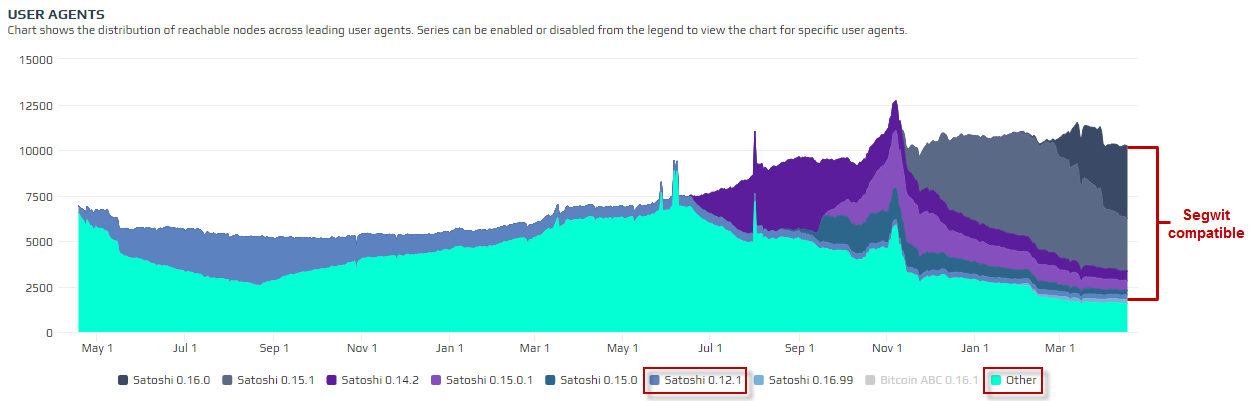 Highlighted boxes are software implementations that are assumed to not be Segwit compatible because they’re likely older than 0.12.1.
The reality is, not everyone here is working on the same “team”. BCash was originally created by and for Jihan Wu, because Segwit would marginalize his companies profits by disabling covert ASICBoost, which is an “improvement” to mining that gave his mining operation significant leverage over others. You can read more about it below, it goes into much better detail:
Jihan knew there was a minority community that wanted to go their own way and used that to his advantage. He actually made it very clear multiple times that Bitcoin is Bitcoin, and BCash is BCash, and they are not to be confused. What happened instead was, that minority community took the new fork and ran with it. Prominent figures tried to capture it and call it The Bitcoin, to which even Jihan fought back and said no:
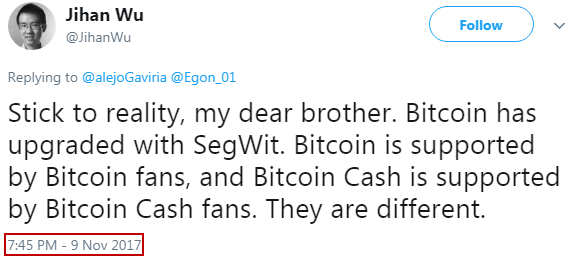 https://twitter.com/JihanWu/status/928831035441274880
Meanwhile, the whole time this was happening (all of 2017), the 2X fork was on the horizon, and the very same people who were applauding BCash were simultaneously pushing for 2X to try and divide the Bitcoin community. Read my 2X article for more on that.
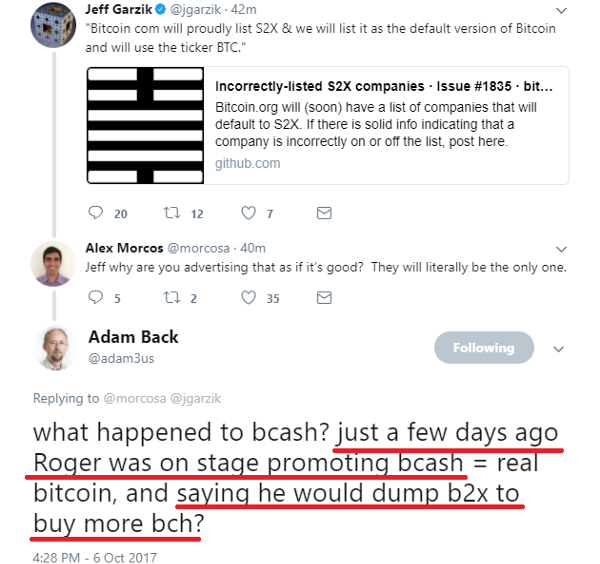
So again I ask, why try to block the most important upgrade to the Bitcoin network since its inception? Why play marketing and social media games?
Why sprea d disinformation & propaganda?
One of the most notable things about the cryptocurrency community is how rapidly it’s growing but how slow the education process is. I’ve learned a lot of what I know by speaking directly to some of the developers, and engaging with many less-involved people like myself, but that obviously doesn’t scale. Lectures are nice, but “nobody” really watches them. Podcasts are good too but they rarely dive deep technically. Looking at all of this from the outside without any knowledge of its inner workings it’s easy to think we have this all squared away, until you read posts like mine and many others that show you just how in its infancy all of this really is.
How many people do you know that are aware of Bitcoin fit this description?
- Understands that it’s _“a protocol”_nobody controls.
- Knows that people “mine” it.
- Knows the price goes up and down.
- That’s it.
I’m willing to bet it’s most of them. Articles like this one I’m writing are okay, but it took 4 months for my first article to reach 20,000 “views”. Most people just don’t want to invest the time, or have the skill-set required to do their own research. On the other hand it took this tweet with a short video a couple of days to reach over 20,000 video views and 100,000 impressions, and that’s still really not that much (and it’s only a short video):

None of this is really surprising though, “nobody” understands how the Internet works. Those who do are less than 1% of the population, and the same will go for Bitcoin’s protocol stack. As the community grows from Bitcoin adoption it stops looking like a community and starts looking like a population with a gradient of opinions, meanwhile the “actual” community keeps chugging along, continuing to discuss and build what Bitcoin was (and still is) intended to be. That inner circle keeps growing, but nowhere near the rate of the outer circles with wildly different opinions.
 https://twitter.com/janeygak/status/967076813141786624
It does, but that’s because most people aren’t actually part of the “community”, nor do they need to be, or ever will be. There is no “TCP/IP” community that consists of Internet Protocol engineers and the average Facebook user. Let’s take a look at some really over simplified categories of community growth as an example, growing by varying factors:

Putting real-world accuracy aside (Coinbase is just a single platform), do you see what I see? I see 10,000,000 people that can potentially be manipulated into believing false premises and propaganda. How many of them would I have to convince if I wanted to sway enough opinions to appear competitive with the real community? 0.18%. In a room of 1,000 people, I only need to convince 2 of them to believe me and take to Reddit or Twitter. So what do you do to combat that? Maybe you ignore it because you’re unconcerned, maybe you argue with people on social media, or maybe you write an article to inform people.
Those numbers are obviously off, and I’m not interested in anyone trying to challenge them because it detracts from the point. It’s very easy to lie in this space, profit off of it, get called out for it, and then lie again for more profit. People can have no clue what the following arguments mean, but if they are just getting in and they stumble across this they become instantly biased and they have no idea the goalpost was moved 10 times already:
 https://twitter.com/Falkvinge/status/967687732721004545
Segwit is a botched fix for a non-issue, Bitcoin can scale with larger blocks. Segwit as a soft-fork is a hack-job and would be much better as a hard-fork, we also need larger blocks. Segwit is being forced on the users who don’t even know what it is, but I’ll take it if it comes with bigger blocks. Lightning Network is vaporware and doesn’t actually exist. Lightning Network won’t be ready for 18 months and even then it’s completely centralized. Lightning Network will be too complicated for the end user experience, and won’t work without bigger blocks. BCash will have Lightning Network too, and BCash has bigger blocks, so it will work better, and we have no Segwit.
 Malleability wasn’t the only thing added in with Segwit, and it was never just about Lightning.
 Bitcoin Unlimited failed. About 400 of their fake nodes recently shut down too…
 There’s no infringement. The patents referenced are owned by Adobe, would effect the entire Internet, and aren’t enforceable. Segwit has nothing to do with this. At best Adobe owns these defensively.
 The whitepaper defines an electronic coin as a chain of signatures (section 2). This still exists with Segwit.
 Right…
 Vitalik supports the Raiden Network (Ethereum’s version of Lightning), and nothing about the Lightning Network changes the security of Bitcoin’s base layer. It only adds features on top of it.
 Again…Lightning changes nothing about Bitcoin’s base layer. It only adds features on top of it.
 The problem always existed. He just came into this space early, ignorantly spread what he believed to be true, while all the developers knew what would eventually happen. Also, Satoshi conceived of payment channels.
Lightning sucks so bad, but if you like it, you can still have it on BCash! — Roger I never actually said that, this quote is libel. I’m telling my lawyers. — Roger
 “More Users” and “More Nodes” are provably false. Notice his friend Fake Satoshi (Craig) in the bottom right corner? We’ll get back to that later…
Bitcoin Cash can have everything Bitcoin has, plus bigger blocks. As a matter of fact, Bitcoin Cash isBitcoin. Not yet though, but when it is, we can just drop the “Cash” from the name.
That’s why they hate the name BCash. It does exactly the opposite of what they want, it drops “Bitcoin” from the name instead, and they’ve been pushing really hard to try and confuse people with this naming convention. Roger owns Bitcoin.com, and is at the least working with the person who controls the @bitcoin Twitter account, who’s been pushing “BCash is Bitcoin, Bitcoin ‘Core’ is not” as well. Many suspect he controls the account and it isn’t beyond belief because the style of responses are similar, and there’s some other information that points to that conclusion as well. I don’t think any of this information proves this theory correct but again, they are at the least working together:
 https://twitter.com/bitfinexeded/status/980205104707063808
Roger doesn’t like it when you comment on his tweets with polls because they go against him every time. Don’t believe me? Give it a try, he’ll block you. He’s done it 3 times to me so far. This isn’t a sockpuppet account, this is me being open about who I am, asking simple questions for the community. He claims censorship left and right and publicly takes pride in being for “free and open speech”, so I have no qualms circumventing his choice to block me. The reason I’m showing this information is because what’s really interesting to note is the @bitcoin account blocked me at the same time Roger did, even though this was a fresh account that never interacted with the @bitcoin twitter. What’s even more interesting is, when it became clear that I was going to continue doing this (high visibility polls that go against their narrative), and continue calling out both accounts for simultaneously blocking me, the @bitcoin account announced their “Twitter Blockchain” list, for plausible deniability. They really don’t want you ruining their attempt to confuse you.

I’m going to quote myself here:
Did you notice the ‘Pro Bitcoin Unlimited’ tag I have for the user in the old Bitcoin- XT subreddit? Same campaign, different flag: Take control of the network. Take control of the name Bitcoin.
As their ability to take over the network gets further and further away from reality (you can’t take infrastructure like Lightning nodes and their channel balances with you when you hard fork) they focus more and more on the naming conventions, because it’s the only thing they have left to try and trick people as the network becomes hardened. They started doing this late last year, before the 2X fork day had passed:

Despite this announcement, Roger went ahead and promoted the 2X fork as well (mentioned above), because he knew it might have an effect on dividing us. It’s only built up since then and the use of the term “Bitcoin Core” has been added into their efforts so they can begin trying to drop “Cash” from BCash. As you can tell by the votes, despite intentionally misleading 800,000 potential voters, most of those that voted know what’s going on and aren’t having it. You can even replace the names with whatever you want, it doesn’t matter:
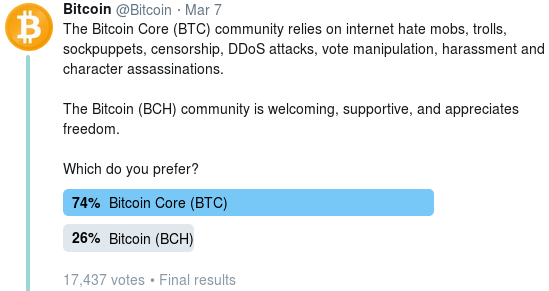
None of this stops the attempts, and it seems like doubling down on his actions is all Roger knows how to do. The Bitcoin.com mobile wallet lists BCash first, now no longer creates an actual Bitcoin wallet by default, and his website is now defrauding visitors with the same tactics:
 https://explorer.bitcoin.com/bch
 https://twitter.com/billsmith4lyfe/status/988803284038172672
 https://twitter.com/peterktodd/status/988693611943514113
I have a strong feeling this is all going to come crashing down on him, but until then Bitcoin Jesus will keep on keeping on. He keeps getting interviews with people from outside the space who know nothing about his history or the context of the discussion they’re about to have, and he keeps repeating the same-exact-mantra on every single one of them.
“Bitcoin Core is”
- “Slow”
- “Expensive”
- “Unreliable”
- ” Moore’s Law means blocks can scale on-chain forever.”
“Bitcoin Cash is”
- “Fast”
- “Cheap”
- “Reliable”
- “Thanks to Moore’s Law it will keep scaling.”
Watch these interviews (if you can bear it) below and just yell “BINGO” when you hear all four of them get said in each one:


Moore’s Observation
I published this section as a standalone piece so it can easily be referenced when someone makes this argument in the future. You can find that here.
 https://twitter.com/ELEProbtc/status/963845795140292609
Moore’s law is the observation that the number of transistorsin a dense integrated circuitdoubles approximately every two years. — Wikipedia
It’s become commonplace to cite Moore’s Law when people discuss raising Bitcoin’s block size in an attempt to justify why the network can continue scaling this way. In short, the mantra goes something like this:
- Bitcoin has always scaled this way in the past when needed.
- Computers get more powerful all the time, just look at Moore’s Law.
- You don’t need to run a node, only miners should decide what code is run.
Notice how the third one has nothing to do with the first two? That’s because after you dismiss the claims about Moore’s Law they fall back to how you just don’t need to run a node, so because you don’t need to run one it’s okay if they take away your ability to run one. So let’s dismiss Moore’s Law, and make a solid argument for why being able to run a Bitcoin node is of utmost importance.
- Moore’s Law is a measure of integrated circuit growth rates, which averages to 60% annually. It’s not a measure of the average available bandwidth (which is more important).
- Bandwidth growth rates are slower. Check out Nielsen’s Law. Starting with a 1:1 ratio (no bottleneck between hardware and bandwidth), at 50% growth annually, 10 years of compound growth result’s in a ~1:2 ratio. This means bandwidth scales twice as slow in 10 years, 4 times slower in 20 years, 8 times in 40 years, and so on… (It actually compounds much worse than this, but I’m keeping it simple and it still looks really bad.)
- Network latencyscales slower than bandwidth. This means that as the average bandwidth speeds increase among nodes on the network, block & data propagation speeds do not scale at the same rate.
- Larger blocks demand better data propagation (latency) to counter node centralization.
 https://twitter.com/ELEProbtc/status/963845795140292609
forever and ever
…
4 times slower in 20 years, 8 times in 40 years, and so on…
…
 Recycling this because it’s applicable, and a good meme. I made it myself.
This is not new information either, he’s been spouting this misconception for years. He knows it’s not relevant. Even people who have hopped on the BCash bandwagon after knocking Bitcoin non-stop knew years ago that latency is the issue, but none of this stops this argument from being brought up over and over again. These tweets are from years ago (‘15/’16) and the following Reddit post was in April of this year (2018):
 https://twitter.com/adam3us/status/693847158693433344
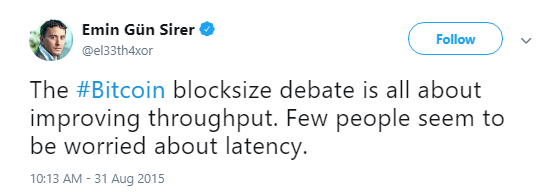 https://twitter.com/el33th4xor/status/638399125474684931
 https://www.reddit.com/r/btc/comments/8e88xu/satoshis_original_whitepaper_talks_about/
It’s not about storing those transactions. It’s about full-nodes being able to receive the transaction, check the UTXO set to verify the information in the transaction is correct, and consider it valid before sending it off to the next node to do the same. This takes time. This delays propagation. Then at some point a miner successfully finds a valid hash for a block and sends that block out to the network, which must then propagate to the nodes on the network and get validated just like all the transactions. There’s ways to shortcut this by checking the block against transactions you’ve already validated, but again it still takes time, and increasing the block size directly effects this process. If you want to increase the block size, put in work that helps offset this issue.
This is real scaling:
 https://www.reddit.com/r/Bitcoin/comments/7x4psl/advances_in_block_propagation_greg_maxwell/
So we’ve established (again…) that all of this is important because of the centralizing effects on full-nodes. Good, now that we’ve completely dismissed that argument, we can forget it even happened. Why? All that work you put into arguing with someone online over this doesn’t matter because:
You don’t need to run a node, only miners should decide what code is run.
There’s only two sides to this debate. “Non-mining” nodes matter, or they don’t. Anyone arguing in between these two stances is missing the bigger picture, or knows that arguing the middle ground helps the side you’re actually on win the tug of war.
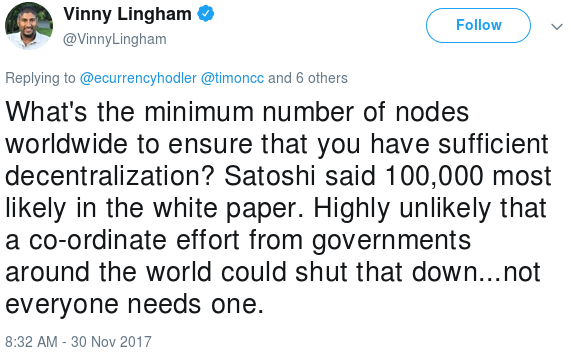 https://twitter.com/VinnyLingham/status/936271705298812928
…Let’s discuss why that’s a misunderstanding of the bigger picture, but first go over some simple concepts we should all be able to agree with.
- It’s better to overshoot security than it is to undershoot security.
- If a change in consensus results in an increase in the number of individuals with the ability to operate a full node, ceteris paribus ,the network decentralizes by some value.
- If a change in consensus results in a decrease in the number of individuals with the ability to operate a full node, ceteris paribus ,the network centralizes by some value.
- Soft-forks are inclusive. Hard-forks are exclusive. Inclusiveness builds a healthy single network, exclusion divides.
Any change you propose that results in someone no longer being able to run their node, and the code they agree upon when they connected to the network, is a bad thing to do. You just created an enemy who has the financial incentive to oppose your change, and you downsized the network by some degree. You also established a precedent that disincentivizes others from getting involved because they may fear being disconnected. (Tangentially, this precedent is one reason why a Proof of Work change is also a bad idea. You’re cutting off nodes and hashpower.)
Additionally, you run the risk of breaking infrastructure that is already in place. Right now this includes services that are dependent on running nodes, current and future services that make use of the Lighting Network, and anything else down the line that will get built on top of this network. Lightning is just the beginning. I wouldn’t even say the network is secure right now because there’s still too much risk of change, and I don’t think it will be secure until there is sufficient layering and real-world negative consequences for even attempting to make such a change to the underlying rules.
What do I mean by attempting?
The following is a “TCP segment”. You don’t have to know what that means, and I don’t know much all about it past what I’m about to tell you.
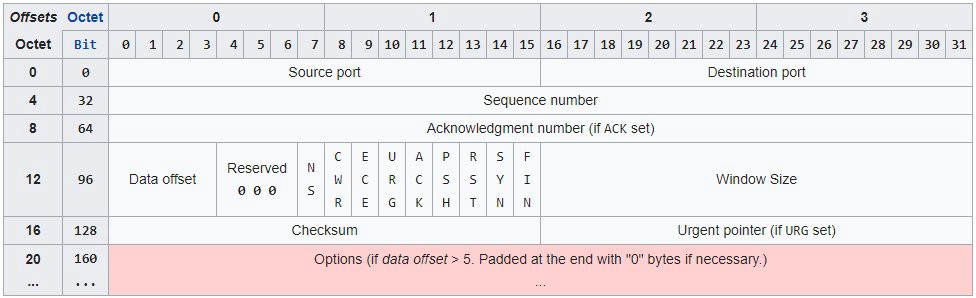
A TCP segment consists of a segment header and a data section. The TCP header contains 10 mandatory fields, and an optional extension field. The data section follows the header. Its contents are the payload data carried for the application. The length of the data section is not specified in the TCP segment header. It can be calculated by subtracting the combined length of the TCP header and the encapsulating IP header from the total IP datagram length (specified in the IP header). — Wikipedia
Those are consensus rules. The Internet consensus rules.
If you change those rules and try to send that data across the Internet using your new rules nothing happens, it’s unrecognized. It’s invalid.
If you implement network code or hardware that uses different rules, and then connect 2 computers together with those new rules, you just created a new network which is completely incompatible with the rest of the Internet.
If you do this with a datacenter full of new hardware and software, network them all together, and then try to connect to the outside world, nothing happens, and you just wasted a lot of money and time.
If you’re the AT&T CEO and you conspire with Verizon to roll out 4G LTE as a hard-fork, you have a few options:
- Surprise everyone, nobody has 4G phones, everyone switches to Sprint, and you lose so much money your mother rejects you as her child.
- Announce a hard-fork date. Everyone laughs at you. You scrub your idea.
In either scenario, if you were the CEO and wanted to do this, y ou wouldn’t even be able to. If the entire Board of Directors voted yes, you still wouldn’t be able to get it done. From your lawyer calling you all idiots down to the engineering group being told that in 6 months they need to offline all of their switches globally, and then subsequently laughing at the memo you just sent them. While just a sample of a much broader analogy I won’t be making, this is what enforced consensus really is. My 3G phone enforces this consensus just by existing alongside millions of others, and asking the following question just sounds absurd, doesn’t it?
What’s the minimum number of phones worldwide to ensure that you have sufficient decentralization?
Hard-forks don’t happen in real life. There are just too many layers to the entire system such that going against the grain and refusing to cooperate with existing infrastructure would only result in you getting cut off from the system. Try driving on the opposite side of the road as a hard rule. I’ve done it on an empty road, I’ve done it to pass slow cars, but actually as a hard rule? Never going back to the normal side? See how long that works out for you. Get back to me with the results.
Bitcoin’s consensus security at full scale doesn’t come from the amount of “users” running “nodes”, it comes from an overall inability to change any old rules from the mining or the client side. How we get to that point or when we get to that point I couldn’t tell you, but we will never get to that point with a “hard-forks are okay” mentality, and we will never get to that point with a “miners can dictate consensus freely” mentality, as if the miners ever even had decentralization on their priority list…
Satoshi Dundee
In an interesting turn of events, disdain has begun brewing within the BCash community surrounding Fake Satoshi (Craig S Wright). Craig is starting to get called out by his own team and I think this is important because it’s likely this will result in a perfect example as to why the “hard-forks are okay” mentality is actually not okay. Something that would normally be mundane, like a conflict between a community and a few individuals, would normally just result in those individuals disappearing or being known as “the loud mouths who won’t go away”. In this community, they have financial influence and control over various aspects of Internet/social platforms, and the potential result is a hard-fork of a multi-billion market cap technology. Sounds great, right?
It actually is. Remember inclusiveness versus exclusiveness? They both compound themselves with each iteration. Every time you try to hard-fork you end up with a minor community on its own that thinks they are all in agreement, until they’re not again and they hard-fork…again, and again, and again, splitting them up more and more. Conversely, the soft-fork community continues to build by being inclusive. Never kicking your node off the network, making sure the software you coded doesn’t become incompatible, or ensuring the wallet you downloaded doesn’t get disabled or confused on what to do or who to follow with each upgrade to the network.
Generally, each client that tried to fork, or proposed a fork for Bitcoin has had a single lead developer behind it:
- Mike Hearn — Bitcoin-XT
- Gavin Andresen — Bitcoin Classic
- Peter Rizun — Bitcoin Unlimited
- Jeff Garzik — 2X (btc1)
- Amaury Sechet (deadalnix) — Bitcoin Cash
- Emin Gun Sirer — Bitcoin-NG (fork proposal for Bitcoin Cash, no client yet)
Ever since BCash successfully forked off, two of these old clients have been repurposed to be compatible with that chain. Mike, Gavin, and Jeff are gone, although the clients are stringing by, but there are really only three people who have potential influence on the code and direction of BCash at the moment: Amaury, Peter, and Emin.
I don’t mean to discredit the other developers, but there’s only three others that work on Bitcoin Unlimited along with Peter who claims lead as Chief Scientist, and a two developers patch-working XT. Amaury is the only developer committing code to Bitcoin-ABC (the BCash reference client), and has helped repurpose the Bitcoin XT client to be compatible with the upcoming BCash hard-fork. This helps to put on the impression that BCash has “implementation decentralization” and that ABC is not the reference client… it is.
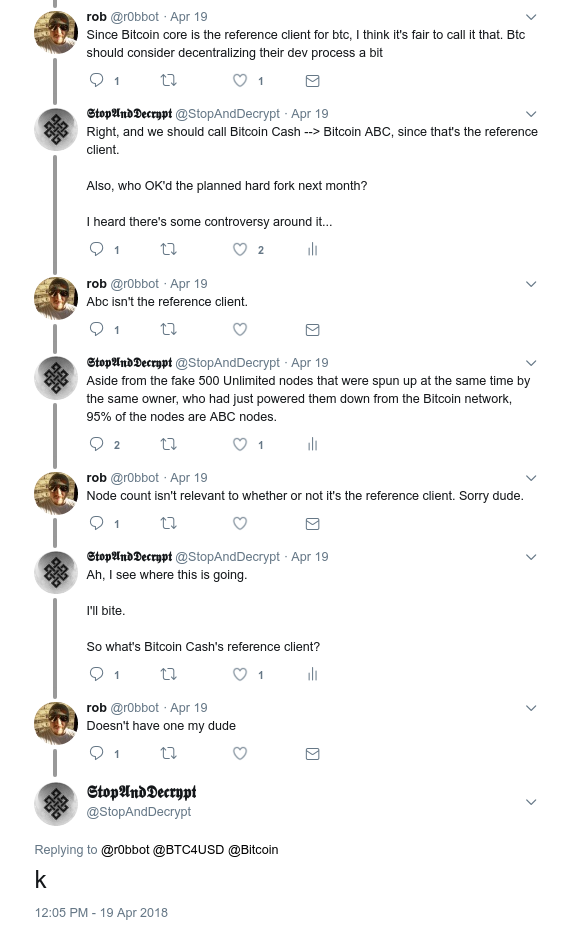
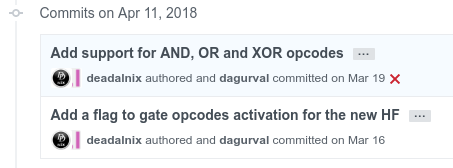 https://github.com/bitcoinxt/bitcoinxt/graphs/contributors?from=2018-01-01&type=c
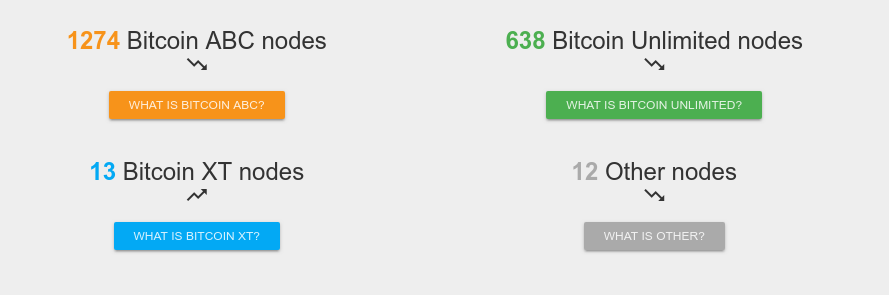


Since no one is actually running XT nodes, this leaves ABC, Unlimited and potentially “NG”in the future. 400 of those Unlimited nodes are fake. Which brings me back to Craig, because Peter and Emin are the ones publicly calling him out on his bullshit. This leaves Amaury (who has argued with Craig and his sockpuppet Mr. Scatman in the past, as well as having a history of not seeing eye-to-eye with other members of that community) the eventual choice: Denounce Craig and his proposals, or accept them and implement them. The latter would result in BCash forking into two chains, but the former will result in all the active developers working on BCash shunning Craig, which puts his friend Roger in an interesting predicament…

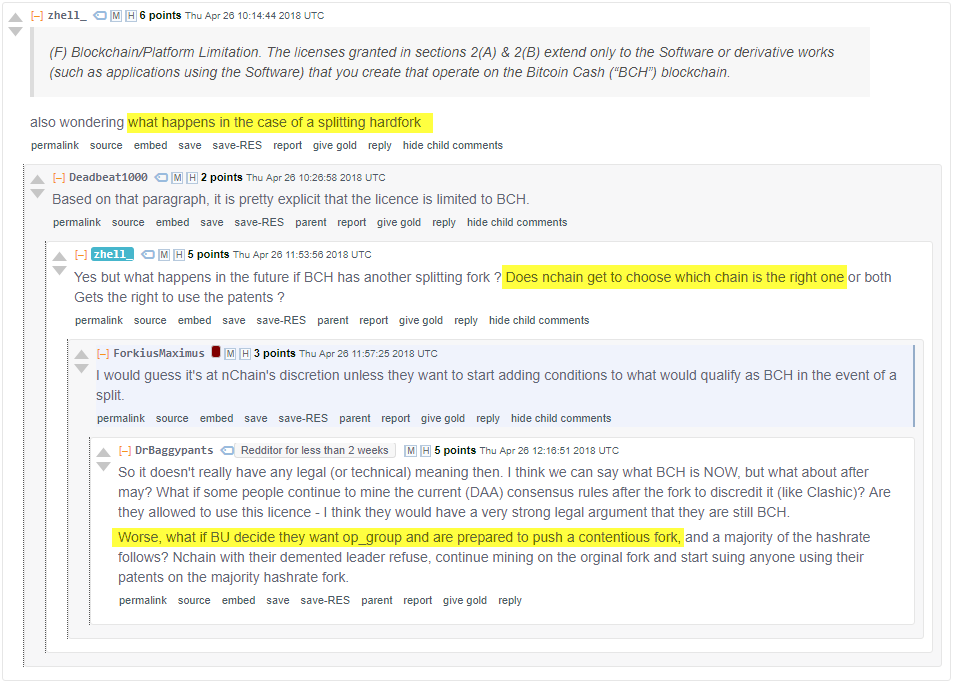 https://twitter.com/StopAndDecrypt/status/988263156517621761
Don’t believe there’s going to be an issue here? nChain, where Craig is deemed the “Chief Scientist”, just put out their “Open Bitcoin Cash License “. Craig’s been pretty open about his intent to put out patents for software related to BCash and how they intend on adding features to BCash that you can only use with nChain’s permission. I think this short conversation below sums up the issue with that pretty well but hey, just remember that “hard-forks are okay”, and all the BCash developers are in agreement. (They’re not.)
 https://www.reddit.com/r/btc/comments/8f1ffv/the_nchain_open_bitcoin_cash_license_pdf/
The outlook doesn’t look good for the “other” camp, and they can’t say we didn’t tell them so. They’ve latched on to these people because they have money to help push the fork they originally wanted, but now that money is pushing further than they may have wanted and letting go is going to be difficult. If Craig get’s pushed out what will Roger do? If Craig & nChain force a fork and Roger backs them, but half their community doesn’t want it, what will the other developers do? What happens when nChain starts suing? What happens if the other developers compromise their morals and work with them?
Conclusion
Consolidating everything above was already a process in itself. I wish I could include more but it would turn this article into what may already look like a Tumblr page. If I had to take everything above, in combination with my prior articles, I’d only conclude with advice for the genuine few of those on the other end of this “debate”:
- The BCash community needs to ditch Craig and Roger. If you sincerely believe that bigger blocks are the way, you’re never going to get anywhere with them still on your team. Cut the cord, they’re legitimately holding you back. The worst part about it? You’re going to realize that half of your community/support won’t want to. They’re too invested and dependent on them to support their claims, but it’s something you need to do.
https://twitter.com/PeterRizun/status/983961846804725761
- Rebrand and move forward, it worked for Dash (formerly DarkCoin). Just bite the bullet, because if it’s all about Satoshi’s Vision it shouldn’t matter. Ditch the name game and the focus on the title of the whitepaper, ditch the infighting, and again, ditch the weight (Roger) on your back that insists on making this the focus of debate.
 https://twitter.com/CryptoCobain/status/963538894959644673
- Give up on the conspiracy theories. I shouldn’t even have to get into this but it makes your entire group look like lunatics. If you seriously believe “Bilderberg is behind Blockstream” you really need to watch this video below and reconsider your outlook on life. Stop liking stupid Twitter comments that suggest this idiocy or sharing articles like the one below. If you don’t believe the theories, consider not giving voice to those “on your side” that propagate them (Roger).


| [**🅂🅃🄾🄿 (@StopAndDecrypt) | Twitter** _The latest Tweets from 🅂🅃🄾🄿 (@StopAndDecrypt). Fullstack Social Engineer: 10% FUD, 20% memes, 15% concentrated…_twitter.com](https://twitter.com/StopAndDecrypt “https://twitter.com/StopAndDecrypt”) |
The Story of the DAO
By Samuel Falkon
Posted December 24, 2017
The Story of the DAO — Its History and Consequences

One of the most incredible concepts to be successfully implemented through blockchain technology is the DAO, a decentralized autonomous organization. Decentralized autonomous organizations are entities that operate through smart contracts. Its financial transactions and rules are encoded on a blockchain, effectively removing the need for a central governing authority — hence the descriptors “decentralized” and “autonomous.”
The Decentralized Autonomous Organization (known as The DAO) was meant to operate like a venture capital fund for the crypto and decentralized space. The lack of a centralized authority reduced costs and in theory provides more control and access to the investors.
At the beginning of May 2016, a few members of the Ethereum community announced the inception of The DAO, which was also known as Genesis DAO. It was built as a smart contract on the Ethereum blockchain. The coding framework was developed open source by the Slock.It team but it was deployed under “The DAO” name by members of the Ethereum community. The DAO had a creation period during which anyone was allowed to send Ether to a unique wallet address in exchange for DAO tokens on a 1–100 scale. The creation period was an unexpected success as it managed to gather 12.7 Ether (worth around $150M at the time), making it the biggest crowdfund ever. At some point, when Ether was trading at $20, the total Ether from The DAO was worth over $250 million.
In essence, the platform would allow anyone with a project to pitch their idea to the community and potentially receive funding from The DAO. Anyone with DAO tokens could vote on plans, and would then receive rewards if the projects turned a profit. With the financing in place, things were looking up.
The DAO’s Great Start Gone Wrong

However, on June 17, 2016, a hacker found a loophole in the coding that allowed him to drain funds from The DAO. In the first few hours of the attack, 3.6 million ETH were stolen, the equivalent of $70 million at the time. Once the hacker had done the damage he intended, he withdrew the attack.
In this exploit, the attacker was able to “ask” the smart contract (DAO) to give the Ether back multiple times before the smart contract could update its balance. Two main issues made this possible: the fact that when the DAO smart contract was created the coders did not take into account the possibility of a recursive call and the fact that the smart contract first sent the ETH funds and then updated the internal token balance.
It’s important to understand that this bug did not come from Ethereum itself, but from this one application that was built on Ethereum. The code written for The DAO had multiple flaws, and the recursive call exploit was one of them. Another way to look at this situation is to compare
Ethereum to the Internet and any application based on Ethereum to a website — If a site is not working, it doesn’t mean that the Internet is not working, it merely says that one website has a problem. The hacker stopped draining The DAO for unknown reasons, even though he could have continued to do so. The Ethereum community and team quickly took control of the situation and presented multiple proposals to deal with the exploit.
However, the funds were placed into an account subject to a 28 day holding period so the hacker couldn’t complete his getaway. To refund the lost money, Ethereum hard forked to send the hacked funds to an account available to the original owners. The token owners were given an exchange rate of 1 ETH to 100 DAO tokens, the same rate as the initial offering.
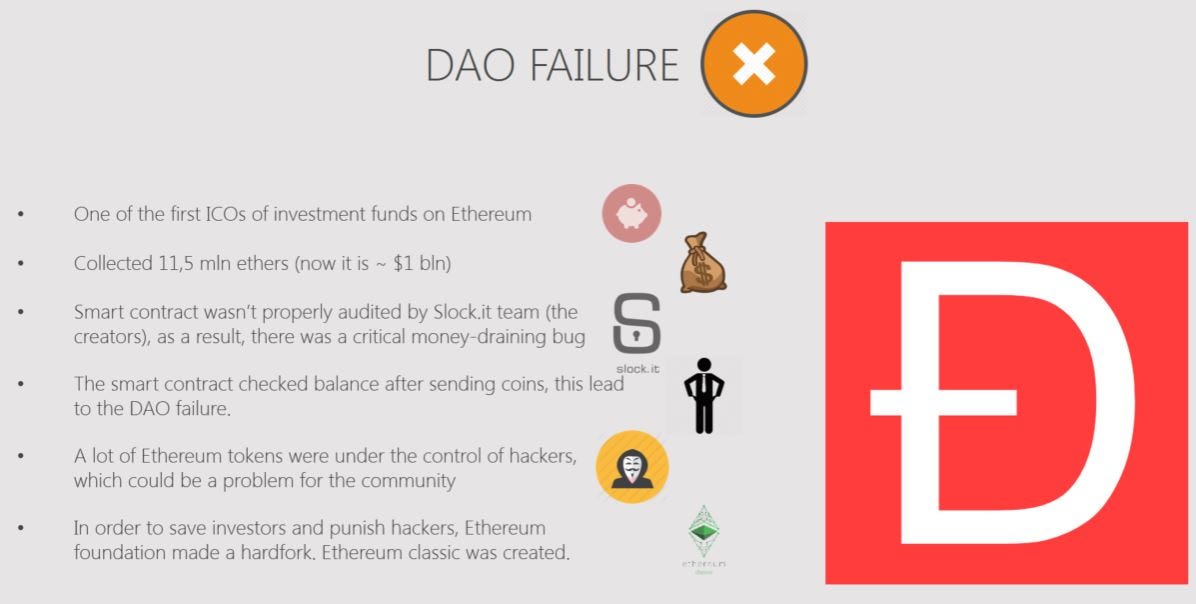
Unsurprisingly, the hack was the beginning of the end for the DAO. The hack itself was contested by many Ethereum users, who argued that the hard fork violated the basic tenets of blockchain technology. To make matters worse, on September 5, 2016, the cryptocurrency exchange Poloniex delisted DAO tokens, with Kraken doing the same in December 2016.
All of these issues pale in comparison to the United States Securities and Exchange Commision (SEC) ruling that was released on July 25, 2017. This report stated:
“Tokens offered and sold by a “virtual” organization known as “The DAO” were securities and therefore subject to the federal securities laws. The Report confirms that issuers of the distributed ledger or blockchain technology-based securities must register offers and sales of such securities unless a valid exemption applies. Those participating in unregistered offerings also may be liable for violations of the securities laws.”
In other words, The DAO’s offering was subject to the same regulatory principles of companies undergoing the initial public offering process. According to the SEC, The DAO violated federal securities laws, along with all of its investors.

The Ongoing Impact of The DAO’s Rise and Fall
Though The DAO project has since folded, its impact is ongoing. Current blockchain development teams continually looked to The DAO’s example for guidance — for what not to do.
First, The DAO teaches a valuable lesson about the importance of establishing secure blockchain platforms. The DAO’s hack was not due to a problem inherent on the Ethereum blockchain; it came from a coding loophole exploited by an intelligent hacker. Had the code been written correctly, the hack could have been avoided.
Second, the SEC’s ruling on The DAO has encouraged blockchain startups to come up with ways of avoiding security registration and federal regulation. One of the ways companies do this is by using the SAFT method. If tokens have legitimate utilitarian value on a blockchain platform,
they violate a component of the Howey case, and therefore cannot be listed as securities or regulated by the SEC.
Without the DAO, who knows what lessons would still need to be taught.