
April 2017 Journal
WORDS is a monthly journal of Bitcoin commentary. This issue collects the April 2017 writing in the WORDS archive. For the uninitiated, getting up to speed on Bitcoin can seem daunting. Content is scattered across the internet, in some cases behind paywalls, and content has been lost forever. That’s why we made this journal, to preserve and further the understanding of Bitcoin.
Miners should be hubs on Lightning Network
By Oleg Andreev
Posted April 1, 2017
Some miners are worried about the fees. What if blocks remain small and most transactions are cleared on the Lightning Network — miners will earn very little while the block reward is quickly coming to an end. An ignorant answer is “lets just raise the block size indefinitely”. Slightly less ignorant answer “fees will be higher, and BTC will be worth more, so don’t you worry”. What if the actual answer is: miners could be the best Lightning Network hubs?
Here’s how it could work. Lightning Network scales Bitcoin payments by compressing chains of transactions into a single transaction, protected by mutual security deposits from both sides of each node and some clever smart contract conditions that make cheating more expensive than playing by the rules. Security deposit lock up money and put a natural limit on how much value and through how little hops can be transferred in the network. The more fees a node wants to earn, the more money they have to lock up in order to service more peers.
How miners are in privileged position to profit from Lightning Network? They are recipients of the large amount of coins (reward + fees) that are also unspendable for 100 blocks (≈16 hours, so called “coin maturity”). That means, that unlike any other bitcoin holder that can put bitcoins to a better use any time they want, miners cannot use coins for over 100 blocks. Miner could use these coins to open many payment channels with interested users (they will pay their deposit using a separate transaction, for free).
Miners, by virtue of having access to large amounts of funds, could open between each other fat payment channels to connect each other’s users in much shorter number of hops, making it cheaper and faster for users, but having a larger chunk of off-chain transaction fees.
Per-block reward and on-chain fees would end up locked up for longer than 100-block intervals, which is even healthier for the network: all the miners become motivated to extend a single chain not for a few days, but for months!
Therefore, problem solved and everyone’s happy.
- No hard forks are necessary.
- Large per-block rewards put to good use.
- Coin maturity increased by 10-100x significantly reducing risk of blockchain fork.
- Users get channel opening for free.
- Users get faster and cheaper LN payments by having lower number of hops.
- Power-hungry miners remain in minority and stop pushing stupid consensus changes.
- /r/btc goes apeshit.
Thoughts on SegWit2MB
By vorhees
Posted April 2, 2017
On March 31, Sergio Lerner and the RootStock team proposed “SegWit2MB” to the Bitcoin Core mailing list.
The basics of the proposal…
- 95% miner support required for consensus
- Upon consensus: SegWit is immediately activated 2MB hardfork countdown begins (to occur Dec 14, 2017).
SegWit is Bitcoin Core’s version (soft fork). The 2MB hardfork aspect is BIP 102, as coded by Jeff Garzik.
Stated plainly, SegWit2MB is a combination of SegWit and a hard fork to a 2MB base block size cap. The two are tied together such that 95% miner support triggers both.
What’s the purpose? In Lerner’s words, “Segwit2Mb is the project to merge into Bitcoin a minimal patch that aims to untangle the current conflict between different political positions regarding segwit activation vs. an increase of the on-chain blockchain space through a standard block size increase. It is not a new solution, but it should be seen more as a least common denominator.”
And I’d like to make the case that it should be considered…
Status Quo: A State of Atrophy Nobody Wants
Let’s start with some common ground: Bitcoin is immensely important. Can we still agree on that?
Society needs what we’re building, not to be forced upon them, but rather offered; a kind and reliable refuge from the tyranny of the world’s financial manipulators. That’s why many of us are involved. That’s why this project got off the ground.
Yet in the six years I’ve had the pleasure to be involved in this project, there has been a fundamental change in the community. The former friendship among strangers, a rare camaraderie derived from the justness of a great cause, has decayed into conflict. We all see and feel this, and for those of us who truly care about this project, it is miserable. Perhaps many have even forgotten what the community felt like just a few years ago, when the enemy was not ourselves.
Bitcoin suffers now from a 2+ year impasse between angry factions. The anger has grown with the passing months. The cause of this impasse is a fundamental disagreement between large portions of the community (all claiming to be the important majority by one metric or another) over the technical path to scalability on the platform. Both sides have good arguments and bad arguments, and they’ve all become wound up in a horribly intricate knot. The rhetorical mess has become at least as bad as the underlying technical problem.
Further, the unfortunate context in which this is occurring is one of diminishing utility on the platform: transactions are getting more expensive and less reliable. The user experience of sending a Bitcoin transaction today is worse than it was two years ago. While the price has risen, fundamental utility has actually declined. This is unsustainable, and will be inevitably resolved by utility once again rising, or price declining to meet it.
Do not let yourself be tricked into thinking that the rising price implies fundamental soundness. Prices follow utility, and the latter may fall well before the former realizes it.
At the same time, innovation and growth on other blockchain platforms continues rapidly. This doesn’t mean any other blockchain is “better” than Bitcoin, but it does mean other blockchains are improving relatively faster than this one. Again, this will be inevitably resolved by Bitcoin gaining steam once again, or stagnating and awaiting its day in the court of market sentiment. If measurements matter, Bitcoin is at an all time low in market dominance relative to altcoins. Valuable members of the community have become disillusioned. While new people are always joining Bitcoin as it grows, at the same time some users are leaving partially or in full, preferring other projects that are more exciting to them, or simply less antagonistic.
There is clearly a problem, and we need to fix it. A number of technical solutions have been proposed, but fundamentally while they may fix ills on the technical level, they ignore, dismiss, or worsen ills on the social level. They thus cannot be considered solutions… especially if they aren’t happening.
The Hollow Blockchain
Bitcoin is a technical project, absolutely. Yet it is a social project as well. Some readers will scoff at that… but consider that a scoff is an emotional response, which actually proves the point.
Bitcoin, as a technical project, is a brilliant machine, but it is still a machine operated by and among people. Humans, with all their characters and personalities, are the complete benefactors and beneficiaries of this vast abacus. Without the human utility derived, the invention is irrelevant. Without the invention, the human utility is impossible. Indeed, the utility of money itself arises from our social needs; our desire to trade and exchange with each other fairly and without coercion or censorship is the ultimate purpose of Bitcoin. This is social.
To misunderstand Bitcoin as only technical is to dismiss its very purpose and utility. Regardless of the talents one contributes to the project, this truth must be appreciated. Bitcoin is as much social as technical, and always will be. The blockchain stands hollow without our souls attached.
The Cost of Conflict
This current impasse is similarly both technical and social, and it continues at great cost. It slows the growth of the project. It depresses enthusiasm, from which all great art and invention arise… and that art and invention go elsewhere. It invites competition. It signals weakness, and demonstrates disorder. It precludes harmony and the collaborative production of disparate strangers.
And while this is endured, the gears of Bitcoin’s true enemies turn slowly, yet they do turn. Bitcoin cannot afford to sit idle in this morass. It does not have the luxury of eternal opportunity. It has a window, and Bitcoin will rise to fill it, or be supplanted by another. If one doesn’t care which blockchain brings the utility of honest money to the marketplace, then Bitcoin’s situation is of little concern. But if one prefers Bitcoin to fill this role, then the situation is immensely important.
A truth many are not appreciating is that stagnation and replacement are as much threats to Bitcoin’s security model as are software glitches and coordinated attackers. Bitcoin has no monopoly on its core virtues: that of storing value without interference, and that of moving value across distance. That it is the best for these today is irrefutable, that it is the best for these tomorrow is assumption.
This assumption cannot be made by prudent caretakers.
As the contentious split in the community (Bitcoin’s social layer) grows, the risk of a contentious split in its blockchain (Bitcoin’s technical layer) grows too. Ignoring or dismissing the former invites the latter.
Indeed, we have seen each successive social rebellion (XT, then Classic, then BU) get closer to technical rebellion: a contentious hard fork. So long as the social order goes unresolved, the technical order is threatened. Even that technician with care neither in people nor politics must appreciate this dynamic if he desires to further the project. The people, the community, are in fact part of the machine itself. All technical efforts are diminished if they exist in a vacuum from the social, and dismissing the social interests of others as “merely political” is itself a political impulse.
Finding Unity
At the risk of oversimplification, there are two sides debating two paths. The one side desires the SegWit path. The other desires the hard fork path. Both want scale. Both want growth. Both want security. Both want decentralization. Both want strength. Both want innovation. Both want movement and progress and pride. Both want Bitcoin to succeed as a new form of money for the world, as the best platform on which money can be stored, moved, and protected. Both sides are of significant size. Neither side is entirely fools. Neither side is entirely saints. Both sides assert knowledge of the one true path, a warning sign that dogma has replaced productive discourse. And so tragic this is among those who should be friends, for they agree 99%, and yet can’t stop focusing and driving a wedge into the remainder.
It must be said that any plan, by either side, that discounts the desires and opinions of the other, is destined to, at best, split the community. At worst, the project itself is jeopardized in the increasingly threat of contentious hard fork… and blaming the other side for this threat only increases it. Bitcoin has so many enemies, most of whom haven’t yet woken. The ridicule and vilification of one Bitcoiner upon another must be a very pleasing development in the eyes of such enemies. There is no need to fight an adversary that fights itself.
To solve this, we should take it upon ourselves to find unity, not only among those with whom perfect agreement exists, but among those with whom any common ground can be attained at all. Bitcoiners have very much common ground, though they have forgotten it.
SegWit2MB
Sergio Lerner’s proposal is not unique in its technical suggestions, but it is unique in its potential to unify. It has the potential to unify not only disparate technical beliefs, but the social fabric of this community, which is as important. Any alternative, which even may be superior technically, while not resolving anything socially, must be said to be in fact inferior, on proper accounting. From where Bitcoin stands and the risk it faces, a good technical solution which can heal socially, is easily superior to a perfect technical solution which further inflames the community (especially if that “perfect technical solution” never comes to pass).
If SegWit2MB can reach 95% support, it cannot be said to be contentious. Upon that threshold, SegWit would activate, immediately bringing more utility to Bitcoin, and alleviating some scaling pains. It would also countdown to a conservative block limit increase, which alleviates further scaling pains and, importantly, will invite the rebellious factions to support it. Such a proposal would, I believe, take the very wind from the sails of subversion.
By enabling social unification, SegWit2MB has a greater chance of actual activation, and importantly, of preventing further schism and infighting. The risk implicit in this proposal’s hard fork must be said to be necessarily lower than today’s present danger of a contentious hard fork. For the great majority of Bitcoiners, that is a win.
The proposal grants to each side that which it desires most, and grants to both a path forward. It brings us a Bitcoin superior both socially and technically than what we have today. Utility of the very platform itself would rise substantially under this proposal, and its community of souls could rest easier, waking refreshed tomorrow to focus again on our real task at hand: changing the global financial system from its very foundation.
We should not let this project linger in its current state. SegWit2MB is the first reasonable compromise, considering the impasse’s technical and social aspects, actually put forth in code, based on well-known and studied fundamental components from Bitcoin’s best engineers. It is a good path forward, and one I hope others will rally around: to activate SegWit, to avoid a contentious hard fork, to enable greater transaction capacity, and to bring Bitcoiners back from their trenches to the great hall we share.
Please consider it.

Erik Voorhees http://www.ShapeShift.io Erik Voorhees, CEO of leading digital asset exchange ShapeShift.io, is among the top-recognized serial Bitcoin advocates and entrepreneurs, understanding Bitcoin as one of the most important inventions ever created by humanity. Erik’s former project, the groundbreaking gaming phenomenon SatoshiDICE, was, at its peak, responsible for more than half of all Bitcoin transactions on Earth and popularized the concept of “provable fairness.” Having been a featured guest on Bloomberg, Fox Business, CNBC, BBC Radio, The Peter Schiff Show, and numerous Bitcoin and industry conferences, Erik humbly suggests that there is no such thing as a “free market” when the institution of money itself is centrally planned and controlled. This blog is about the human struggle for the separation of money and state, and about Bitcoin as the instrument by which it will happen.
You can start editing here.
Stablecoins: A Holy Grail in Digital Currency
By Nick Tomaino
Posted April 3, 2017
A global currency with no central bank and low volatility may be a key component of the decentralized web
One of the main characteristics of digital currencies that the mainstream media has focused on is volatility. While the volatility of Bitcoin has decreased significantly since it launched in 2009, it is still not a good unit of account or a stable store of value. Look no further than the price of BTC and ETH over the past month (BTC price moved over 10% in a day and ETH moved over 20% in a day several times).
What if the volatility of a a digital currency could be minimized by a decentralized autonomous organization (DAO) with no central authority? This is the promise of an emerging category of digital assets called
stablecoins.
A stablecoin is an asset that has price stability characteristics that make it suitable for short-term and medium-term use as a unit of account and store of value. The US dollar is the best example of a stablecoin in the world of fiat currencies. While USD does offer relatively low volatility for those that want a reliable unit of account and store of value, it doesn’t offer user control because it’s controlled by the Federal Reserve Bank and requires reliance on the US banking system for significant commercial use. User control and minimized volatility is a holy grail in not just digital currencies but currencies broadly.The Maker project is seeking to reach this holy grail by creating the first viable stablecoin: the dai.

Meet Maker
The dai does not exist yet and is not much more than a vision. But the groundwork is currently being laid for a stablecoin that could bring millions of more people into the blockchain ecosystem.
In 2015, Rune Christensen published the white paper that describes the Dai Credit System, a complex organizational structure designed to create a digital asset with minimized volatility and no central bank. Since then, Rune and the decentralized autonomous organization known as Maker issued MKR tokens and built a lot of the infrastructure required to bring the vision to life, including a decentralized exchange for ERC20 tokens, developer tools for writing smart contracts, and core splitting auction contracts.
The Maker team has significant security work left to do on the smart contracts, but the plan is to launch the dai by the end of 2017. The system the Maker DAO is building is complex but it is inspired by a lot of economic theory. If you’re an econ nerd like myself, you may enjoy the next section. If not, you may want to skip.

Rune Christensen leads Maker
Understanding the Dai Credit System
There will be two different tokens in the Dai credit system: Dai (the stablecoin) and MKR (the counter coin). Dai is a free floating currency that derive its value from the fact that it’s backed by collateral (ETH to start, other digital assets later). MKR is a token that derives its value from the fact that it earns stability fees (interest) from the borrower of dai and has an active function in making the whole system work (governance). There are 1 million MKR tokens outstanding currently, but this will fluctuate in the future based on the performance of the system (if good then the total supply will decrease, if bad it will increase). The tokens have been continuously sold off in small batches by the Dai Foundation. Currently about 55% of the total supply has been distributed, with the foundation still having another 45% for future fundraising.
Another important value proxy to consider in the system is the Special Drawing Right (SDR), which is an international currency basket maintained by the International Monetary Fund (IMF) that has low volatility against all major world currencies. The target price of dai will always be in terms of the SDR.
There are five different types of participants in the Dai Credit System that all play critical roles:
- Dai borrowers:Dai borrowers create dai by locking up collateral in ETH or other digital assets (which will be voted on by MKR holders). This is known as a collateralized debt position (CDP). A primary initial use case for borrowers is likely to be margin trading (traders can borrow dai by posting ETH as collateral and sell the dai in exchange for ETH to leverage ETH exposure). A borrower that wants their collateral back has to return dai + interest (which gets paid to MKR holders).
- Dai holders:Holders are individuals or companies that are motivated to use dai as a unit of account or store of value that they control.
- MKR Holders (Governors):MKR holders play two important roles in the system: they vote on decisions the Maker DAO makes (like what digital assets can be posted as collateral and what features should be prioritized) and they help keep the dai stable (meaning they act as the final backdrop for all collateralized debt positions). When CDPs hit their liquidation ratio (the equivalent of a margin call), new MKR is created and existing MKR holders step up and buy back the assets with DAI and returns to the borrower whatever is left over.
- Keepers:Keepers are economic agents that are incentivized to contribute to making the system run efficiently. Specifically, they perform two important functions in the system: participating in continuous splitting auctions and market making the dai around the target price.
- Oracles:Maker needs information about the market price of the dai and its deviation from the target price in order to adjust the deflation rate as well as the market price of the various assets used as collateral for the dai in order to know when liquidations can be triggered. Oracles provide that service in the system.
This is an extremely complex organizational structure with lots of moving parts. Like all blockchain projects, it’s an economic experiment that’s never been tested before and no one knows for sure how the different participants will react and if the system will work as designed. I’m personally excited to see it tested in the wild though. A decentralized currency with no volatility could ultimately become the backbone of the global economy.
How to learn more
- Read the Maker whitepaper: http://makerdao.com/docs/
- Read the Maker purple paper: http://stablecoin.technology/purple.pdf
- Check out the Maker Subreddit: https://www.reddit.com/r/MakerDAO/
- Chat in the Maker Rocketchat: https://chat.makerdao.com/
- Vitalik Buterin on Stablecoins: https://blog.ethereum.org/2014/11/11/search-stable-cryptocurrency/

The Token Summit is May 25th in NYC at the Paulson Auditorium at NYU Stern School of Business
Maker core developerAndy Mileniuswill be attending theToken Summitand speaking about the Maker project.Get your ticket nowto meet Andy and other leaders from many of the leading blockchain projects in the world on May 25th.

About me:I run The Control and am an investor at Runa Capital, an early stage venture fund. Previously, I worked on business development and marketing at Coinbase. Follow me on Twitter, signup for our newsletter, and support us by becoming a member:
People Love Complaining About Bitcoin Payments
By Elaine Ou
Posted April 15, 2017
Here’s a 2007 video of Howard Lindzon trying to buy food in Manhattan using Canadian dollars. He tells people that CAD is a commodity currency, backed by Canada’s oil and gold, and Americans should treat his money as a valuable asset. None of the street vendors want his Canadian dollars and it is all very sad.

CANADIAN DOLLARS HAVE FAILED AS A PAYMENT SYSTEM, is a blog post we might see in the WSJ.
Just kidding. But here’s the umpteenth article about how Bitcoin sucks because merchants don’t accept it and customers don’t use it. American merchants don’t accept bitcoin for the same reason New Yorkers don’t take Canadian dollars: They have to pay their employees and landlords in USD. Beyond that, everyone in this country has one very big US dollar creditor in common, and that’s the IRS.

Eventually Howard manages to get two raspberries for $20 CAD. He’s basically getting screwed, but the fruit vendor isn’t much better off. The vendor will have to go through the asspain of changing CAD for USD to pay his raspberry suppliers. The only reason this exchange can occur is because the fruit vendor values his time even less than Mr. Lindzon does.
A few years ago, retailers like Overstock and Microsoft made a point of adding bitcoin payments so that they could look cool and innovative. It was a good effort, but few customers ever chose the bitcoin option. When using bitcoin, the customer has to pay an extra transaction fee to the miners. With a credit card, the merchant covers transaction costs. On top of that, many cards reward their customers with airline miles for sticking it to the merchant. If presented with bitcoin versus credit card, a customer should choose the credit card every time — it’s cheaper!
A medium of exchange will only be successful if it lowers the transaction cost for both the customer and the merchant. Stripe is a payment processor that charges 0.8% to process a bitcoin payment, and 2.9% + 30 cents to process a credit card payment. A Stripe merchant could potentially offer a 2% discount to bitcoin users and still come out ahead, but that’s pretty weak. You don’t want your customers deliberating a 2% discount at the final stage of the checkout process.

Bitcoin will never become a mainstream payment system, because mainstream retailers already have access to low-cost payment processors. Spending bitcoin at Overstock is like trying to spend Canadian dollars in New York — it increases the transaction cost for both parties with no benefit.
Bitcoin isn’t competing on low-cost processing. It’s competing on settlement risk, which is a cost suffered by the merchant when a customer payment falls through. There are some businesses that mainstream payment processors refuse to serve, because of legal risk or because the business operates in an industry that sees a lot of fraud. Stripe gives a pretty good overview of high-risk industries here. Online pharmacies, crowdfunding, gift cards — This is where bitcoin adds the most value.

If you’re in the business of selling anonymity tools, you have a pretty high risk of being paid with stolen credit cards.
High-risk industries attract high-risk customers, which means merchants get a lot of payment disputes and chargebacks. That’s expensive. Bitcoin’s biggest benefit is that chargebacks are impossible. If you want to know how much this is worth to a merchant, check out some of the scuzzier parts of the internet: Online pharmacies typically offer discounts of 25% or more for choosing bitcoin. Bitcartsells Amazon gift cards for 15% off, and Purse.io offers around 20% off for bitcoin. The customer gets a big discount, the merchant avoids the risk of chargeback, and everyone is happy.
Bitcoin is a perfectly fine payment system, just like the Canadian dollar is a perfectly fine currency. You just have to find the right place to spend it.

The first thing people do with stolen credit card numbers is buy gift cards to launder into cash. For this reason, many card processors refuse to serve gift card resellers.
See Also: The Value of Settlement Finality
The Pillar and the Pond
By Beautyon
Posted April 21, 2017


The Bitcoin Murmuration.
A big Bitcoin exchange has just run into a problem with their bank making it impossible for customers to deposit or withdraw dollars. This sabotage is a symptom of a bigger problem; the design of Bitcoin businesses. TL;DR: “A swarm of bees is safer and more dangerous outside the hive. It is better to have 5,000,000 users using CoPay than it is to have 5,000,000 users in Coinbase.”
What is “The Pillar and Pond Problem”? Inspired by Eric Raymond’s famous piece, It is a way of describing the advantages and disadvantages of different business architectures in Bitcoin. For example, if you have 5,000,000 users in a database with user names, passwords, KYC/AML documents, fiat balances and Bitcoin balances as MySQL entries, you are in a Pillar Configuration:
- All the users are siloed in your pillar.
- You have one bank interface to serve your customers
- You are on one hardware platform, at one network address
- There is one place to attack the owners.
In the Pond Configuration, things are very different…
- All the users are not on a single platform.
- Each user has their own bank relationship.
- Every user is on their own hardware, at many network addresses.
- There is no single place to attack the users.
- A business owner has no long term user care, custody or contract.
A column is immovable. It stands very tall. It is heavy — made of stone. It is a landmark, a target that can be seen for miles. A column can be fenced off and pulled down or blown up with dynamite. A pond on the other hand, is flat, and s_pread out_ over miles. A missile shot into it makes a splash that is quickly covered over and smoothed by water. A pond cannot be pulled down or blown up; it is already at the lowest possible level in its constituents; the free molecule — the single user.
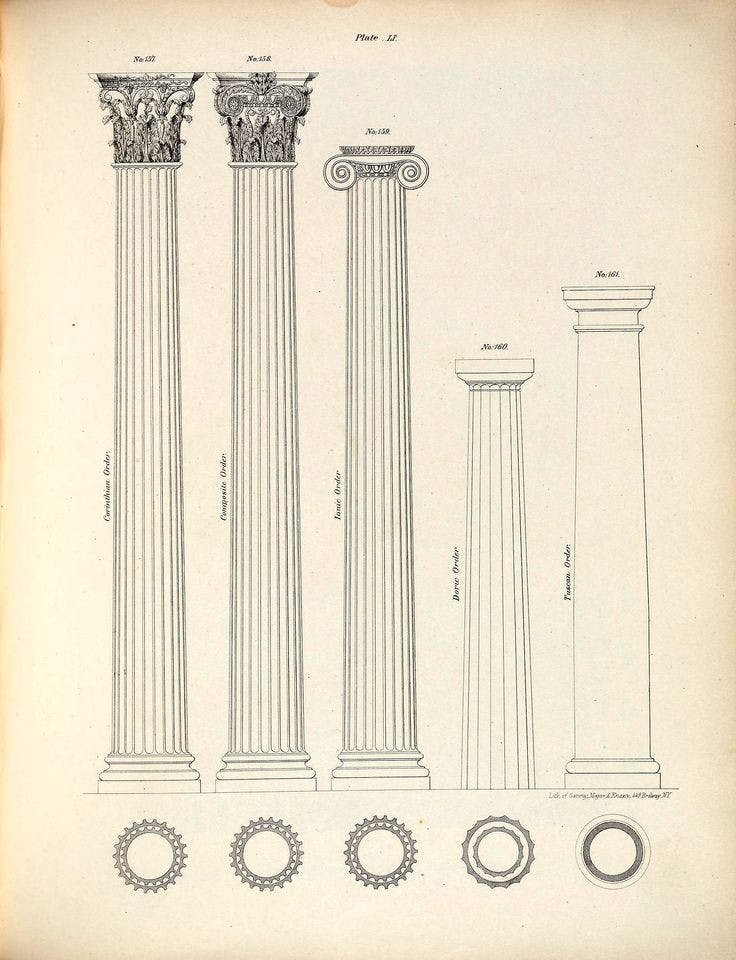
The pillar is inherently weak.
Here are examples of services that are more or less in Pond Configurations:
- Bitsquare https://bitsquare.io/
- LocalBitcoins https://localbitcoins.com/
- HodlHodl https://hodlhodl.com/
- Samurai Wallet https://samouraiwallet.com/
- Bisq https://bisq.network/
- Electrum https://electrum.org/
- And others https://bitcoin.org/en/choose-your-wallet

Very flat. Nothing to knock down. Each molecule is a Bitcoin user. Find a particular one and stop her. If you can.
But what about Azteco? Is it a Pond or Pillar service?
It’s neither.
Azteco doesn’t hold customer funds and doesn’t have users. It is simply a way to distribute Bitcoin. There are no user accounts. As soon as you redeem your voucher, you have no relationship with Azteco…until you buy another voucher. And another. It’s a rolling, disposable service, that doesn’t tie you down, restrict you or require your long term trust.
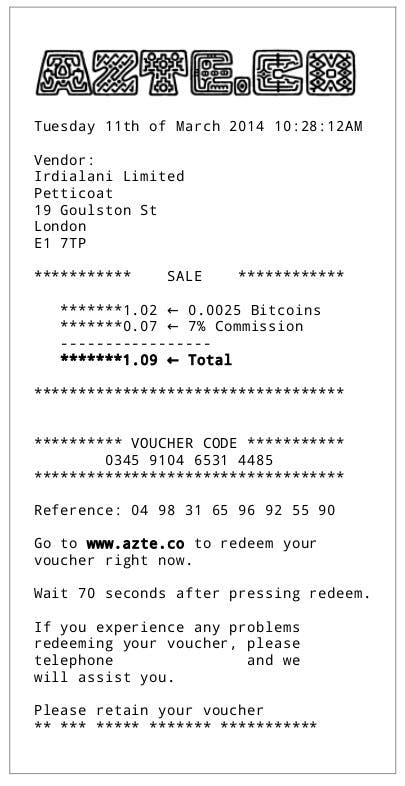
By removing “signed up” users, companies that are structured as flat Ponds have many advantages. They have a smaller attack surface, less burdensome administrative headaches, and are more agile. There is less to explain, keep tidy and manage; the cost of all of these problems is pushed on to other services, which if they are designed correctly, make the problems disappear entirely from the user network.
Pillars have big SPOF (Single Point of Failure) problems that they can’t make go away; they are built into the assumptions and business model.
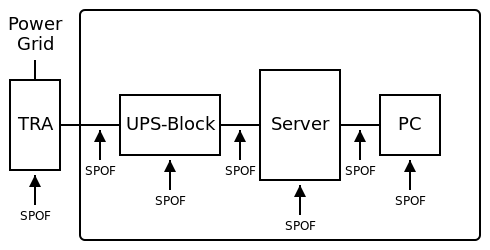
This diagram could be superimposed on any “Pillar Bitcoin” company from Coinbase down. That company is under a very nasty attack, where all of its user data has been unconstitutionally demanded. That attack is possible because Coinbase is a Pillar; a single, “SPOF” monolithic service.
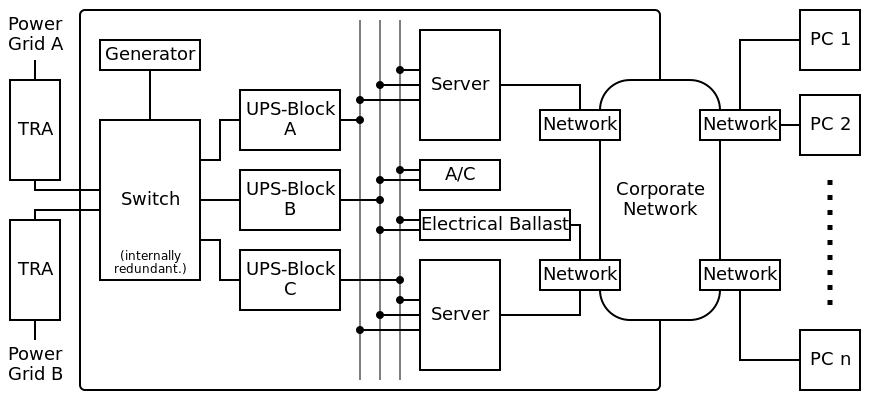
Completely redundant system without SPOFs.(Note: Assumes Generator and Grid sources are each rated at N, Each UPS is rated at N and “A/C” and “Electrical” are in themselves completely fault tolerant systems
This is a much better architecture. The system is entirely redundant, made of separate pieces. If any box (user or service) fails, the system carries on without interruption. In BitTorrent, it’s even better, and remember, this has been enough to prevent anyone stopping the vast majority from sharing files for over a decade, despite needing central search portals to find magnet links that hash the torrent locations.

Not a BitTorrent diagram, but very pretty.
And in a fully decentralized network, The picture is even better, because there is no 2D line (underlying single owner services) that you can traverse and attack. An ideal Bitcoin would be like a Murmuration of Starlings. All the birds are connected by a protocol bound in nature, that cannot be changed. You can shoot a shotgun at it, and a hole will appear where the shot enters. It cannot be stopped, only observed. And marvelled at.
It’s a sky pond.

They Can’t Win
Eventually, the bank problem will be gone forever, but in order to get there, you can’t use a Pillar to break the system; only a pond can dissolve it. New pieces of software like Bitsquare and the very interesting HodlHodl by Roman Snitko are the future in the long term. Eventually a very resilient system of many redundant parts, more resilient than the BitTorrent ecosystem will emerge from the market, and everyone will live with it, and embrace it, just like they embrace the Internet, and accept it as a fact of life.
Finally, it should be clear to everyone that the ideal, if you are running a Bitcoin business, is to have total control over every part of your service, and to never rely on any third party for anything but the basics, like operating systems, ISPs and hardware. Any service you can get from an API, like Bitcoin network connectivity should be done “in house”, with your own software instances and equipment. As soon as you rely on someone else, the Pillarization Process begins.
Here are some off the cuff rules of thumb. Flatten and spread out. Reduce complexity. Absolutely reject all identity other than what Bitcoin provides by default. Think UNIX. Reduce footprint. Increase speed. Make it disposable. Conform to the nature of the tools; completely reject “Bitcoin Skeuomorphism” — making services that mimic banks and other institutions.
And then…we win.
If you like the content and feel so obliged to send some love via BTC donations you can do so at the address below:↴