
January 2016 Journal
WORDS is a monthly journal of Bitcoin commentary. This issue collects the January 2016 writing in the WORDS archive. For the uninitiated, getting up to speed on Bitcoin can seem daunting. Content is scattered across the internet, in some cases behind paywalls, and content has been lost forever. That’s why we made this journal, to preserve and further the understanding of Bitcoin.
Behold mighty exahash, hammer of the blocks!
By Dave Hudson
Posted January 6, 2016
“Exahash” sounds like it could well have been the hammer of the Norse Gods of old as it defeated all in battle. In the Bitcoin world of early 2016, however, a mining network that achieves one exahash per second will soon become part of the new folklore. It will, as others before it, quantitatively destroy all earlier incarnations of itself.
Common wisdom that this ever-increasing hash rate makes the Bitcoin network continually stronger, but what does that strength mean? What is it stronger than? What guarantees does it offer? The answer, as so often, is perhaps less clear-cut than we might first imagine!
The nature of Bitcoin hashing (an aside)
The Bitcoin network is secured and processes transactions by mining. Mining comprises two activities, block making and hashing. Block making is generally the preserve of very large miners or mining pool operators (see “The gambler’s guide to Bitcoin mining”) while hashing is the activity that can be decentralized to many different operators. For our purposes, though, we’re not interested in block making, but instead hashing.
Hashing is the process by which computational guesses are made in order to solve the cryptographic puzzle required to mine a Bitcoin block. The hashing process is the “work” in the “proof-of-work” that is often synonymous with Bitcoin mining.
When we talk about “work” we really mean this in a thermodynamic sense. The work involves performing a deliberately uninteresting computational task that takes useful energy (electricity) and turns it into less useful energy (heat). The purpose is for the hashing engines to demonstrate their expenditure of real-world-valuable electricity in the chance of obtaining Bitcoins via mining rewards.
In theory the system can be gamed by trying to find uses for the less useful heat energy, but in practice this is only used in a very small part of the network and generally doesn’t fit well with most heat usage patterns. Most users don’t want continual heat, while Bitcoin mining hardware depreciates in value too fast for users to afford to run it at less than 100% utilization. Entropy is the major winner.
While not terribly environmentally friendly the design pattern does work rather well, but there are unanswered questions about long-term implications of proof-of-work networks. While watching the most recent episode of Star Wars and seeing the First Order’s Starkiller Base draining all of the power from a sun I was left wondering if this was the ultimate fate of proof-of-work!
Hash rates
Hash rates have been incrementally on the rise for very good economic reasons. Throughout 2015 their growth rates reflected the lower BTC:USD valuation, but with the increase in the value of Bitcoins and the introduction of new 16nm ASICs there has been room for yet another period of rapid hash rate expansions.
2009 wasn’t very interesting for Bitcoin mining so we take up our story from 2010:
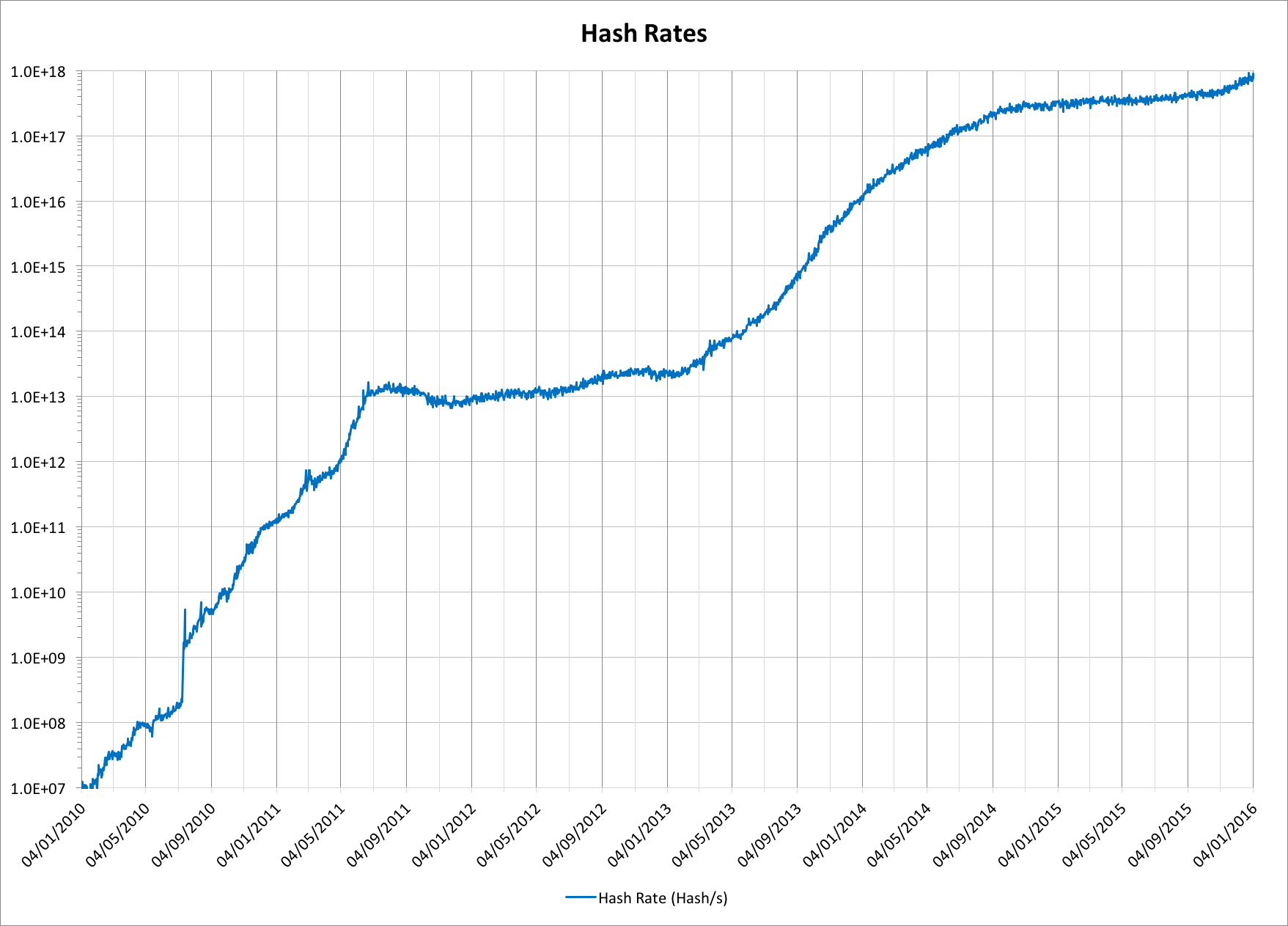
Hash rates in the Bitcoin network from 2010 to 2016
The chart is plotted on a logarithmic scale to make it meaningful. Each vertical graduation is 10x larger than the one immediately below. The late 2015 plot is apparently showing a big uptick but it remains to be seen just how large this will actually be, but that 1 exahash per second figure (1.0 x 10^18^ hashes per second) is quite staggering. Generally, these sorts of numbers just don’t appear in normal engineering activities. To put this in perspective, if we had every person on the planet each make the same sorts of guesses that the hashing network does then every one of us would need to make more than 135 million guesses per second to match this same rate.
What does proof-of-work actually do?
Proof-of-work is intended to secure the Bitcoin network. It does this by making it computationally very difficult for a bad actor to change historical transactions. They would have to generate a newer, stronger, proof-of-work than has been done by the good actors within the system. When we actually talk about this sort of proof, however, what’s really meant is that we believe the probability of constructing an alternative timeline for the Bitcoin blockchain becomes sufficiently low that it’s not a practical concern. The mathematics for this are given in the original Satoshi white paper.
It’s generally presumed that newer work makes it incrementally less likely that really old work could be overturned. This would certainly be true if the network didn’t get faster, but what are the actual numbers?
We can start by considering the measured hash rates since the start of the Bitcoin network, but rather than looking at the hash rate per second, let’s look at two other numbers. Let’s evaluate the total number of hashes computed ever since the first genesis block, and the number of hashes computed on any given day. Hash rate numbers aren’t precise, but statistically, over time, they work out pretty accurately:
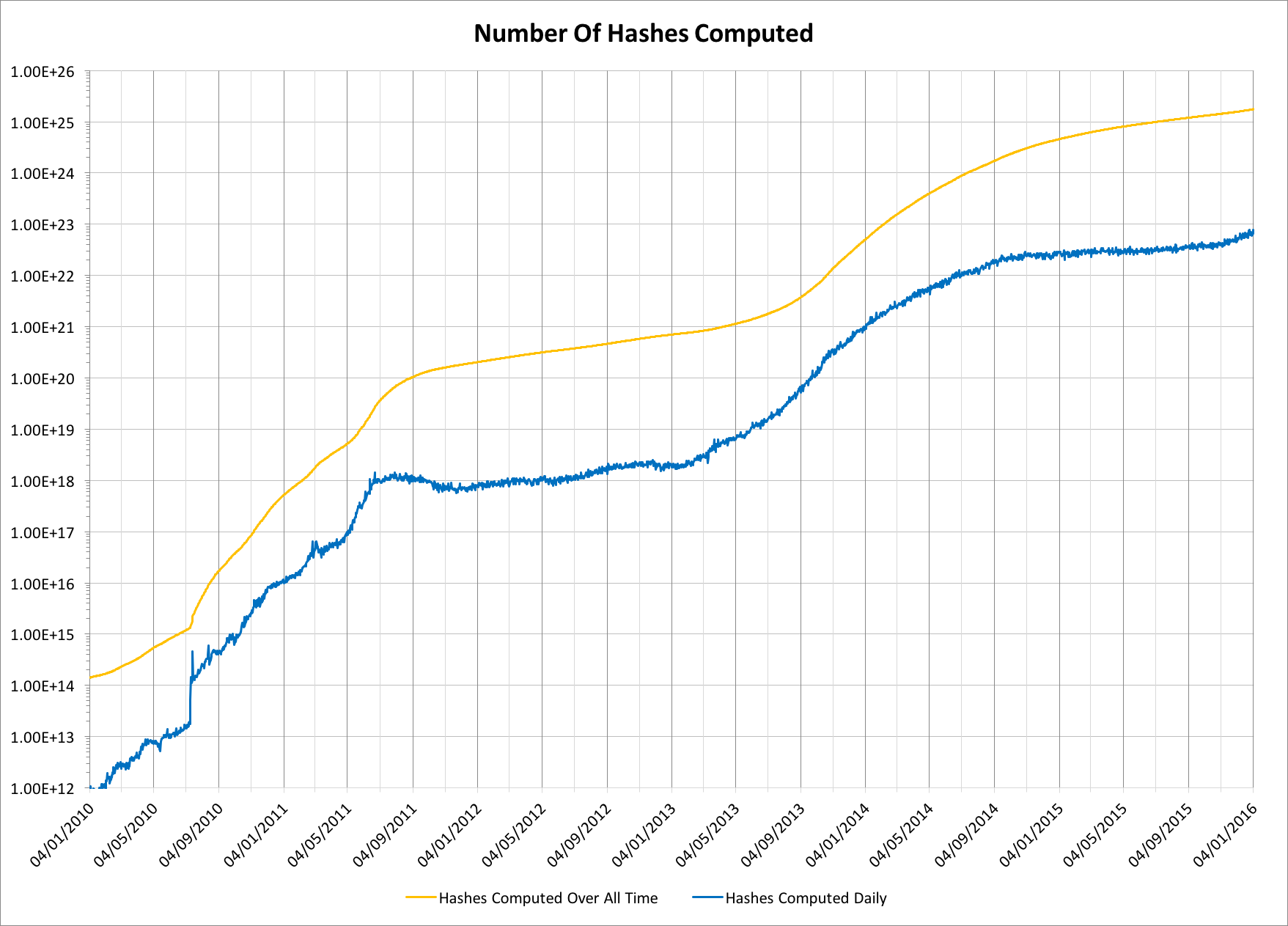
Numbers of Bitcoin hashes over all time and per day
Notice that both traces are plotted on the same axis!
The chart tells us something really interesting about how much faster the network is getting over time. On, or around, 2011-08-31 the total computed hashes hit 100 exahashes (1.0 x 10^20^ hashes). A little over 2 years later, on, or around, 2013-09-23 the number of hashes computed on a daily basis hit the same number. Had the network of 2013-09-23 been available before the end of August 2011 it would have been possible to recompute an entirely new Bitcoin history (32 months of work) in a single day!
If we look at the two traces it becomes obvious that as the network hashing capacity undergoes significant growth that the gaps become much smaller. If we consider the 10 zettahash (1.0 x 10^22^) level, the cumulative date was around 2013-10-22, and the daily date was 2014-06-16. Instead of 24 months required for the 100 exahash level, slightly less than 8 months was required for 10 zettahashes.
A new metric
What we’ve just seen is something of an intellectual curiosity, but let’s consider a new metric. How long it would take the network to recompute all of the previous history? We can do this by plotting the ratio of the total hashes computed over all time to the hashes computed on each day up to that point:
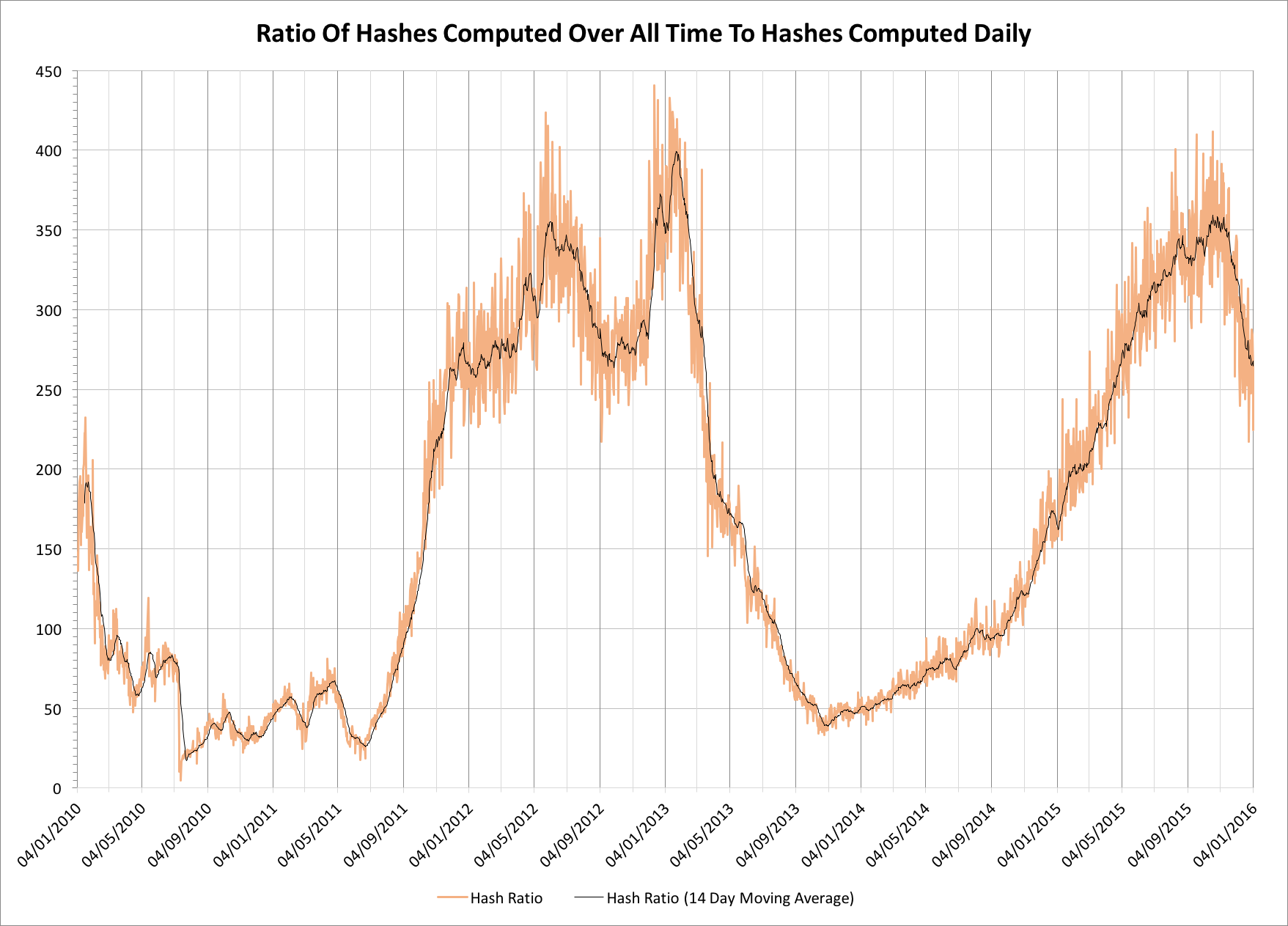
Ratio of total cumulative hashes to daily hashes
We see something new! During periods of extreme, rapid, expansion the hashing capacity can accelerate to a point where all earlier proofs of work become dramatically less valuable. Steady network growth in most of 2015 culminated in the network requiring almost 12 months of computation to recompute every block since the genesis block, but only two months later the progression towards 1 exahash/s has seen this fall to under 9 months; the entire blockchain history is apparently less strong than 2 months ago! In the middle of the extreme expansion from the first wave of ASICs during November 2013 the network could recompute the entire blockchain history of 58 months in under 40 days.
Far from being a constantly strengthening network, we instead see that the network sometimes undergoes periods in which the cumulative weight of earlier proofs of work can become significantly less valuable, albeit perhaps only for a few months until new work is added. The lost work is, however, never recovered.
General threat models for the Bitcoin network consider the risks of a 51% attacker causing problems for new transactions. If, however, the Bitcoin network is used to anchor other blockchains, the history itself becomes valuable for other reasons, potentially in excess of the value for Bitcoin itself. In the short term there is no obvious technology to supplant the current ASIC roadmap, but we might have some pause for thought about whether, environmental concerns aside, proof-of-work alone will be sufficient to secure the long-term history of the Bitcoin blockchain.
The resolution of the Bitcoin experiment
By The resolution of the Bitcoin experiment
Posted January 14, 2016
I’ve spent more than 5 years being a Bitcoin developer. The software I’ve written has been used by millions of users, hundreds of developers, and the talks I’ve given have led directly to the creation of several startups. I’ve talked about Bitcoin on Sky TV and BBC News. I have been repeatedly cited by the Economist as a Bitcoin expert and prominent developer. I have explained Bitcoin to the SEC, to bankers and to ordinary people I met at cafes.
From the start, I’ve always said the same thing: Bitcoin is an experiment and like all experiments, it can fail. So don’t invest what you can’t afford to lose. I’ve said this in interviews, on stage at conferences, and over email. So have other well known developers like Gavin Andresen and Jeff Garzik.
But despite knowing that Bitcoin could fail all along, the now inescapable conclusion that it has failed still saddens me greatly. The fundamentals are broken and whatever happens to the price in the short term, the long term trend should probably be downwards. I will no longer be taking part in Bitcoin development and have sold all my coins.
Why has Bitcoin failed? It has failed because the community has failed. What was meant to be a new, decentralised form of money that lacked “systemically important institutions” and “too big to fail” has become something even worse: a system completely controlled by just a handful of people. Worse still, the network is on the brink of technical collapse. The mechanisms that should have prevented this outcome have broken down, and as a result there’s no longer much reason to think Bitcoin can actually be better than the existing financial system.
Think about it. If you had never heard about Bitcoin before, would you care about a payments network that:
- Couldn’t move your existing money
- Had wildly unpredictable fees that were high and rising fast
- Allowed buyers to take back payments they’d made after walking out of shops, by simply pressing a button (if you aren’t aware of this “feature” that’s because Bitcoin was only just changed to allow it)
- Is suffering large backlogs and flaky payments
- … which is controlled by China
- … and in which the companies and people building it were in open civil war?
I’m going to hazard a guess that the answer is no.
Deadlock on the blocks
In case you haven’t been keeping up with Bitcoin, here is how the network looks as of January 2016.
The block chain is full. You may wonder how it is possible for what is essentially a series of files to be “full”. The answer is that an entirely artificial capacity cap of one megabyte per block, put in place as a temporary kludge a long time ago, has not been removed and as a result the network’s capacity is now almost completely exhausted.
Here’s a graph of block sizes.
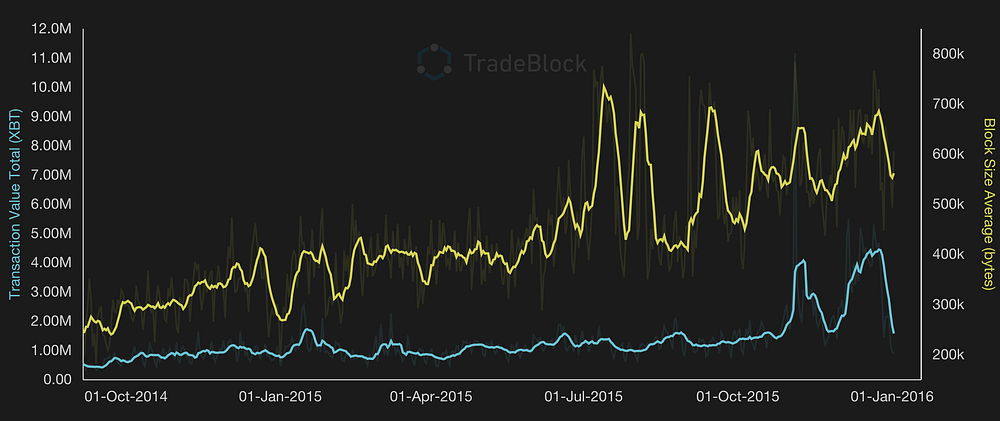
The peak level in July was reached during a denial-of-service attack in which someone flooded the network with transactions in an attempt to break things, calling it a “stress test”. So that level, about 700 kilobytes of transactions (or less than 3 payments per second), is probably about the limit of what Bitcoin can actually achieve in practice
- NB
You may have read that the limit is 7 payments per second. That’s an old figure from 2011 and Bitcoin transactions got a lot more complex since then, so the true figure is a lot lower.
The reason the true limit seems to be 700 kilobytes instead of the theoretical 1000 is that sometimes miners produce blocks smaller than allowed and even empty blocks, despite that there are lots of transactions waiting to confirm — this seems to be most frequently caused by interference from the Chinese “Great Firewall” censorship system. More on that in a second.
If you look closely, you can see that traffic has been growing since the end of the 2015 summer months. This is expected. I wrote about Bitcoin’s seasonal growth patterns back in March.
Here’s weekly average block sizes:
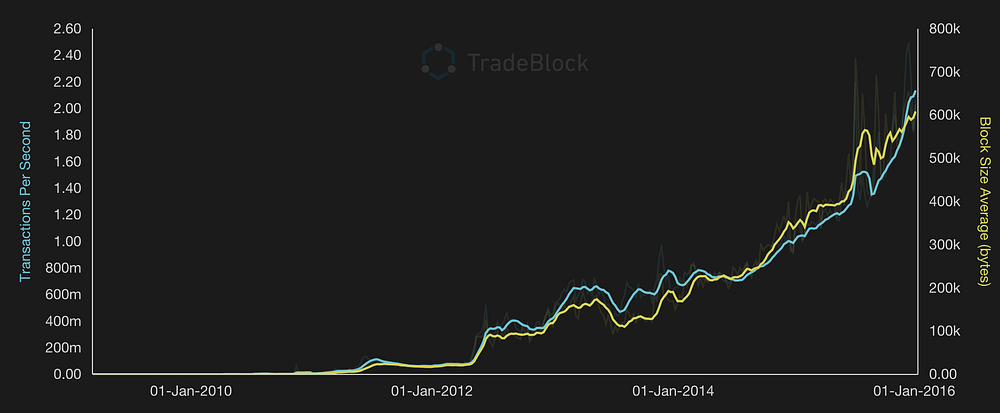
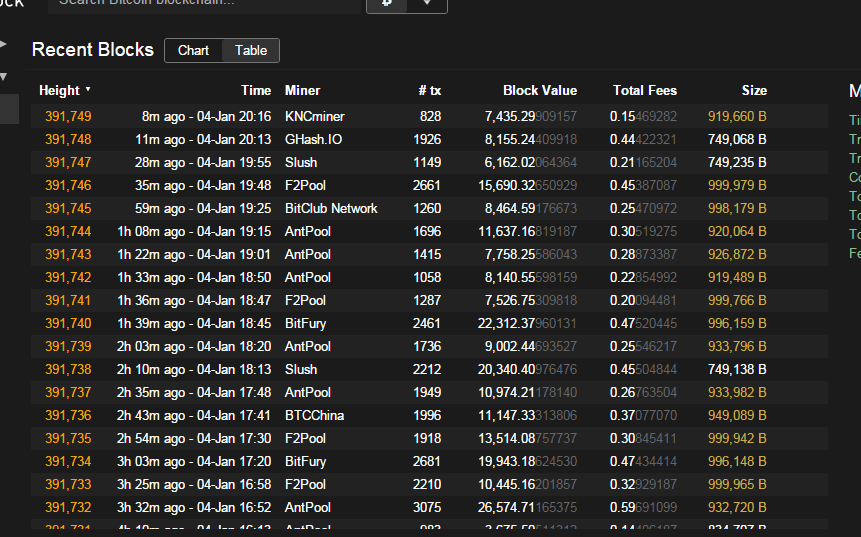
So the average is nearly at the peak of what can be done. Not surprisingly then, there are frequent periods in which Bitcoin can’t keep up with the transaction load being placed upon it and almost all blocks are the maximum size, even when there is a long queue of transactions waiting. You can see this in the size column (the 750kb blocks come from miners that haven’t properly adjusted their software):
When networks run out of capacity, they get really unreliable. That’s why so many online attacks are based around simply flooding a target computer with traffic. Sure enough, just before Christmas payments started to become unreliable and at peak times backlogs are now becoming common.
Quoting a news post by ProHashing, a Bitcoin-using business:
Some customers contacted Chris earlier today asking why our bitcoin payouts didn’t execute …
The issue is that
it’s now officially impossible to depend upon the bitcoin network anymore to know when or if your payment will be transacted,
because the congestion is so bad that even minor spikes in volume create dramatic changes in network conditions
. To whom is it acceptable that one could wait either 60 minutes or 14 hours, chosen at random?
It’s ludicrous that people are actually writing posts on reddit claiming that there is no crisis. People were criticizing my post yesterday on the grounds that I somehow overstated the seriousness of the situation. Do these people actually use the bitcoin network to send money everyday?
ProHashing encountered another near-miss between Christmas and New Year, this time because a payment from an exchange to their wallet was delayed.
Bitcoin is supposed to respond to this situation with automatic fee rises to try and get rid of some users, and although the mechanisms behind it are barely functional that’s still sort of happening: it is rapidly becoming more and more expensive to use the Bitcoin network. Once upon a time, Bitcoin had the killer advantage of low and even zero fees, but it’s now common to be asked to pay more to miners than a credit card would charge.
Why has the capacity limit not been raised? Because the block chain is controlled by Chinese miners, just two of whom control more than 50% of the hash power. At a recent conference over 95% of hashing power was controlled by a handful of guys sitting on a single stage. The miners are not allowing the block chain to grow.

Why are they not allowing it to grow? Several reasons. One is that the developers of the “Bitcoin Core” software that they run have refused to implement the necessary changes. Another is that the miners refuse to switch to any competing product, as they perceive doing so as “disloyalty” —and they’re terrified of doing anything that might make the news as a “split” and cause investor panic. They have chosen instead to ignore the problem and hope it goes away.
And the final reason is that the Chinese internet is so broken by their government’s firewall that moving data across the border barely works at all, with speeds routinely worse than what mobile phones provide. Imagine an entire country connected to the rest of the world by cheap hotel wifi, and you’ve got the picture. Right now, the Chinese miners are able to — just about — maintain their connection to the global internet and claim the 25 BTC reward ($11,000) that each block they create gives them. But if the Bitcoin network got more popular, they fear taking part would get too difficult and they’d lose their income stream. This gives them a perverse financial incentive to actually try and stop Bitcoin becoming popular.
Many Bitcoin users and observers have been assuming up until very recently that somehow these problems would all sort themselves out, and of course the block chain size limit would be raised. After all, why would the Bitcoin community … the community that has championed the block chain as the future of finance … deliberately kill itself by strangling the chain in its crib? But that’s exactly what is happening.
The resulting civil war has seen Coinbase — the largest and best known Bitcoin startup in the USA — be erased from the official Bitcoin website for picking the “wrong” side and banned from the community forums. When parts of the community are viciously turning on the people that have introduced millions of users to the currency, you know things have got really crazy.
Nobody knows what’s going on
If you haven’t heard much about this, you aren’t alone. One of the most disturbing things that took place over the course of 2015 is that the flow of information to investors and users has dried up.
In the span of only about eight months, Bitcoin has gone from being a transparent and open community to one that is dominated by rampant censorship and attacks on bitcoiners by other bitcoiners. This transformation is by far the most appalling thing I have ever seen, and the result is that I no longer feel comfortable being associated with the Bitcoin community.
Bitcoin is not intended to be an investment and has always been advertised pretty accurately: as an experimental currency which you shouldn’t buy more of than you can afford to lose. It is complex, but that never worried me because all the information an investor might want was out there, and there’s an entire cottage industry of books, conferences, videos and websites to help people make sense of it all.
That has now changed.
Most people who own Bitcoin learn about it through the mainstream media. Whenever a story goes mainstream the Bitcoin price goes crazy, then the media report on the price rises and a bubble happens.
Stories about Bitcoin reach newspapers and magazines through a simple process: the news starts in a community forum, then it’s picked up by a more specialised community/tech news website, then journalists at general media outlets see the story on those sites and write their own versions. I’ve seen this happen over and over again, and frequently taken part in it by discussing stories with journalists.
In August 2015 it became clear that due to severe mismanagement, the “Bitcoin Core” project that maintains the program that runs the peer-to-peer network wasn’t going to release a version that raised the block size limit. The reasons for this are complicated and discussed below. But obviously, the community needed the ability to keep adding new users. So some long-term developers (including me) got together and developed the necessary code to raise the limit. That code was called BIP 101 and we released it in a modified version of the software that we branded Bitcoin XT. By running XT, miners could cast a vote for changing the limit. Once 75% of blocks were voting for the change the rules would be adjusted and bigger blocks would be allowed.
The release of Bitcoin XT somehow pushed powerful emotional buttons in a small number of people. One of them was a guy who is the admin of the bitcoin.org website and top discussion forums. He had frequently allowed discussion of outright criminal activity on the forums he controlled, on the grounds of freedom of speech. But when XT launched, he made a surprising decision. XT, he claimed, did not represent the “developer consensus” and was therefore not really Bitcoin. Voting was an abomination, he said, because:
“One of the great things about Bitcoin is its lack of democracy”
So he decided to do whatever it took to kill XT completely, starting with censorship of Bitcoin’s primary communication channels: any post that mentioned the words “Bitcoin XT” was erased from the discussion forums he controlled, XT could not be mentioned or linked to from anywhere on the official bitcoin.org website and, of course, anyone attempting to point users to other uncensored forums was also banned. Massive numbers of users were expelled from the forums and prevented from expressing their views.
As you can imagine, this enraged people. Read the comments on the announcement to get a feel for it.
Eventually, some users found their way to a new uncensored forum. Reading it is a sad thing. Every day for months I have seen raging, angry posts railing against the censors, vowing that they will be defeated.
But the inability to get news about XT or the censorship itself through to users has some problematic effects.
For the first time, investors have no obvious way to get a clear picture of what’s going on. Dissenting views are being systematically suppressed. Technical criticisms of what Bitcoin Core is doing are being banned, with misleading nonsense being peddled in its place. And it’s clear that many people who casually bought into Bitcoin during one of its hype cycles have no idea that the system is about to hit an artificial limit.
This worries me a great deal. Over the years governments have passed a large number of laws around securities and investments. Bitcoin is not a security and I do not believe it falls under those laws, but their spirit is simple enough: make sure investors are informed. When misinformed investors lose money, government attention frequently follows.
Why is Bitcoin Core keeping the limit?
People problems.
When Satoshi left, he handed over the reins of the program we now call Bitcoin Core to Gavin Andresen, an early contributor. Gavin is a solid and experienced leader who can see the big picture. His reliable technical judgement is one of the reasons I had the confidence to quit Google (where I had spent nearly 8 years) and work on Bitcoin full time. Only one tiny problem: Satoshi never actually asked Gavin if he wanted the job, and in fact he didn’t. So the first thing Gavin did was grant four other developers access to the code as well. These developers were chosen quickly in order to ensure the project could easily continue if anything happened to him. They were, essentially, whoever was around and making themselves useful at the time.
One of them, Gregory Maxwell, had an unusual set of views: he once claimed he had mathematically proven Bitcoin to be impossible. More problematically, he did not believe in Satoshi’s original vision.
When the project was first announced, Satoshi was asked how a block chain could scale to a large number of payments. Surely the amount of data to download would become overwhelming if the idea took off? This was a popular criticism of Bitcoin in the early days and Satoshi fully expected to be asked about it. He said:
The bandwidth might not be as prohibitive as you think … if the network were to get [as big as VISA], it would take several years, and by then, sending [the equivalent of] 2 HD movies over the Internet would probably not seem like a big deal.
It’s a simple argument: look at what existing payment networks handle, look at what it’d take for Bitcoin to do the same, and then point out that growth doesn’t happen overnight. The networks and computers of the future will be better than today. And indeed back-of-the-envelope calculations suggested that, as he said to me, “it never really hits a scale ceiling” even when looking at more factors than just bandwidth.
Maxwell did not agree with this line of thinking. From an interview in December 2014:
Problems with decentralization as bitcoin grows are not going to diminish either, according to Maxwell: “There’s an inherent tradeoff between scale and decentralization when you talk about transactions on the network.”
The problem, he said, is that as bitcoin transaction volume increases, larger companies will likely be the only ones running bitcoin nodes because of the inherent cost.
The idea that Bitcoin is inherently doomed because more users means less decentralisation is a pernicious one. It ignores the fact that despite all the hype, real usage is low, growing slowly and technology gets better over time. It is a belief Gavin and I have spent much time debunking. And it leads to an obvious but crazy conclusion: if decentralisation is what makes Bitcoin good, and growth threatens decentralisation, then Bitcoin should not be allowed to grow.
Instead, Maxwell concluded, Bitcoin should become a sort of settlement layer for some vaguely defined, as yet un-created non-blockchain based system.
The death spiral begins
In a company, someone who did not share the goals of the organisation would be dealt with in a simple way: by firing him.
But Bitcoin Core is an open source project, not a company. Once the 5 developers with commit access to the code had been chosen and Gavin had decided he did not want to be the leader, there was no procedure in place to ever remove one. And there was no interview or screening process to ensure they actually agreed with the project’s goals.
As Bitcoin became more popular and traffic started approaching the 1mb limit, the topic of raising the block size limit was occasionally brought up between the developers. But it quickly became an emotionally charged subject. Accusations were thrown around that raising the limit was too risky, that it was against decentralisation, and so on. Like many small groups, people prefer to avoid conflict. The can was kicked down the road.
Complicating things further, Maxwell founded a company that then hired several other developers. Not surprisingly, their views then started to change to align with that of their new boss.
Co-ordinating software upgrades takes time, and so in May 2015 Gavin decided the subject must be tackled once and for all, whilst there was still about 8 months remaining. He began writing articles that worked through the arguments against raising the limit, one at a time.
But it quickly became apparent that the Bitcoin Core developers were hopelessly at loggerheads. Maxwell and the developers he had hired refused to contemplate any increase in the limit whatsoever. They were barely even willing to talk about the issue. They insisted that nothing be done without “consensus”. And the developer who was responsible for making the releases was so afraid of conflict that he decided any controversial topic in which one side might “win” simply could not be touched at all, and refused to get involved.
Thus despite the fact that exchanges, users, wallet developers, and miners were all expecting a rise, and indeed, had been building entire businesses around the assumption that it would happen, 3 of the 5 developers refused to touch the limit.
Deadlock.
Meanwhile, the clock was ticking.
Massive DDoS attacks on XT users
Despite the news blockade, within a few days of launching Bitcoin XT around 15% of all network nodes were running it, and at least one mining pool had started offering BIP101 voting to miners.
That’s when the denial of service attacks started. The attacks were so large that they disconnected entire regions from the internet:
“I was DDos’d. It was a massive DDoS that took down my entire (rural) ISP. Everyone in five towns lost their internet service for several hours last summer because of these criminals. It definitely discouraged me from hosting nodes.”
In other cases, entire datacenters were disconnected from the internet until the single XT node inside them was stopped. About a third of the nodes were attacked and removed from the internet in this way.
Worse, the mining pool that had been offering BIP101 was also attacked and forced to stop. The message was clear: anyone who supported bigger blocks, or even allowed other people to vote for them, would be assaulted.
The attackers are still out there. When Coinbase, months after the launch, announced they had finally lost patience with Core and would run XT, they too were forced offline for a while.
Bogus conferences
Despite the DoS attacks and censorship, XT was gaining momentum. That posed a threat to Core, so a few of its developers decided to organise a series of conferences named “Scaling Bitcoin”: one in August and one in December. The goal, it was claimed, was to reach “consensus” on what should be done. Everyone likes a consensus of experts, don’t they?
It was immediately clear to me that people who refused to even talk about raising the limit would not have a change of heart because they attended a conference, and moreover, with the start of the winter growth season there remained only a few months to get the network upgraded. Wasting those precious months waiting for conferences would put the stability of the entire network at risk. The fact that the first conference actually banned discussion of concrete proposals didn’t help.
So I didn’t go.
Unfortunately, this tactic was devastatingly effective. The community fell for it completely. When talking to miners and startups, “we are waiting for Core to raise the limit in December” was one of the most commonly cited reasons for refusing to run XT. They were terrified of any media stories about a community split that might hurt the Bitcoin price and thus, their earnings.
Now the last conference has come and gone with no plan to raise the limit, some companies (like Coinbase and BTCC) have woken up to the fact that they got played. But too late. Whilst the community was waiting, organic growth added another 100,000 transactions per day.
A non-roadmap
Jeff Garzik and Gavin Andresen, the two of five Bitcoin Core committers who support a block size increase (and the two who have been around the longest), both have a stellar reputation within the community. They recently wrote a joint article titled “Bitcoin is Being Hot-Wired for Settlement”.
Jeff and Gavin are generally softer in their approach than I am. I’m more of a tell-it-like-I-see-it kinda guy, or as Gavin has delicately put it, “honest to a fault”. So the strong language in their joint letter is unusual. They don’t pull any punches:
The proposed
roadmap
currently being discussed in the bitcoin community has some good points in that it does have a plan to accommodate more transactions, but
it fails to speak plainly to bitcoin users and acknowledge key downsides
.
Core block size does not change;
there has been zero compromise
on that issue.
In an optimal, transparent, open source environment, a
BIP
would be produced … this has not happened
One of the explicit goals of the Scaling Bitcoin workshops was to funnel the chaotic core block size debate into an orderly decision making process. That did not occur.
In hindsight, Scaling Bitcoin stalled a block size decision
while transaction fee price and block space pressure continue to increase.
Failing to speak plainly, as they put it, has become more and more common. As an example, the plan Gavin and Jeff refer to was announced at the “Scaling Bitcoin” conferences but doesn’t involve making anything more efficient, and manages an anemic 60% capacity increase only through an accounting trick (not counting some of the bytes in each transaction). It requires making huge changes to nearly every piece of Bitcoin-related software. Instead of doing a simple thing and raising the limit, it chooses to do an incredibly complicated thing that might buy months at most, assuming a huge coordinated effort.
Replace by fee
One problem with using fees to control congestion is that the fee to get to the front of the queue might change after you made a payment. Bitcoin Core has a brilliant solution to this problem — allow people to mark their payments as changeable after they’ve been sent, up until they appear in the block chain. The stated intention is to let people adjust the fee paid, but in fact their change also allows people to change the payment to point back to themselves, thus reversing it.
At a stroke, this makes using Bitcoin useless for actually buying things, as you’d have to wait for a buyer’s transaction to appear in the block chain … which from now on can take hours rather than minutes, due to the congestion.
Core’s reasoning for why this is OK goes like this: it’s no big loss because if you hadn’t been waiting for a block before, there was a theoretical risk of payment fraud, which means you weren’t using Bitcoin properly. Thus, making that risk a 100% certainty doesn’t really change anything.
In other words, they don’t recognise that risk management exists and so perceive this change as zero cost.
This protocol change will be released with the next version of Core (0.12), so will activate when the miners upgrade. It was massively condemned by the entire Bitcoin community but the remaining Bitcoin Core developers don’t care what other people think, so the change will happen.
If that didn’t convince you Bitcoin has serious problems, nothing will. How many people would think bitcoins are worth hundreds of dollars each when you soon won’t be able to use them in actual shops?
Conclusions
Bitcoin has entered exceptionally dangerous waters. Previous crises, like the bankruptcy of Mt Gox, were all to do with the services and companies that sprung up around the ecosystem. But this one is different: it is a crisis of the core system, the block chain itself.
More fundamentally, it is a crisis that reflects deep philosophical differences in how people view the world: either as one that should be ruled by a “consensus of experts”, or through ordinary people picking whatever policies make sense to them.
Even if a new team was built to replace Bitcoin Core, the problem of mining power being concentrated behind the Great Firewall would remain. Bitcoin has no future whilst it’s controlled by fewer than 10 people. And there’s no solution in sight for this problem: nobody even has any suggestions. For a community that has always worried about the block chain being taken over by an oppressive government, it is a rich irony.
Still, all is not yet lost. Despite everything that has happened, in the past few weeks more members of the community have started picking things up from where I am putting them down. Where making an alternative to Core was once seen as renegade, there are now two more forks vying for attention (Bitcoin Classic and Bitcoin Unlimited). So far they’ve hit the same problems as XT but it’s possible a fresh set of faces could find a way to make progress.
There are many talented and energetic people working in the Bitcoin space, and in the past five years I’ve had the pleasure of getting to know many of them. Their entrepreneurial spirit and alternative perspectives on money, economics and politics were fascinating to experience, and despite how it’s all gone down I don’t regret my time with the project. I woke up this morning to find people wishing me well in the uncensored forum and asking me to stay, but I’m afraid I’ve moved on to other things. To those people I say: good luck, stay strong, and I wish you the best.
“This is just my opinion”
By Beautyon
Posted January 18, 2016


I am always wary of any piece of writing that starts with, “This is just my opinion”. We know its your opinion, humble author. This is normally an indication that whoever the writer is, he is going to try to lie to you, or unleash a torrent of fallacies.
The block size debate has entered into another phase since the rage quit of Mike Hearn, who has managed to annoy just about everyone.
Ben Davenport is the CTO at BitGo a rational, serious and well mannered man, not prone to trolling or tough talk on Twitter.
People on both sides of the Bitcoin capacity split agree that using the New York Times to declare Bitcoin “dead” when he personally chided others for discussing Bitcoin in any context other than vanilla use cases is a good indication of Hearn’s character. Having said that, he is of course, free to say whatever he likes. It doesn’t matter what he says. Software cannot care about what people think or say, and this is about software only, not anyone’s personality, opinion or politics. The people who sold their Bitcoin on reading the New York Times do not understand the nature of what they own, and in the long history of Bitcoin are nothing more than a blip.
People’s reactions do not matter. Only the software matters.People’s opinions do not matter. Only the software matters.
Your training in any field doesn’t matter except one; software, and then inside that subset, there are other high bars to pass before what you say should be listened to, and even then if the listener is not a machine, what you have to say is irrelevant.
This is the age of machine mediated human interactions. The men who write the instructions for those machines matter, and no one else.
The endless, iteration and classification and placating of the different groups on each side of this issue is pointless. It pads out writing and produces nothing. What is needed here is software, not discussion about moving a slider to the left or right by people who couldn’t write a “Hello World” programme, let alone conceive of or see the need for Bitcoin.
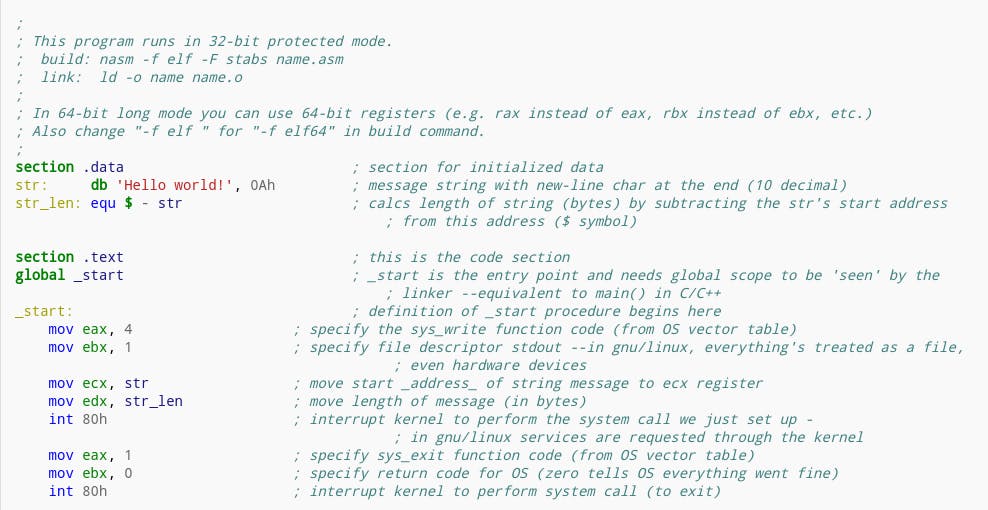
“Hello world!” program for Linux in NASM style assembly using the C standard library
Saying that, “Bitcoin has issues” is meaningless. Bitcoin is software and a network that is currently in a state where it operates as specified. Because the people who use it are increasing in number and demanding more data to pass into and around it, there will come a point where the network as it currently stands will not be able to handle the throughput. There is a solution to this problem. What that solution is is the debate.
Now a brief interruption for recursion. The article you are reading is not a “defence of Bitcoin”. Bitcoin does not need to be defended, any more than arithmetic needs to be defended. It does what it is designed to do, and rational men are not in an “Arithmetic Camp”; they simply accept that 1+1=2. It is exactly the same with Bitcoin. Now of course, you can join a club called “Bitcoin is Dead” if you like. Its prominent members are listed at the Nakamoto Institute. That does not change the nature of math, software or Bitcoin. No matter what you choose to believe.
Bitcoin is a scarce resource, and like any scarce resource, it has a price. This is true of Bitcoin when it imitates money, and the price of processing the transactions. In the real world, when something is scarce, its price goes up in the market. Socialists cannot accept this, and want something for nothing. If there is a scarcity of money in the economy, “Just Print More!” is their answer. They do not take into account the consequences of printing money (impoverishing the poor, stealing value from savers and wage earners and debasing the currency a.k.a. “theft”) they use the printing press as a blunt instrument without any understanding of what money is, its function in a market or even the history of money printing (inflation) which always ends in currency collapse.

Is it big enough for you?
The fees in Bitcoin are a market device to control allocation of a scarce network resource. If something is cheap, anyone can use it and flood the network. If however it costs a dollar to spend a dollar, no one will use Bitcoin to send a dollar. They will use it to send 100 dollars because that is still cheaper than Western Union. In this example, higher transaction fees raise the bar, shutting out the utility of Bitcoin for any transaction under a dollar, but Bitcoin itself remains unchanged, and entirely useful.
Increasing the fees payable to send Bitcoin would mean that micro payments would eventually become uneconomic. One camp claims that, “Bitcoin was not designed for buying coffee at Starbucks”, and they are correct. Bitcoin’s explicit mission is much bigger than that; it was designed to destroy government fiat currency forever. Taking this into account, its clear that it may be the best solution in terms of the Bitcoin creator’s philosophy is to use another currency on top of or along side Bitcoin to facilitate your urge to buy coffee.
Like the Birmingham Button Makers who minted private currencies in the 1700s
these “sub Bitcoin” tokens could be created and circulated in very profitable services, and large Bitcoin reconciliation done on a nightly basis between services. Its very easy to come up with “solutions” of that nature, and of course, they are mere thought experiments that only have value if they are transformed into software. That being said, the company Blockchain could actually do something like this right now.
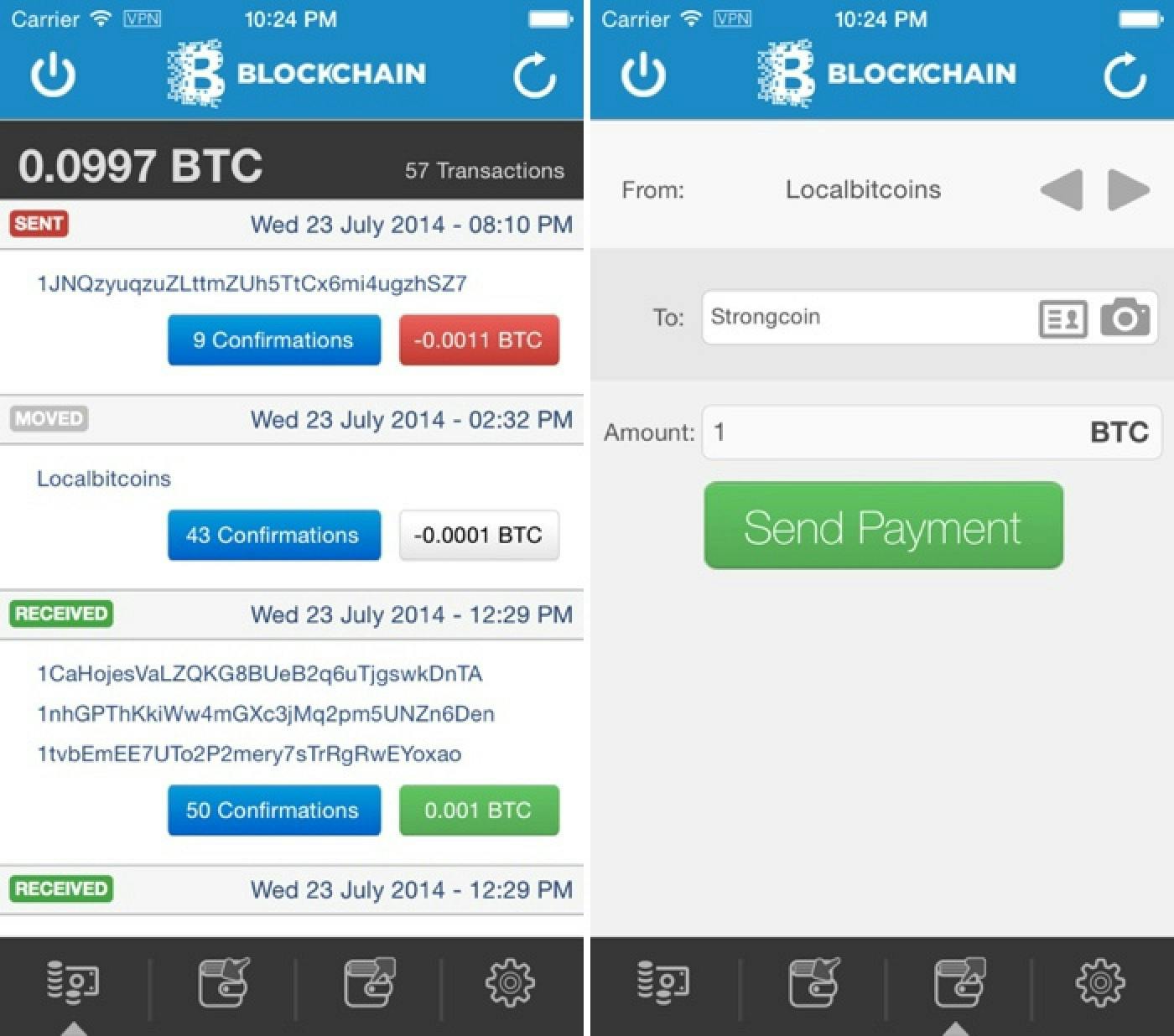
Blockchain could create a new type of transaction in their service, which is “Blockchain to Blockchain”. If two Bitcoin users are both Blockchain users the Blockchain system will be able to detect this and then move the display balance between the two instantly, because it is a MySQL UPDATE command and not a Bitcoin transaction on the Blockchain proper. That balance could be withdrawn to the outside world seamlessly from a pool Blockchain holds to facilitate outgoing transaction requests from their users.
What I just roughly described does two things. It creates an advantage for merchants to select Blockchain as their platform over other companies. Instant guaranteed reconciliation is something people complain about in Bitcoin, and what I outlined would solve it for Blockchain users. If you use Blockchain in this idea, your Bitcoin balance is guaranteed to instantly “confirm”. Users know that when they receive Bitcoin there will be no delay, and they can always transfer out to the live network as an option if they need to. Bitcoin would be better on Blockchain than being exposed to the live Bitcoin network. This would drive adoption of Blockchain as a platform, for merchants and users without it becoming another walled garden.
The solutions to this problem do not necessarily need to be solved by changing Bitcoin; this is something that is not very well understood, and which represents a large market opportunity to build software that mitigates the transaction scarcity in the current running network. Coming up with ideas to solve difficult problems is hard. Writing the software that implements those rare ideas is even harder. This is why so many people, who are not very good thinkers and who cannot even write software, are supporting simplistic “just move the slider to the right” quick fixes.
Bitcoin does not “have issues”. _Hysterical people “_have issues”. Also, and this is very important, complex underlying software design decisions are not something that can be put to a democratic vote. Software is not about politics, and your experience in politics, the law or any other field is completely irrelevant to software logic. The only thing that matters is the performance of the software and nothing else. This is how the Linux Kernel is developed, very successfully, and the same principles apply to Bitcoin development.

If Linus was Satoshi, we would not be having this discussion.
Some people think that collective decision making is part of Bitcoin, and that somehow good manners makes good software. This is not true. Bitcoin was written by either one man or a small group of men with a single well defined goal. They did not consult with the pubic for their opinion, and did not seek anyone’s pet economic theories, input or advice. They just did what was required to meet the narrow specification, and then released their software. Nothing has changed in Bitcoin. Its ethos and reason for being has not changed simply because some people from some State sanctioned profession are “stoked about the possibilities” of this “technology” not even understanding that they are talking about software, not a new technology. I have a strong suspicion that these people are about to be taught a big lesson about who has the real power in Bitcoin…I could be, wrong, of course.
Collective decision making does not confer or impute legitimacy or technical correctness into anything. The people who think that it does are brainwashed.
Voting for a new interface feature at the invitation of an app developer is not the same as voting for a change in the fundamental workings of a protocol that is owned by no one, and anyone that understands this would never accept that a vote is the way to resolve a matter of pure logic.
This is the root problem of the idea of “The Bitcoin Community”. Users of software are not qualified to make decisions about how software is written at the source code level. Its as absurd as asking the public to vote on the software in IPV6. The public has no idea how these deeply complex systems work, and of course, the way programmes interact with each other in a dynamic system can exhibit emergent properties and behaviour that even developers cannot predict will happen.
This is why bugs keep being found in large complex software systems. The idea that the public making a decision can lessen the chances of disasters, bugs, mistakes or unforeseen consequences of complexity by dint of a vote is absurd on its face. It is only through slow, methodical, properly tested and incremental changes by experienced and talented developers well versed in the way complex software systems work that a project like Bitcoin can be held in a robust state while boosting capacity.
Increasing the costs of sending transactions does not change the nature or underlying source of the network, and it manages capacity through market forces. Bitcoin may not have to change if this method is chosen as the way to mitigate the problems caused by the built in limitations of the protocol.
Alot of noise is being made about 42. No, not that 42, “The Answer to the Ultimate Question of Life, The Universe, and Everything”. I’m talking about the number of banks that are joining “R3CEV” aka “Hearn’s folly”.
It comes as a shock, thanks to a video of a private meeting at The Brookings Institute,
“The Creature from Jekyll Island” 2.0
that R3CEV has no concrete plans, designs, patterns or basic concepts for integration any software of any kind. Their explicit business model is to ask the banks what it is that they want and then to build that. Imagine that you are an inventor of Henry Ford class, and you have just invented the refrigerator. You go to the biggest ice distributor in the country and ask him, “What would you like me to do with my new invention, the electric ice box?”
LOL!
I almost fell of my chair when I heard their representative say they have nothing. Literally nothing. I would love to see the text of the document these 42 banks have actually signed up to. Wouldn’t you?
More disturbingly, this R3 representative knew in advance the subject and text of the New York Times hit piece that was just about to be published.
This was in every way a PR stunt by definition. It was planned in advance and coordinated. Furthermore, Mike Hearn knew that a price affecting public statement was about to be made, and he sold his Bitcoin in advance of the statement. In the stock market, this class of act falls under, “Insider Trading” and is illegal. Even if it were not illegal, who would want someone in their project who was willing to “scorched earth” what they have been working on because they are disgruntled? Only a fool.
Remember; many people use Bitcoin, thousands of developers work on it, and many men have put their life’s savings into it. By publishing a false article, and relying on people’s perception of him being a top authority on Bitcoin, Mike Hearn damaged many people with his irresponsible, false, and despicable outburst. Even if he believed that what he was saying was true, he should have had consideration for “The Community” that he was leaving rather than trying to burn it to the ground with everyone in the building. For a man who thinks anarchism is “jive” and selfish, Hearn has certainly wasted no time looking after his own interests and lust for vengeance at the expense of all Bitcoin users globally.
Back to BankCoin. We must remember that at the senior level, banks are staffed 100% with computer illiterates. Their ATMs are running Microsoft Windows
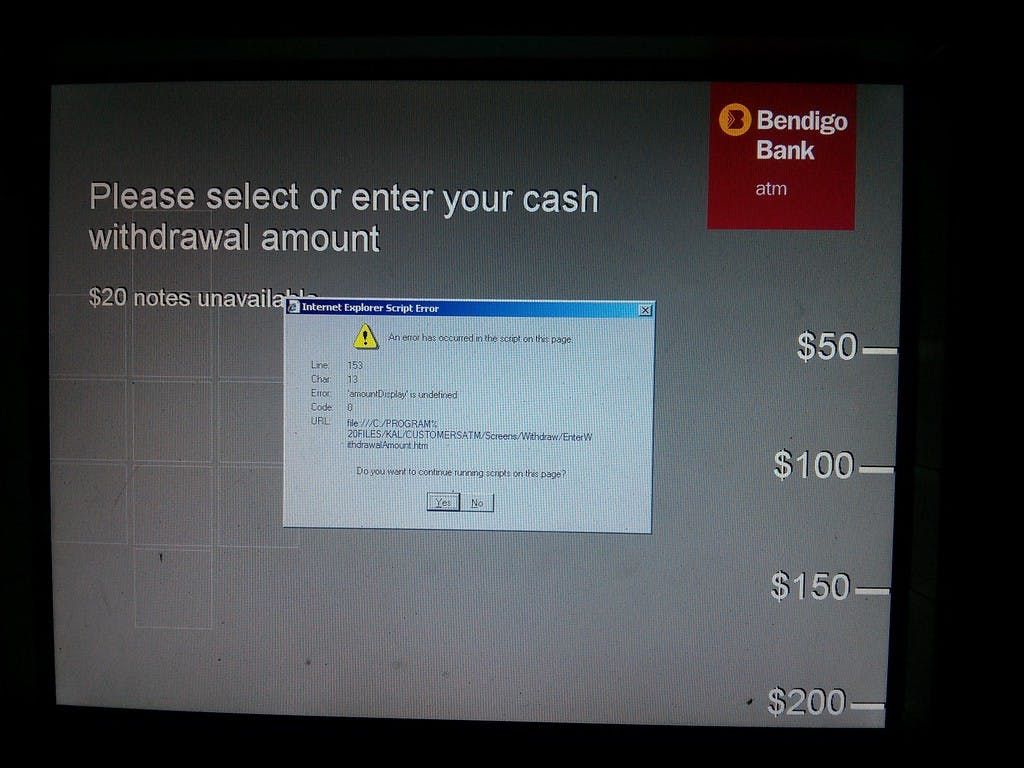
“We use Microsoft, because its the standard”
and at the low level, their systems are still running on COBOL. They are only taking Bitcoin seriously now because newspapers are not ridiculing it, and there is a glimmer of realization that this might be, “The Big One” the earthquake that destroys them forever. The reality is that they have absolutely no understanding about anything to do with Bitcoin. We know this is true, because immediately after the announcement Hearn made in the New York Times, the Bitcoin price fell dramatically. Anyone who understands Bitcoin would have known that Mike Hearn saying, “Bitcoin has Failed”, is meaningless drivel, and would not have run to their trading terminals to sell their Bitcoin. The fact that they did, shows they do not understand the fundamentals of Bitcoin. Bitcoin is not a machine that Mike Hearn has to manually crank to keep it going. Just how stupid can people be?

NO MIKE NO! DON’T GIVE UP NOW!!!
All the breathless chatter about R3CEABCDEFG is nothing more than hot air. They have no software, no plans for any software, and even if they did have a running platform right now, it will be at least a decade before it is completely rolled out. In software, a decade is three lifetimes. There is no way that banks can survive Bitcoin intact. Even without Bitcoin, the banking industry is rapidly transforming, closing its street branches, and then excluding people from entering branches if they do not have the correct level of account. They are restricting cash customers, routinely abusing them and behaving in hostile ways to entrepreneurs and in many areas, acting like an empire in its last days. R3 or no R3 Banks will not be able to adapt to Bitcoin quickly enough. They are held back by the computer illiterate crony capitalists who run them and by the State that regulates them.
Ideally, Bitcoin should not be about the wishes of the owners of any single company. It should be like the Internet, where you can build any service you want on it, set your own rules in software that uses its protocol, and then invite the public to use your service so you profit. In absentia of that, if Bitcoin must have a benevolent dictator, it should be a man of the correct character, philosophy and type.
A man of the incorrect type, is one that thinks it is ethical to block people’s accounts from the entire network because their lifestyle and market choices are unpopular. I’m talking about blocking the accounts of people who want to buy goods like plants or metalwork. Bitcoin is a purely technical challenge, and has nothing to do with the uses to which it is put. Its as insane as blaming the telephone company for crimes or adultery or obscenity spoken over telephone calls. The separation of the basic function of the Bitcoin network and the uses its users put Bitcoin to is crucial to understand, and has precedent in other areas (the Common Carrier exemption) and whoever becomes the Bitcoin Dictator should have a clear appreciation of this, and shun the idiotic wishes of people who want to cripple Bitcoin services.
As I have said before, the occupation of the man addressing Bitcoin is the lens through which he assesses it. Lawyers see a Regulatory Problem, Policy Wonks, policy wonkery, Economists see a money supply problem, the police see a crime problem and so on.
Just because your background is the law, this does not mean that your assumptions have anything to do with Bitcoin, the nature of software, or people’s right to write software and send messages to each other via a network. Your opinion has no validity, and no ability to influence how software works. Services will always route around you and your ideas. You will never catch it, cannot grasp it, and are doomed to fail. The unregulated internet changed “the environment” without you uttering a single word, holding a single conference, or anyone asking for your opinion or permission, and the changes have been entirely beneficial. The same is true for Bitcoin, and will be true for it going forward. You can either choose to fight it and lose, or go along with it and prosper. These are your only choices. There are no other choices for you.
Some are ridiculing the idea of “be your own bank”. Using Bitcoin actually does do away with the need for traditional financial services that banks routinely provide. That is one of the reasons why it was written and why people are building bank destroying services on top of it. There is nothing you cannot do with an iPhone and a Blockchain account that you could not do with a bank, and its completely unregulated and does not require your consent or approval. This is the true underlying objection that some types are making about he disruption of banks; a whole swathe of industries and opportunities to charge fees through management and ancillary services are being swept away by Bitcoin in the hands of millions, and the very thought of this makes them sick to their stomach.
What you think are appropriate services and their shapes and rules is binding only on you and your business; what someone halfway across the world does on their own server on the net is none of your business. You need to unlearn the thinking of a lifetime and accept the reality of Liberty; what people do with their own property is not your concern or the in the remit of the State to control. Again, there is nothing you can do about it, and you will never be able to change it.
Bitcoin companies that do it right and banks are not in a similar business. Banks and properly run Bitcoin companies like Blockchain are highly differentiated. Blockchain allows users to instantly sign up and receive and send and receive an unlimited amount of money to anywhere in the world in the blink of an eye. Their users do not have to identify themselves, do not have to attend anywhere in person, do not have to sign a contract. The difference could not be more stark.
It is also a huge mistake to believe that the current crop of Bitcoin businesses in their present incarnations are going to be the default going forward. Anyone with even a cursory knowledge of the history of the internet knows this.

HotBot Search Engine
HotBot and Lycos seemed like forces of nature when they were online, and now they are gone. AOL for millions was the internet. After a stage of being the butt of jokes, its now not even that. The Bitcoin companies in the market today are by no means safe from complete disruption and elimination, and the ones that are most likely to be disrupted are those whose processes and thinking mimic the banks. The exchange that recently banned all Russian users, in absentia of any new law is a perfect new example. It is that banking, regulation obsessed model that is dead, and anyone imitating it is doomed to fail.
Blockchain on the other hand, is radically different. They actually post instructions on how to revoke your Bitcoin from them and leave the service; they make it easy. They do not claim to be the custodians of your Bitcoin, unlike other bankish services that do exactly that. How anyone can miss the differences between banks and these new companies is beyond me. Some companies may be modelling themselves on banks, but the ones who will ultimately disrupt on a global basis are actively shunning the bank model.
In conclusion, Bitcoin cannot “calm down” it is not a living person, and the people who use it and what they think has no bearing on anything other than the time at which they make a signature on it. The engineering problems that Bitcoin is facing are going to be resolved, probably by a mixture of warfare and software and gentle persuasion. That is how things are done on the internets. People who are not used to this, who think computers are Microsoft Windows, will have a hard time understanding what is going on. This is regrettable, however in order to protect Bitcoin its evident that these things need to be done.
Xiao Long Bao, on a Sunday afternoon↴

An historical timeline of The Real Bitcoin (TRB) development, part ii.
By Pete Dushenski
Posted January 21, 2016
See also : part i (and TRB co-chair Ben Vulpes’ nulla part)
January 23, 2015 : Bump version by Ben Vulpes
With the “rev_bump” patch, the software version advertised to other nodes on the network was changed from 0.5.3 to 0.5.3.1 so as to more readily distinguish and more clearly identify TRB nodes from less thoughtfully maintained version. Though 0.5.3.1 was not to be the final word on version strings, it was under this banner that TRB would publish its first formal release on March 19, 2015.
January 28, 2015 : Portatronic build by Stanislav Datskovskiy
With the “porta-tronic” patch, support was established for cross-compiling TRB on ARM CPUs, namely those found in the Pogoplug 4s acquired by several TMSR~ citizens with the aim of broader TRB node deployment.
Also included in this update was a build script that specified the OpenSSL, DBD, and Boost versions for the first time. While this script was initially designed for the Pogos with the idea that these nodes would be set-up once and “poured into cement,” it would go on to form the basis of Stator and Rotor for desktop (and possibly laptop) users, both of which were key developments in the establishment of a deterministic bitcoind, but these will be covered in more detail in part iii.
January 30, 2015 : Orphan block limiting by Stanislav Datskovskiy
With the “orphanage-burner” patch, recurrent memory exhaustion crashes during initial sync were first addressed. The root of the issue was the “mapOrphanBlocks” data structure. In essence, during initial sync, transaction blocks would be accumulated from other hosts out of order, and such “orphan blocks,” with no where to call home, would simply accumulate in memory before ultimately exhausting it, thereby triggering the kernel to issue SIGKILL to TRB.i This patch also sneakily updated the version from 0.5.3.1 to 0.5.3.2, despite much belabouring of the cardinal “one change per patch” rule.ii This patch did much to address the memory footprint concerns during initial sync, but more would ultimately still be needed. More on which in a minute.
February2, 2015 : DNS Seeding excised by Stanislav Datskovskiy
With the “dnsseed_snipsnip” patch, the first of four patches aimed squarely at the Domain Name System (DNS) application layer,iii four of the “trusted” nodesiv from which an initial sync might be conducted were removed, reducing potential attack vectors from UnSavoury Garnishes and leaving the TRB operator free to point their machine in the seeding direction of their preference. Also affected by this patch were, as Ben Vulpes points out, i) the removal of the “-nodnsseed” flag and the corresponding “SoftSetArg” call from init.cpp, ii) removal of ThreadDNSAddressSeed and ThreadDNSAddressSeed2 declaration and implementation, and iii) removal of ThreadDNSAddressSeed from StartNode.
The purpose of removing DNS references from TRB at the time was that, if DNS were activated, glibcv would invoke libnss.vi The biggest problem with libnss was that it couldn’t be statically linked because it’s configured for each machine individually, and without a static build, TRB couldn’t realise its goal of releasing a deterministic bitcoind for any reasonable Unix on any reasonable machine.
While removing DNS seeding was only the start of the complete DNS excision, glibc would ultimately be replaced by muslvii in the July 27th publication of Rotor, which will be covered in part iii.
March 6, 2015 : Static makefile by Shane Kinney **
With the “static-makefile” patch, the versions of OpenSSL, BDB and Boost were fixed at v1.0.1g, 4.8.30, and 1.52.0, respectively. The idea here being to give all TRB implementations a fixed starting pointviii from which to build as well as the specific tools known to work (and sufficiently trusted to do so). This patch therefore laid important groundwork for the cementing of Bitcoin on a Linux OS with either a x86_64 or x86_32 CPU architecture.ix Then,x as now,xi you don’t build your house on sand. Capiche ?
The March 12th “v0.0.2” update to this patch, also by Mr. Kinney, added a static libgcc, a library that the GNU Compiler Collection (GCC) uses during code generation. “More static is more better” isn’t a bad heuristic here.
March 19, 2015 : 0.5.3.1-RELEASE published by Shane Kinney
The summation of all improvements to the reference client to date, The Real Bitcoin Foundation published its first formal release. A major milestone !
April 2, 2015 : Integer ironing out by Stanislav Datskovskiy
With the “kills-integer-retardation” patch, the unsigned integer (uint)xii width in the macrosxiii arguments were set precisely. This had the ultimate effect of creating defined uints more than once, but this was at least better than uints being undefined in several places simultaneously, as was the case prior to this patch. This was necessary, if not entirely satisfactory progress (at least according to Stan).
May 4, 2015 : Orphan block excision by Stanislav Datskovskiy
In the “orphanage_thermonuke” patch, the large memory footprint was attacked from the angle of “orphan” or “bastard” block storage in memory during the initial sync process. In essence, rather than storing randomly received blocks from the randomly connected nodes (a process that was limited in the “orphanage_burner” patch), this patch forced TRB nodes to discard any block received whose direct antecedent was not part of the longest chain and ask the inputting node for all the blocks between the bastard and the at-the-time best-known height.
May 28, 2015 :Orphan transaction excision by Stanislav Datskovskiy
With the “tx-orphanage_amputation” patch, as a follow-up to the previous patch and as a further measure towards reducing TRB’s memory footprint, orphan transactions that have not yet been incorporated into blocks are also discarded. This greatly sped up the sync process as the TRB node would thereafter focus its resources exclusively on processing blocks useful for establishing the correct longest chain, after which it could begin its function as a relay node if its owner so decided.
June 17, 2015 : DNS hard-coded seeds excised by Stanislav Datskovskiy
With the “zap_hardcoded_seeds” patch, as Ben Vulpes points out, the pnSeeds array and fAddSeed were removed, preventing the hard-coded DNS seeds from being added to the mapAddresses data structure used to track trusted nodes. This was step two of four in completely eliminating DNS invocation in TRB.
June 17 2015 :“showmyip.com” mechanism excised by Stanislav Datskovskiy
With the “zap_showmyip_crud” patch, as Ben Vulpes points out again, we saw the removal of GetMyExternalIP, GetMyExternalIP2 and GetMyExternalIP from ThreadGetMyExternalIP, all of which were dependent on a single centralised service (showmyip.com) for their operation and in turn the secure and effective operation of the entire network. If a bad actor were to gain access to that service, a service that is quite fittingly no longer in operation, they could manipulate IP addresses and spoof good nodes into thinking that they were connecting to trusted nodes when in fact they were connecting to an alt-chain being broadcast by malicious nodes. This was clearly a weak link in the node identity chain and was therefore step three of four in completely eliminating DNS invocation in TRB.
[To be continued]
- SIGKILL is a command issued by the Unix-based operating system to immediately cease operation of an application with no opportunity for user intervention. It’s highly, highly annoying when you’re trying to, y’know, actually run software because it forms the backbone of essential economic infrastructure.↩
- Alas, this little tweak was not the end of the world.↩
- DNS ~= USG.↩
- Namely, bitseed.xf2.org, dnsseed.bluematt.me, dnsseed.bitcoin.dashjr.org, and seed.bitcoin.sipa.be – the latter two of which will be readily recognisable to the alert reader as belonging to Luke “BFL is legit u guise” Jr. and Pieter “Dead Man Walking” Wuille, respectively.↩
- Any Unix-like operating system needs a C library: the library which defines the “system calls” and other basic facilities such as open, malloc, printf, exit… The GNU C Library is used as the C library in the GNU system and in GNU/Linux systems, as well as many other systems that use Linux as the kernel. ~GNU↩
- Network Security Services (NSS) is “a set of libraries designed to support cross-platform development of security-enabled client and server applications.”↩
- You’re invited to compare musl with glibc, dietlibc, and Uclibc for yourself.↩
- Software updates in general, especially those necessitating hardware upgrades – as seen in the mainstream implementation of planned obsolescence in consumer electronics and “apps,” which at this point even includes, sadly, cars– are diseases that have no place in something as economically fundamental and politically important as Bitcoin, at least not any more than, say, the jeweler’s gold weighing scale or the dollar bills in your pocket. While it’s indeed the case that cash bills do receive the occasional facelift, this is typically on timescales in the order of decades, not
monthlyweeklydaily as in “tech.” You wouldn’t plague your case with new “features,” “performance updates,” and “bug fixes,” would you ? Oh you would ? ↩ - As Stan points out in the comments below, ARM CPU architecture could also be added to this list, even if this avenue of the project is not in active deployment at the moment.↩
- Matthew (7 : 26) : And the rain fell, and the floods came, and the winds blew and slammed against that house; and yet it did not fall, for it had been founded on the rock. Everyone who hears these words of Mine and does not act on them, will be like a foolish man who built his house on the sand. ↩
- mircea_popescu: This is really the revolution Bitcoin brought about. People think it’s a major breakthrough in money, but that’s doubtful. It is however a string of major breakthroughs in systems theory. ↩
- Unsigned integers differ from signed integers in that the latter include a sign bit that allows for the expression of both positive and negative integers whereas the former lack such specification.↩
- A macro is a single instruction that expands automatically into a set of instructions to perform a particular task.↩