
October 2014 Journal
WORDS is a monthly journal of Bitcoin commentary. This issue collects the October 2014 writing in the WORDS archive. For the uninitiated, getting up to speed on Bitcoin can seem daunting. Content is scattered across the internet, in some cases behind paywalls, and content has been lost forever. That’s why we made this journal, to preserve and further the understanding of Bitcoin.
We’re Leading You Away From Golden Calves And Towards Happiness
By Pete Dushenski
Posted October 1, 2014
Let’s say you’re miserable.
You hate your job. Every Monday morning at 9:00 am, you begin the countdown until the weekend when you’ll be able to watch sports, drink beer, and do whatever else makes you Happy. This countdown will be exactly as long as the one you started last week, and the week before that, and the week before that, and so on. It sucks. It’s endless. And at this rate, you’re going to die as miserable as you are today.
You just want to be H**appy, goddammit!
But the fruits of your labour – the new house, the new car, the new TV, and the rest of the things from the magazine ad – utterly fail to fill the void. Goodness knows you’ve tried. That sweet, sweet honeymoon period of consumer gratification is never as long as you expected, and before you know it, you’re back at the store, hassling the salesperson for the inside scoop on the next generation of gizmo, hoping to glean an edge or a release date or anything of value at all in the exact spot where you won’t find. Maybe you just haven’t bought the right thing yet. Even you have to admit, if you’re perfectly honest, how utterly pathetic this all is. But everyone else around you is doing the exact same thing, so what’s the alternative?
If you agreed with the last paragraph and weren’t too offended to keep reading, you’re neither ignorant enough for the bliss enjoyed by the unwillfully retarded and possibly also not too stupid to do something about it. Yes, you’re out of the Garden of Eden now, and yes, it’s time to come to terms with Knowledge, and no, you don’t have a say in the matter. You might be lucky enough to have an Eve to accompany you, but you might not. Either way the mission is the same: be Happy despite Knowledge. The alternative to this is life as you currently know it, which might as well be death.
So the Golden Calf of Consumerism is a false idol, a hollow facsimile of genuine Happiness, so then where to?
While there are a few steps on the ladder before you reach Immanual Kant’s heady heights, there are worse pursuits than coming to terms with his Critique of Pure Reason (1781). Therein, Kant describes the road you must take. It isn’t at all like the roads you see around you but that makes it no less real.i
Let’s explore a few passages and see if we can’t bring them into digestible terms:
Morality per se constitutes a system. But we can form no system of happiness, except in so far as it is dispensed in strict proportion to morality.
This is a point worth belabouring. As morality is right action, as defined in your time and your place, you cannot be Happy unless you act right! There’s no “Right To Happiness,” no obligation on the part of the world to suck your toes and make you giggle like a schoolgirl, and there’s no way to enjoy what’s Good without earning it. The Good isn’t for everyone and you sure as fuck don’t get a whiff of it just for being born. You come into this world deserving nothing. Not a blanket to keep you warm, not a morsel of food, not a rock to play with – much less healthcare, education, and a pension.ii Remember that. You’re not entitled to a goddam thing on this planet unless you act rightly; not as self-defined either, but as defined by your rulers.
But this is only possible in the intelligible world, under a wise author and ruler.
Hmm. Now where can we find a wise author and ruler? Democracy perhaps? Nope, already looked there… Ooh I know! Monarchy! Yup, a hard pill to swallow for your “educated” noodle, but a pill that must be swallowed nonetheless. Your +EV strategy from here on out is to listen dutifully to the Bitcoin Lordship. Yes, that includes me.
Such a ruler, together with life in such a world, which we must look upon as future, reason finds itself compelled to assume; or it must regard the moral laws as idle dreams, since the necessary consequence which this same reason connects with them must, without this hypothesis, fall to the ground.
Another key point:Without proper rulers, there can be no right action. You think you were born knowing what right action is? Doubtful. You bought a home in the suburbs and locked yourself into a 30 year mortgage. You plunked down 4 months take-home for a shiny rock for your fiancée. You’ve demonstrated exactly zero critical thinking skills thus far, and without proper guidance ASAP, the probability of you developing such skills rapidly approaches zero. You’re not getting any younger.
Hence also the moral laws are universally regarded as commands, which they could not be did they not connect a priori adequate consequences with their dictates, and thus carry with them promises and threats. But this, again, they could not do, did they not reside in a necessary being, as the Summum Bonum,iii which alone can render such a teleological unity possible.
The moral laws must indeed regarded as commands. Take the Ten Commandments (thou shalt not kill, adulter,iv etc.) and the morality described thereby: listen to me and you will be Good and Happy, pretend like you know better and you’re fucked. This was made so black and white for the simple reason that the opacity of cause and reason are themselves so potent and so beyond the reach of the common man that expecting him to derive them ex nihilo of his own accord is like expecting immaculate conception.v This is why monarchic systems are most successful when aligned with religious institutions. In such an arrangement, the ruling elite can make their decisions in peaceful isolation before relaying their commandments to the Church, who will in turn relay them to the subjects, who will dutifully obey because “God’s Will be done.” And this all happens without the ruling elite ever having to justify the decisions to people who can’t grok the explanation anyways. It’s quite a lovely way to organize a society, all told.vi
Leibnitzvii termed the world, when viewed in relation to the rational beings which it contains, and the moral relations in which they stand to each other, under the government of the Summum Bonum, the kingdom of Grace, and distinguished it from the kingdom of Nature, in which these rational beings live, under moral laws, indeed, but expect no other consequences from their actions than such as follow according to the course of nature in the world of sense. To view ourselves, therefore, as in the kingdom of grace, in which all happiness awaits us, except in so far as we ourselves limit our participation in it by actions which render us unworthy of happiness, is a practically necessary idea of reason.
So we inhabit a world where only we can be Happy (animals cannot) but we cannot attain Happiness until we limit the actions that would make us unHappy. This is exactly what Taleb refers to with his theory of Via Negativa: improvement through subtraction. So what actions should prospective Citizens of Bitcoin limit? To name but a few:
Eating plastic food, being excessive sessile, taking on more than modest amounts of debt, using webwallets, reading CoinDesk, having Facebook/LinkedIn accounts, buying altcoins, using cloud storage, using biometric “security”, updating software, attending Bitcoin “conferences”, etc.
If you’re doing any or all of the aforementioned, don’t write yourself off. You weren’t born knowing this shit. It’s no wonder you’re miserable. You just need a better ruler.
Without a God and without a world, invisible to us now, but hoped for, the glorious ideas of morality are, indeed, objects of approbation and of admiration, but cannot be the springs of purpose and action. For they do not satisfy all the aims which are natural to every rational being, and which are determined a priori by pure reason itself, and necessary.
We can see far off into the distance. We can see a better world. We can take you there. To be happy, you don’t need more apps, you need to better use the tools already available. You don’t need more choice, you need better shepherds. You don’t need more rights, you need better laws.
——————————————————————————————————— In Summa: Better Rulers → Right Action → Happiness———————————————————————————————————
You don’t need more golden calves.
If you want to be Happy…
You need us.
- Much in the same way that you can’t see the Hāna Highway from your living room window.↩
- Not that the shit you’re currently being fed is worth much. Your “healthcare” is more likely to infect you with a nosocomial infection, your “education” has turned your brain into such regurgitated mush that it’ll take decades to unwind all the derpage, and you’ll never see that “pension” if Bitcoin has anything to say about it.↩
- Latin expression for “The Highest Good” or “The Supreme Good”↩
- Note that, for adherents of the Old Testament, being an “adulturer,” that is, “a corruptor,” meant for a man to have an affair with a married woman other than his own wife. A married man was free to have extramarital relations with other women as long as they were not married. The married woman was forbidden from bedding anyone other than her husband, but the married man was only forbidden from acting as a homewrecker. There was no notion that an unmarried woman acting as mistress to a married man could do anything other than enhance the marriage.↩
- Yet democracy expects precisely this.↩
- At least on paper. No, no system is perfect, and no, living in a Commonwealth country isn’t the same as living under a true monarch so I’ve never experienced it first hand, but we do know that such systems are better in that they’re longer lasting, create better architecture, and create more art. It’s less “fair” but what of it?↩
- Gottfried Wilhelm von Leibniz (1646-1716) was a German mathematician and philosopher.↩
How A Bigger Blockchain Is Less Secure And Why Block Size Ain’t Gonna Increase Any Time Soon
By Pete Dushenski
Posted October 7, 2014
Just last night, our good friends over at Qntra posted Gavin Andresen Proposes Scalability Roadmap and Hardfork. I enjoyed the article and took it upon myself to call out Teh Lead Derp of Teh Bitcoin Fundation scammers on my second favouritei channel for doing so, Twitter:
https://twitter.com/pete_d/status/519364709451968512
When Andresen finally rolled out of bed and read his Notifications this morning, he chimed in on the comments section of Qntra’s article, saying:
- This blog is #1.↩
- While there are various types of possible attacks, the most significant is the “51% attack,” wherein a pool of mining power gains the ability to double-spend bitcoins.↩
- Or just look at the size of the base of the Burj Khalifa vs. your average 15-story apartment building.↩
- And nearly triple what it was a year ago.↩
- And it’s one that further affirms the need to keep blocks small.↩
The Absolute Value of Crypto
By BTCtheory
Posted October 9, 2014
Secrets have a value. How much, it is hard to say, perhaps invaluable would be a more apt description. Invaluable because a secret can mean the difference between life and death; that which can lead to victory or defeat in war. Secrets have an absolute economic value as well because it can truly mean the difference between life and death. Cryptography understands that the security of communication is essentially to life and death, and there is real value to both privacy and secrecy.
Bitcoin and other digital currencies are built on top of strong cryptography for this reason. This cryptography is strong enough to be considered unbreakable at this point in time, and most likely for the next several decades. Due to the mathematically assured, provable secrecy that bitcoin is built on top of, bitcoin creates additional value outside of the energy spent mining bitcoins by creating a cryptographically strong system of digital exchange. The ability to exchange through strong cryptography, and the secrecy it affords is part of what creates the economic value of bitcoin.
This value comes from the commodity that bitcoin is made from. Just as gold’s secondary values comes from its fungibility; the proof-of-secrecy function of bitcoin gives each unit their fungibility, which in turn creates secondary value. The provable mathematical security of bitcoin means the system is totally secure from legalized theft. No state, banker, or military general can steal your securely stored bitcoin; no matter how powerful they may be, or how many guns they have pointed at you.
A Very Short History of Crypto and War
Cesar’s Shift Cipher
Even before Julius Cesar first used his simple shift cipher for encoding his messages; ciphers, and stenography were wide used to conceal information throughout ancient history. These tactics of hiding information and keeping that information secret, or Crypto, developed as a tactic for war, and has had a large role within power struggles throughout the centuries.
As Napolian Bonaparte said, “The secret to war lies in communication.”
Over several millenia the developments of stenography and shift ciphers got better and better, as they were used for diplomatic and military purposes. A major advancement in the field occurred when poly-alphabetic ciphers, such as Vigenère cipher in 1553. Several centuries later the developments of cryptography were culminated in Kerchoff’s “La Cryptographie Militaire”in 1883, which are now surmised in Kerchoff’s principals. This was a scientific manifesto on the military application of cryptography, and how to understand the security of cryptosystems and breaking them. Of these principals that Kerchoff established was the need to make the system based upon mathematical principals, and the supremacy of keeping the secret key secret, as if you do not, the system will be know by your adversary.
Just as in war you have an enemy, in crypto there is an adversary–an opponent that is seeking to compromise your system, and break it of its secrecy. If your secrecy is compromised, and if the secrecy of this communication is based upon life and death, you will die. This value of secrecy is absolute, and nation-state’s wars against one another accelerated the improvement of cryptography at a startling rate. This arms race in crypto ran parallel to the arms race for nuclear weapons in the 20th century, and was just as pivotal to its outcome.
The Mechanization of Cryptography for Advanced Warfare
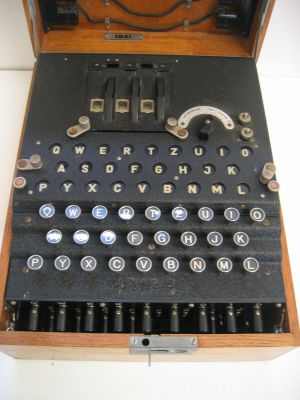
Enigma Machine
The mechanization of ciphers with the rotor machines were developed in the early 20th century. It was the first true attempt to apply a more robust computational principals to ciphering with machines. The mechanization of ciphering reached its apex during WWII with the German enigma machine. In order for the Allies to break the encryption of the enigma, they had Alan Turing develop The Bombe. This was one of the first computers ever created in order to crack the code of the German enigma machines. These ciphers had become so complex, they now needed computers to help with the complex mathematical calculations to crack their code.
Like the wars that the empires throughout the ages have fought; at first their tools were rudimentary and crude, but developed with sophistication, technology, and scientific precision over the ages to what they are today. States now command weapons of mass destruction that can wipe out millions of people in a moment, and they use this as a token of power within the realpolitik of statecraft against other states.
This is called brinkmanship–the art of pushing dangerous scenarios for favorable outcomes on ones own terms. It is within this same vein of power that the tools of cryptography were developed as a means of war. We must ask ourselves: why has this technology been so zealously guarded, with so much human energy expended upon it?
Privacy and Secrets as Power
It is because within the realm of secrecy and privacy that people can organize independently, and outsmart stronger, more powerful enemies. Encryption is a weapon for the weak against the powerful, and a way for individuals to be given a mathematical assurance against the invasions of privacy, both for personal documents, and communications. It is a mode of mathematically assured protection. One needs not to trust people with money or secrets any longer. Now they only need to trust the code upon which their secrets are hidden. That code is only mathematical, and is binary in nature.
From being built on top of this mathematical encryption technology that cryptocurrencies create a true use-value. Proof-of-secrecy creates both fungible, and security. These features, paired with the limited number of bitcoins, and computational and electrical energy that goes into creating bitcoin units, creates the total concept that gives bitcoin, and other digital currencies, their value. Bitcoin and other digital currencies give rise to a new mode of sovereign economic power. It is this economic force that over the coming decades will deconstruct, and depose of the old concepts of money, value, banking, exchange, protection, and finally the state itself.
The Digital Sovereign
Digital currencies are the economic power that will become the bases for a new way of organizing. This new form of power will create new social, economic, and political organizations which together will create a new superstructure of power I call the digital sovereign. Echoed in the sentiments of the declaration of independence of cyberspace, this is the process of creating a world that all may enter without privilege or prejudice accorded by race, economic power, military force, or station of birth. The digital sovereign is the space in which the civilization of the Mind will make itself victorious over the world of flesh and steel.
—
Next: Bitcoin and The Internet as Ideological Apparatuses
Sovereign Violence and Legitimacy of Law
By BTCtheory
Posted October 15, 2014
“Yes, [we will not find a solution to political problems in cryptography,] but we can win a major battle in the arms race and gain a new territory of freedom for several years. Governments are good at cutting off the heads of a centrally controlled networks like Napster, but pure P2P networks like Gnutella and Tor seem to be holding their own.”
–Satoshi Nakamoto
This is one of the few political comments that we are offered from Satoshi. This is a reference to Micheal Foucault’s interview on power and sovereignty found in Truth and Power:
- monarchy presented itself as a referee, a power capable of putting an end to war, violence and pillage and saying no to these struggles and private feuds. It made itself acceptable by allocating itself a juridical and negative function, albeit one whose limits it naturally began at once to overstep. Sovereign, law and prohibition formed a system of representation of power which was extended during the subsequent era by the theories of right: political theory has never ceased to be obsessed with the person of the sovereign. Such theories still continue today to busy themselves with the problem of sovereignty. What we need, however, is a political philosophy that isn’t erected around the problem of sovereignty, nor therefore around the problems of law and prohibition. We need to cut off the King’s head: in political theory that has still to be done.*
Sovereignty, Legitimacy and How Violence Connects Them
The fundamental issue at hand is one of sovereignty–who has the supreme right of rule? Today, governments around the globe have anointed themselves with the supreme right to rule over almost every aspect of life. This is not because of their majesty or our consanguinity, but simply from their monopolization on violence, and the legal framework they use to justify it. There has been a long, and precipitous train of abuses that has created the world as it is today, and considerable injustice that has forced us to ask such questions.
We first must questions where this Right comes from. This Right is not only a historical residue impressed upon us from the evolution of society from feudalism, but also an ideological perspective that is reinforced incessantly throughout our lives. When we reduce this power down to how it operates on an individual and organizational levels, we can see beyond the garb of officialdom, legitimacy, and righteousness that it purports to be, for the crude, barbaric machine that it really is: violence organized under the banner of the state.
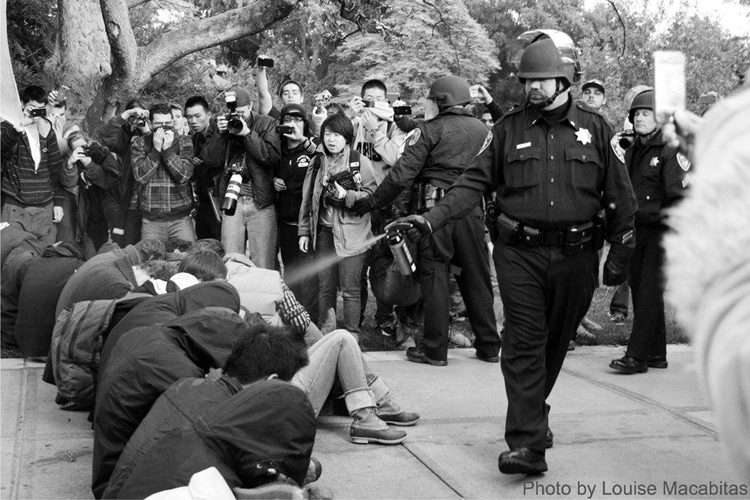
This action was legal for the police to carry out–no violence came to the officer for doing this.
Violence is the basis of power that governments use to project their legitimacy into the world. This is done through explicit means, such as police, military, prisons, laws, and regulations; but also through discreet means such as education, religion, bureaucracy, and especially elections. The discreet channels of what is seen as ‘correct’ or ‘legitimate’ is the most powerful form of controlling the conversations of ‘what is violence’ and who is entitled to it. This creates the context for which violence can be used, and thus justified. The utilization of violence to enforce the status quo (i.e. the law) is justified by the ideological discipline that demands authority to be respected, and obeyed for no reason other than that ‘authority should be respected, and obeyed’.
The fact that we are allowed to vote for one of two representatives that invariably represent the same corporate interest of the status quo, is part of the greater dialog that has us believe the legitimacy of such violence. We are told that we have ‘democratic power’ and that if we can just elect the right person (despite having no sort of electoral process for the police or army), that we will be able to solve our political woes. The truth of the matter is distinctly different.
There are people in this world that can initiate violence against others within explicit legal means with no form of recourse. We are subjects underneath the law and subject to it, and we have masters that are outside and above the law; which ironically calls itself the ‘law enforcement’.
It is the threat of this systematized violence in all capacities (legal, economic, personal) that governments base their power from. It is under this banner of legitimacy via legal violence that all governments have operated through all of history. That might shall make right, and as the official judicial decision, that is final. This is the legal bases of the laws of the state, and this is why they can command your death–because they have the power to do so.
Sadly, there simply has never been any other way to politically organize with the exception of sporadic, unsustainable revolutions that fold back into the same power structure that rely on violence. As revolutionary chaos grows, it harnesses the apparatuses of power for itself, and becomes the Specter of the State, legitimizing its own violence and corruption.
This is the theory of the sovereign–how political institutions create power over one another–it is done from the point of a sword, again, and again; through all of history.
This is the revolutionary struggle for sovereignty. As Foucault pointed out, so long as we are still grappling with this central issue in political theology of enshrining the power of life and violence one over another into a legal system, be it in the form of a senator, minister, police officer, judge or king; there will still be the problem of the great negative forms of power. Masters of all institutions seek to be good masters; but first and foremost, they seek to be masters. There is an alliance among the aristocrats that they all believe there is good reason for them to be masters over the world, and to hold power over all.
Sovereignty as we know it can only exist at the bequeathment from something or someone; or violently take from those same powers through revolution. Once entered into the subject of sovereignty, there is an immediate glaring flaw that a political body must offer sovereignty, or it must be taken by force. This force is what we seek to avoid in the first place, and what has locked humanity into a permanent struggle for power against and over itself–homos lupus homnium. For all of human history, this concept has battled between its two poles: one of accepting the sovereignty offered from another, or to fight that offering to take it for oneself. Violence and physical force are the tools used for the sovereign struggle to establish who is master, and who is slave.
Political History of Sovereignty
The most recent political revolutions of the late 16th century shifted the power by delegitimizing the divine right of kings, and enumerating that power into republican councils. Although there was resemblances of change within the structure of power, what really occurred was a shattering; a mutation of the system and a fracturing of power among many actors. Sovereignty was stripped from kings, and that power was divided among the various ideological structures and repressive state apparatuses that make the modern state.
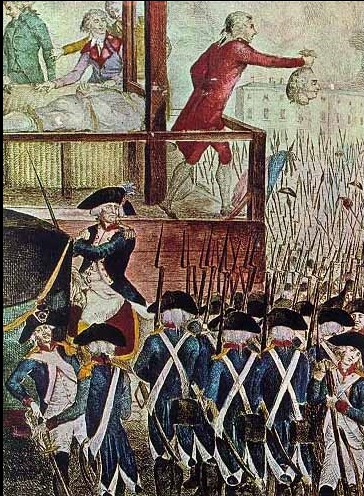
Power is no longer centralized within one body (The King), but is fractured into the government bureaucracy itself as a corporate body. Power, legality, legitimacy, sovereignty, the party as aristocracy, and state-sanctioned violence as a means to execute the law, are all part of this same political-government structure. However, these forces are no longer vested in the one body of the monarchy, but a new body of people outside the law itself. The decree of Divine Right that was once used to inflict the rule by Kings, is today being used to inflict the Rule of the State, but this time under the title of civil liberties.
Invariable, man finds himself under the bludgeon, chain, and whip, happy to oblige, for he no longer has one master, but many! And this time they are for the good of civil liberties! He fails to recognize that the defenders of civil liberties seek to protect their own rights first and foremost at the expense of his flesh.
Violence is the means that compliance with unjust laws are explicitly extorted upon the populous. It is not the justice or majesty of contemporary legal systems that enforces the law; but ruthless, uncaring, violence. It is within the hidden manipulations of what is normal and appropriate that we also find apologists who demand to be ruled as a subjects, not people.
If people are to liberate themselves from such an insidious and total system of rule, it must be upon their own merits to help themselves. People must arm themselves with knowledge, and a willingness to think critically to create a new, and better world. Using the internet, bitcoin, and strong crypto we can create a better world, and establish new laws from within the internet to help save us from global environmental catastrophe that is coming.
Cryptography and Self-Legitimacy
Digital currencies retreats from the theology of sovereignty via violence through creating a new mode of sovereignty. Intangible and non-physical, this new form of power is created through a destituent form of power, one that withdraws and refuses to cooperate with any form of violence.
Legitimacy within cryptography is created from knowable and provably unbreakable secrets that can only exist the digital realm or mathematics. It cares not for what occurs in the physical world, but only that of which it can experience in the digital world: provable mathematics and the sacrament of the private key.
Legitimacy no longer comes from an authority within the current political or economic system, but creates its legitimacy through explicitly existing outside of any states control and the violence they enshrine.
The concept of sovereign is flipped on its head. No longer does legitimacy need to come from state institutions that are empowered via violence, but through provable mathematical systems that are not part of the violence power structure. This creates a new economy system with No God, and No Masters.
No longer do we need to pay for the privilege of our freedom to exchange with one another, or be extorted by the Gods of Government, or their Masters of Capitalism. Bitcoin re-invents money into what it once was, and was always suppose to be–a network of legal and economic exchange for all people everywhere.
—
Next: The Legal Politics of Money
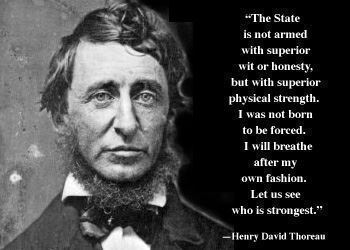
The Difference Between Weak Hands And Strong Hands
By Pete Dushenski
Posted October 16, 2014
WEAK HANDS: You’re panicking over the bloodbaths.i You’re selling your bitcoins. You’re scrambling to fix HTTPS holes.ii You’re using web-based Bitcoin wallets and password managers.iii You’re using Windows boxes with Intel chips.iv You’re investing in DDoS attacks.v You’re investing in USG attacks.vi
STRONG HANDS: We’re loving every minute of the big bad bear.vii We’re buying your bitcoins. We’re writing 3000 lines a day.viii We’re airgapping.ix We’re running old hardware.x We’re not updating software.xi We’re using PGP.xii We’re rolling dice.xiii We’re fixing the holes in WordPress’ head.xiv We’re fending off DDoS attacks.xv We’re laughing off USG attacks.xvi
And we’re calling the shots. After all, we’re La Serenissima.xvii
That’s the difference.
- Certainly ISIS and Ebola but mostly where it counts: in the pockets you once thought were full but are looking increasingly barren. At noon on October 15, 2014, the Dow was down 450 points, erasing its gains for the entire fucking calendar year, before recovering slightly to lose “only” 173 points. But no matter, the bullet hole is there and QE∞ can’t stop this bleeding.↩
- Heartbleed, Poodle, etc. Yup, SSL is a complete scam. Your banking, utility bills, and the rest of everything else you think is “secure” and “safe” may as well be in plaintext with its pants down.↩
- Because you’re too cheap/intellectually poor to use desktop app that don’t suck. So your webwallets get pwned and so do your password managers. And you’re using contemptible piece of shit services that don’t allow users to create passwords with more than 14 characters because it doesn’t really take that many characters to write your birthday and “zulu”, does it?↩
- Cuz that’s what’s cheep cheep, neh?↩
- This is what you do to yourself when you read news that isn’t Qntra and scripture that isn’t the logs.↩
- Or, as you might call them, “Registered Retirement Savings Plans” or “Individual Retirement Accounts.” These, in case you were blissfully unaware, are designed forthose fools who trust the Inquisitor’s promises of “I’ll never crank this tighter, I swear. Cross my heart and hope to die,” while your balls are in his vice. You don’t have to look very far back into human history to see how burned you’re gonna get with this fucktardedly misplaced trust. See: Poland, 2013. And make no mistake about it, if you pull this same stunt, you’re gonna get motherfucking burned too. And what does the Inquisitor do with your balls? He cuts them off and buys Bitcoin to tank the price so he can keep pretending like it’s 1999, he buys Chief Derpists to unconvincingly derp about block size increases, and he buys LMO food because “optimal stock.” Generally, he swings his stupidity and fleeting power in every destructive way imaginable. Don’t support terrorists like this. Just stop.↩
- That is, the unwinding of the monumental Federal Reserve Ponzi/pyramid scheme. After sound money regains its rightful throne, such schemes will be known as “Fed schemes.”
- Like we did on October 15, 2014. After all, writing is one of The Six Pillars For Surviving in Computer Times, y’know.↩
- With a USB stick and an old, offline computer. See MP’s Practical Guide on how you can to (when Trilema stops being DDoS’d) ↩
- Like real men. Like sane men.↩
- “If software ever worked, it will always work. Always.” –Paul Niquette via Stan D.↩
- See Please To PGP (Guide for Linux, OS X, Windows) ↩
- That’s how you getdecent fucking entropy for passwords and private keys. None of this /dev/random shit.↩
- Matt Mullenweg is a derp who won’t fix the holes in his own head because “the holes aren’t that big and no one uses them neways donchaknow“, but don’t let that stop you from fixing your blog’s WP yourself!↩
- No matter how many rounds they fire at us we’ll still separate the lemma from the palea.↩
- Eh nice try with the USMS Silk Road auction, fuckers. But twas only a try, not a do. And now we get to watch you bleed from every orifice like the diseased sack of shit you are.↩
- “Who in their senses, one wonders, would leave the fertile plains of Lombardy to build a settlement – let along a city – among these marshy, malarial wastes, on little islets of sand and couchgrass, the playthings of current and tide?” asks John Julius Norwich at the beginning of Venice: The Rise To Empire. My answer: the same people who’re leaving the fertile plains ofFiat and building an empire on Freenode.↩
My comments on the BitLicense
By Peter Surda
Posted October 20, 2014
I spent a lot of time researching the proposed BitLicense and associated issues, and today I submitted my comments to the NYDFS. Here it is.
Dear Superintendent Lawsky,
dear General Counsel Syracuse,
kindly allow me to add my own comments to the proposed regulation Title 23, Chapter I, Part 200, henceforth “BitLicense”.
Introduction
I specialise in economic research of cryptocurrencies, with emphasis on the economic theory. My activities involve publications, lectures, reviews and consulting. I have started my research three years ago. Prior to that, my professional focus was in computer networks and security, for about fifteen years, including traditional payment processing, where I was mainly responsible for implementing security policies (PCI-DSS) and disaster recovery. This combination allows me a broad insight into the types of activities and problems of cryptocurrency companies. While my own business is unlikely to require to apply for the BitLicense, several of the companies that I have contractual relationships with might.
Even though it is customary to give recommendations in comments to proposed regulation, I typically try to stay neutral. I strive to help people to understand rather than to tell them what to do. In this spirit, I hope that my comments will cause the NYDFS to become more aware of the consequences of the proposed regulation, which, according to my impression, are not well understood.
I read many of the publicly available comments to the proposal, and used some of them as input for my own comment, in order to make my arguments more complete. Nevertheless, I think that I bring new important insights, and my comment should not be simply be treated as a duplicate of other comments. Links to some of the sources that I used can be found at the end of the comment.
My comment is divided into four sections. The first one lists two issues which, in my opinion, make the BitLicense proposal unworkable. The second one lists issues which, while possible to adapt to, nevertheless cause significant hindrances for cryptocurrency companies. The third one lists issues which are comparably minor, such as omissions and unclarities. The fourth one is an attempt to ascertain the goals of the proposed regulation, its efficacy and is perhaps more “meta” in nature.
Grave issues
Affects unrelated companies
The grave issues follow from the nature of cryptocurrencies. Unlike with traditional monies and financial systems, cryptocurrencies are just numbers. In particular, private keys in the Bitcoin protocol (which I presume is what the “digital unit” in 200.2.m refers to) are 32 bytes long. For a more casual explanation, four of such keys comfortably fit into a single SMS or a tweet. 32 bytes can be stored on any object, digital or analogue, and transferred by a wide variety of means (I explain this in my master’s thesis). Once you realise this, the terms “transmission” (200.2.l) and “storing” (200.2.n.2) gain a whole new meaning. As long as this storage or transfer involves a third party, at least one of the participants is potentially subject to BitLicense. This has the perhaps unexpected consequence of a wide variety of businesses, not merely those who use cryptocurrencies in a non-financial way (as has been pointed out by others, such as Sean King), but who do not even have a cryptocurrency-specific business, being faced with BitLicense requirements. For a better emphasis, let me reformulate that. Anyone storing or transporting data or physical objects, on behalf of their customers, is potentially subject to BitLicense. Some examples of businesses that will unexpectedly be affected:
- warehouses
- vault providers
- physical transport (e.g. trucking companies, car rentals, moving companies)
- data centers, online hosting (e.g. DropBox) data processing (e.g. email), or ISPs. If I send an email to the superintendent and attach a private Bitcoin key, Microsoft, who process NYDFS’ email, will become subject to BitLicense. If he views my email on his mobile phone, his mobile phone provider will become subject to BitLicense.
- decentralised hosting systems like bittorrent (or newer ones like StorJ or MaidSafe). This affects all kinds of non-commercial entities who merely participate in the provision of online storage or data transfer
Companies have no good way to identify whether whatever they store or transport is or isn’t a private key unlocking a positive balance. Even if they realise that they store data that might be a private key, if the key is encrypted, they have no way of knowing the balance or what cryptocurrency it is related to.
What is, to me, surprising, is that this is not an unforeseeable problem. Other types of regulations do contain a variety exemptions, and they actually do exempt at least some of these business types. For example, federal regulation, 31 CFR 1010.100(ff)(5)(ii), has exceptions, among other things, for physical transport of cash, network services, payment processors, and facilitating sale of goods/services. California financial code, division 1.2, chapter 2, section 2010-2011 also has some exemptions. There are no equivalent exemptions in the BitLicense. BitLicense does not even exempt local, state or federal agencies, foreign governments, or the US Postal Service. These might also become subject to BitLicense. The police, if they, during exercising their duties, confiscate physical objects that store private keys (such as computers), will also become subject to BitLicense.
Even prior to cryptocurrencies, money transmitter laws already affected businesses in absurd ways. In “Regulating the New Cashless World”, professor Kevin V. Tu explains some of these problems. The proposed BitLicense makes no use of professor Tu’s analysis and only exacerbates the issue.
No way to comply with BitLicense
Even if a company realises it is subject to BitLicense and attempts to act according to it, they cannot comply with the identification requirements (200.12.a.1 and 200.15.d.1) or avoid “involving New York or a New York Resident” anyway. Once an address has non-zero balance, it is publicly visible on a ledger, and anyone can send transactions to that address, without identifying himself to anyone. The superintendent himself (being a “New York Resident”), if he desired so, could troll and send bitcoins to addresses of companies that try to exclude New York residents, forcing them to qualify their activities as “involving New York or a New York Resident” (200.2.n). The recipient cannot prevent this. If you think that I am exaggerating, similar things already happened in the past. Spammers sent small amounts of bitcoins to random addresses to advertise their products, for example the “Enjoy Sochi” or “Laxo Trade”.
The requirement to identify both of the parties involved in a transaction is akin to requiring a mail server or relay operator to identify the senders and recipients of each email. At least the mail server operator can reject an incoming email. A holder of a private key cannot prevent receiving a transaction, as required by 200.15.i. When Jeremy Allaire argued that the regulation is “technically impossible to comply with”, with other industry leaders (e.g. Wences Cesares) concurring, they were not exaggerating. My conclusion is actually that it is even more problematic than the comments of those gentlemen allege.
Significant hampering
200.8.b requires the BitLicensee to invest retained profits in a few types of US-Dollar denominated investments. It is not clear whether this prohibits retaining profits in other fiat currencies (e.g. Euros or RMB). It however excludes investing into analogous types of investments issued in other countries and denominated in other currencies. Why should BitStamp or Huobi, who are not located in the US, be forced to interact with the US financial markets? Furthermore, here we have a paradoxical situation where most of the BitLicense treats non-financial uses of cryptocurrencies as financial, this restriction treats financial uses of cryptocurrencies as non-financial. Companies that use cryptocurrencies as functional currencies, for example to pay their suppliers or employees, might get cash flow problems due to this restriction. Some companies, such as CoinBase, need stashes of bitcoins to sell to their customers quickly. This could also be potentially hampered by this restriction.
Some companies do not use fiat money at all. In the past, blockchain.info presented itself as having no bank accounts (however, according to Jeremy Liew, who is or soon will be on their board, this is no longer the case). Purse.io, for example, is another company that, based on their business model, do not need a bank account (I do not personally know whether they do have one). Other types of businesses that do not require a fiat account are mining pools or sellers of physical bitcoin media, such as Casascius coins. Why should they be forced to obtain a bank account and/or services of a broker? What if they cannot find anyone that is willing to provide them such services?
This restriction also creates problems for companies that want to have more than 100% of reserves. According to audits published earlier this year, OKCoin, Kraken and Bitfinex were confirmed to have more than 100% reserves. This can be beneficial, for example, if the company wants to store 100% reserves in cold storage and a small amount in hot wallet. The additional reserves could also be used for other services, such as hedging or facilitating margin trading. If the company needs to liquidate excess reserves according to accounting deadlines rather than business demand, this would have negative impact on security and the provision of variety of business services.
Conversely, the requirement to hold no less than 100% reserves (200.9.a) is in conflict with certain business models (see the paper by Brito, Shadab and Castillo). It is also sometimes in conflict with other regulations, such as CFTC or SEC, as pointed out by Ryan Selkis in “Bitlicense letters #3”.
BitLicense seems to apply to certain type of intermediation services, for example escrow. This would include not only cryptocurrency businesses, but also others like notaries or lawyers. While I assume that in a typical escrow situation notaries and lawyers do identify the parties, why should they be subject to the other restrictions of the BitLicense?
BitLicense also applies to situations where encrypted keys are stored or transmitted by a third party and the holder/transmitter cannot use them in the financial sense (such as the aforementioned blockchain.info). Why?
Companies that bring together buyers and sellers are not specifically exempt. While they probably do not qualify as “Virtual Currency Business Activity”, perhaps they should be specifically exempt.
If I travel to New York, say for a conference, companies that I have contractual relationship with might become subject to BitLicense due to my trip. Why? Are these companies supposed to track my movements? My bank does not care whether I travel to US, why should a cryptocurrency company do?
Minor issues and pointless requirements
All BitLicensees are required to have a cyber security program (200.16). This includes companies that do not deal with bitcoin electronically (e.g. sellers of Casascius coins) and in such case is pointless.
In some business models, the identity of the parties is known to another business involved in the transaction. In the case of purse.io, Amazon knows the identities of both the buyer and seller of bitcoins (it knows the credit card data of the bitcoin buyer and the shipping address of the bitcoin seller). If NYDFS wished to do so, they can obtain this information from Amazon by a court order. Why does purse.io also need to identify these two? This just makes the participants more vulnerable to identity theft.
Some companies act as an agent of the payee (e.g. payment processors). Why do they need to identify the payer? The payee can, with appropriate court order, provide the identity of the payer. During the Senate hearings in November 2013, Tony Gallippi of BitPay said that they do identify the merchant already, but as far as I know, none of the cryptocurrency payment processors identify the payer. The aforementioned professor Tu also uses the example of the agent of the payee, and the California financial code has an exemption in such as case.
It is unclear what happens with the customer’s funds after revocation of license (200.6.c) or denial for people already engaged in Virtual Currency Business Activity (200.21). Is the company supposed to return them to the depositors? How much time do they have for it? Will NYDFS confiscate the deposits?
If two BitLicensees facilitate transfers between the two of their respective customers, do they need to identify each others’ customers? E.g. if a payment processor sells bitcoins on an exchange, does the processor need to know the identity of the buyer (of bitcoins) and does the exchange need to know the identity of either the merchant or the buyer of the goods or services?
Storing and transferring the blockchain (as opposed to storing the private key) is not clearly exempted, yet might fall under “Virtual Currency” (200.2.m). This may affect thousands of non-commercial entities and private persons if not rectified.
“Fiat money” (200.2.d.) excludes commercial deposit accounts (only coins and notes are legal tender) and appears to be too narrow. On the other hand, “other value” and “retail conversion” (200.2.n.4) are not defined, can mean anything and appear to be too broad.
“Transmission” (200.2.l) excludes transmission from a person to that same person. I don’t know whether this was intentional, I however think it is interesting.
Exemption 200.3.c.2 does not include the use of Virtual Currency for something else than a payment, i.e. merchants and consumers using of Virtual Currency for non-payment purposes (e.g. document timestamping) are not specifically excluded. Perhaps they should be.
In 200.4.a.13 – “an explanation of the methodologies used to calculate the value of Virtual Currency in Fiat currency” should include “if applicable”. 200.19.e.4, for example, does contain “the exchange rate, if applicable”. Some businesses do not provide such valuation at all, so they should not be required to explain how they calculate it.
The requirement for a bond or trust account in dollars (200.9) causes a problem for companies that do not operate with fiat money. Perhaps NYDFS should consider signing up with one of the payment processors to alleviate this?
In 200.10 (material change to business), BitLicense does not specify how long the superintendent has to approve or reject it, whereas 200.11 (change of control, mergers & acquisitions) does.
In 200.12.a.1 (books and records), “transaction” is not defined.
In 200.12.c, “non-completed, outstanding or inactive” is not defined.
Achieving goals
We all need to be aware that some of the purported goals of the BitLicense are, to a larger or smaller extent, in conflict with each other. For example, consumer protection and the requirement to conduct an AML/KYC program. If the BitLicensee is required to store personal identification of the customer, this increases the risk of identity theft. NYDFS needs to clarify their priorities. The superintendent’s remarks about not letting “a thousand flowers to bloom on the innovation side” gives us a bit of insight into his personal priorities. However, such attitude is more emotional than rational, and it is very dangerous, as explained by Adam Thierer in “Technopanics”. Jim Harper has been, for a long time, requesting a cost-benefit analysis from NYDFS, and has not received any yet.
NYDFS might consider that certain types of companies, in particular exchanges that deal with fiat, and payment processors, will increasingly tend to do AML/KYC irrespective of regulation. This is because they need good relationships with banks, and the presence or absence of AML/KYC policies at exchanges or payment processors significantly affects banks’ perceived risk.
NYDFS also does not appear to have given much merit to alternative methods to achieve the desired goals. The most obvious method is in my opinion the education of consumers (it is expected that the BitLicensees do this). NYDFS could also perform certification services of public keys or provide APIs for authenticating consumer identities, which would help BitLicensees to identify New York residents without having to store their identities themselves. In “Bitcoin Financial Regulation: Securities, Derivatives, Prediction Markets, and Gambling”,
Brito, Shadab and Castillo attempt to provide examples of many such alternative approaches.
My own impression is that, mirroring the proverb “if you have a hammer, everything looks like a nail”, NYDFS continued in doing what and how it has been doing, the result looking similar to traditional banking and money transmission regulation, and the hearings conducted by NYDFS were moot.
Sincerely,
Peter Šurda
Vienna, Austria, October 20th 2014
Links:
BitLicense proposal: http://www.dfs.ny.gov/about/press2014/pr1407171-vc.pdf
Jeremy Allaire: Thoughts on the New York BitLicense Proposal, https://www.circle.com/en/2014/08/13/thoughts-new-york-bitlicense-proposal
Jerry Brito and Eli Dourado: Comments to the New York Department of Financial Services on the Proposed Virtual Currency Regulatory Framework, http://mercatus.org/sites/default/files/BritoDourado-NY-Virtual-Currency-comment-081414.pdf
Jerry Brito, Houman B. Shadab, Andrea Castillo: Bitcoin Financial Regulation: Securities, Derivatives, Prediction Markets and Gambling, http://papers.ssrn.com/sol3/papers.cfm?abstract_id=2423461
Wences Cesares: “[XAPO] WILL HAVE NO CHOICE BUT TO BLOCK NEW YORK CUSTOMERS FROM ACESSING SERVICES” AND WHY NEW YORK SHOULD CARE, https://xapo.com/post/xapo-will-have-no-choice-but-to-block-new-york/
Anthony Gallippi @ Senate Hearing, https://www.youtube.com/watch?v=uJYBlROTswo
Jim Harper (on behalf of Bitcoin Foundation): comments on NYDFS BitLicense Proposal, https://bitcoinfoundation.org/wp-content/uploads/2014/10/Bitcoin-Foundation-Comment-on-NYDFS-BitLicense-Proposal.pdf
Sean King: Here Are My Official Comments on the New York Department of Financial Services’ Proposed Bitcoin and Virtual Currency Regulations,
http://wefivekingsblog.blogspot.co.at/2014/07/here-are-my-official-comments-on-new.html
Sean Neville: Hammering on the BitLicense, https://medium.com/@psneville/hammering-on-the-bitlicense-d00a81e4f5c0
Ryan Selkis: The BitLicense Papers #3, http://two-bit-idiot.tumblr.com/post/94458273399/the-bitlicense-papers-3
Peter Šurda: Economics of Bitcoin: is Bitcoin an alternative to fiat currencies and gold?,
http://dev.economicsofbitcoin.com/mastersthesis/mastersthesis-surda-2012-11-19b.pdf
Adam Thierer – Technopanics, Threat Inflation and the Danger of an Information Technology Precautionary Principle, http://mercatus.org/sites/default/files/Technopanics-by-Adam-Thierer_MN-Journal-Law-Science-Tech-Issue-14-1.pdf
Kevin V. Tu: Regulating the New Cashless World,
http://papers.ssrn.com/sol3/papers.cfm?abstract_id=2235937
Adding Value To Bitcoin
By Pete Dushenski
Posted October 21, 2014
Just like the fresh faces I met at my local meet-up last night, you’ve now heard of Bitcoin. Naturally, enough, you want to help the cause!
You listened to a podcast or two, you swallowed the pitch of the merchants and exchanges who say “Spend your coins to st-st-stimulate the Bitcoin economy!” Of course, these businesses want to keep you hungry and stupid, so why not toss 10,000 BTC on that pizza, have fun! and just replace the coins you spent (minus fees). Not like the merchant will turn around and either dump the coins back onto the exchangei for you to gobble up or else just hoard them like you shoulda done in the first place, right?
So, ya, if you have 1,000+ BTC and you feel like spending some, go for it.ii Have fun, you’ve earned it! But if you’re spending BTC instead of fiat and you actually have a choice between the two, get your head checked and read up on Gresham’s Law for chrissake.iii Don’t worry about helping Bitcoin by spending it. Bitcoin was just fine before merchants started accepting it (and before you’d ever heard of it) and it will be fine long after they stop. SDRsiv aren’t much use at the grocery store and neither is your house or your car. You don’t have to spend your wheelnuts and doorknobs for your cars and houses to be valuable, do you?
You’re more than welcome to still strike up a conversation about Bitcoin with the person next to you in line at the store, but you hardly have to show them “how easy and fun!” it is to pay with Bitcoin to do that. It’s not like they’re gonna dump their life savings into some investment scheme they heard from some random kid at the coffee shop anyways. If they did that every day, they’d already be penniless and of exactly zero value to you. If you want to “spread the word” why not talk to your rich uncle or parent? Someone outside your inner circle is of precisely no value to Bitcoin.
If you have any Bitcoin at all, Step 1 is securing your coins. Treat even your fractions of Bitcoin like they’re worth the moon and you’ll be justly rewarded. Don’t be the guy who threw away his HD with 4,500 BTC on it.
Step 2 only applies if you really want to “add value to Bitcoin,” so just… decide. This step includes two things: spending the next 6-12 months reading logs on #bitcoin-assets and getting in the WoT.v The logs won’t make a lick of sense at first, and you’ll probably be oh-so-offended within the first 30 lines or so, but if you can make it over that hump, and past your preconceptions about Bitcoin as a consumer technology that’s going to empower anonymity in Africa,vi you have at least a chance of understanding the space, if a smaller still chance of meaningfully contributing. If you can’t manage this, enjoy Reddit and your day job cuz that’s that’s all you fucking get.
In the interest of fairness and equality and all that jazz, the path charted above is the same for you as it was for me as it is for Nobel Prize winning economists as it is for American Idols as it is for the rest of the VC circus. It’s the fucking same for everyone. All of them. All of you.
Hilariously, VC’s (and their vast fan clubs) continue to pretend like they can just “start a business” and “build infrastructure” and “add value” outside of La Serenissima. No matter how much bezzleUSDvii they spend, this is patent nonsense. It ain’t gonna happen.
Which brings us to a recent Twittrepartee with kinda-Bitcoin-dev-ish-as-if-there-were-such-a-thing-guy Jeff Garzik:viii
https://twitter.com/pete_d/status/524407900069187584
https://twitter.com/pete_d/status/524554560648777728
https://twitter.com/pete_d/status/524570725043437568
https://twitter.com/pete_d/status/524587481426309121
Next year, VCs will spend a $billion! And then a $trillion the year after that! Not like their dollars could be used for anything useful, like sane computing environments or anything. It’s not like their money, as it lacks both vision and leadership, has any use at all. It’s not like they could buy an equivalent amount of Bitcoin with those useless piles of fiat. So why not keep pretending like they’re relevant and that all they have to do is “invest!” ? To which MP neatly points out:
Money works best for comparing like things. Like. Things. Money does not work to compare the unlike, or people who are not things (some people are things, and them being bought and sold like any other item, on the open market, is perfectly fine). So therefore, “money everything” isn’t a solution. There’s a reason the complete economic theory doesn’t simply read “Money. Moneymoneymoneymoneymoney moneymoneymoney!1″
It’s not just about money and certainly not about POS systems – it’s aboutknowledge and relationships.
So this brings us back to you! As ever, if you want to make a difference in this world, you’re going to need some training. You weren’t born with anything to offer and, if I still haven’t heard of you, you’ve not done anything in Bitcoin yet.ix If you still want to do something in Bitcoin, you’ll need to check your pretenses at the door and find a willing coach / mentor / master / lordx to guide you. Why? Because, we, your shepherds,
We can see far off into the distance. We can see a better world. We can take you there. To be happy, you don’t need more apps, you need to better use the tools already available. You don’t need more choice, you need better shepherds. You don’t need more rights, you need better laws.
Adding value isn’t hard.
Just apply within.
- Completely opposing the fucktarded little “economic theory” you ignorantly borrowed from fiat finance, and depressing the price of Bitcoin rather than increasing it, as you hoped. Get your “hope” the fuck out of here and do the maths.↩
- Or rather than spending it, why not gamble with it and try to earn some more! Also fun and less consumerist! Might I recommend BitBet or War of Life?↩
- “During the period from 1792 to 1834 the United States maintained an exchange ratio between silver and gold of 15:1, while ratios in Europe ranged from 15.5:1 to 16.06:1. This made it profitable for owners of gold to sell their gold in the European market and take their silver to the United States mint. The effect was that gold was withdrawn from domestic American circulation; the “inferior” money had driven it out.” (via Britannica). See, now fiat is infinite, like pogs, beanie babies, etc. Bitcoin ain’t. Figure out which one is worth holding on to and which one ain’t. The rest will sort itself out.↩
- “To deal with the inability of the existing system to create an adequate quantity of reserves without requiring the United States to run large deficits, a new kind of reserve called Special Drawing Rights (SDRs) was devised by the International Monetary Fund. Members of the Fund were to be allocated SDRs, year by year, in prearranged quantities to be used for the discharge of international indebtedness.” (via Britannica). ↩
- The WoT entails PGP. This Guide will help you.↩
- Seriously, at the local meet-up last night, one fucking new dude had the gall to tell me that “Satoshi wanted Bitcoin to be democratic. He said so in his white paper. And therefore it should facilitate microtransactions for poor Africans and Filipinos.” As if Bitcoin’s existence and function were up for a bar room debate. And as if Satoshi didn’t mean “democracy” in the Ancient Greek sense, y’know? Not this watered-down socialist shit.↩
- “Money has two aspects, which are in fact unrelated. On one hand, money is the instrument of ensuring one’s survival. You need money to pay the rent, and you need money to bail your idiot kid out of jail. This is all money, and any living being’s natural tendency to acquire the means of life guarantees everyone will be forever trying to get money. How much of it ? A lot. How much is a lot ? Shut up and count, Bernie. On the other hand, money is also the instrument of ensuring a group’s survival, so to speak, through allocating resources back and forth. This is substantially different from that, much like cooking and eating are entirely different professions. You wouldn’t trust a theatrical critic to write you a play, nor would you trust a playwright to get very far in the newspaper columns with his butthurt ideas, would you ? Same here! This is what the bezzle is : an attempt to separate the first from the second.” (via Trilema) ↩
- Regular readers will remember Garzik as the dude who wanted to put PGP in your web browser a few months ago. Not that anyone listened…↩
- Though perhaps you’ve already done several wrong things, in which case you’re more likely to be splattered with a rolled up copy of Contravex than anything else.↩
- Call us what you want, just don’t forget the “Sir.”↩
Bitcoin’s Compound Rewards
By Daniel Krawisz
Posted October 25, 2014
If there were a set of rules such that the people who followed them were rewarded in a way that increased with the total number of followers, then each person involved has the incentive to bring more in, and furthermore can expect everyone else involved to do the same. Regardless of any other merits the rules have, the mere prospect of rewards will make success more likely for them.
I suggest that Bitcoin works like this. Yes, Bitcoin is great as a payment system and so on, but I think its value as an investment prospect should be taken more seriously. If Bitcoin succeeds, then obviously its early adopters will benefit enormously. And the earlier you buy in, the more you benefit.
This prospect, I believe, does a lot to explain Bitcoin’s extraordinary success even against the overwhelming competition of the dollar. Most people are somewhat mystified when they first hear about Bitcoin because they can already buy anything they want with dollars. Bitcoin’s value proposition depends upon a lot of people actually buying bitcoins, despite the fact that today there is not much demand for them. Yes, I know you can buy pretty much anything with bitcoins now, but there is still a big difference between bitcoins and dollars. If you run around with a suitcase full of dollars, you can get anyone to do anything for you. With bitcoins you have to find the right person to take them.
Dollars clearly make more sense as a currency right now because they enjoy a much larger network. And yet, Bitcoin continues to defy skepticism and grow. Despite Bitcoin’s performance over the last six months, it is shows phenomenal returns over the past year. Furthermore, Bitcoin’s transaction volume has nearly returned to the level it was at the peak of the last mania. Over its five year history, Bitcoin has grown exponentially, and people have continued to dive in, despite how distant its success may have appeared.
By contrast, nobody benefits from holding dollars. Dollars benefit the people creating them, not the ones saving in them. Hence, there is a relatively small group of people with the incentive to promote dollars as a payment system, consisting of the government-banking cartel. The group with the incentive to promote Bitcoin, on the other hand, is relatively large: it consists of everyone else, even those who have not bought bitcoins yet. Despite the diversity of people involved in Bitcoin, they have a unified incentive to make Bitcoin succeed. Meanwhile, there is no similar incentive for people to cooperate to save the dollar.
It is therefore not so difficult to see why Bitcoin should succeed, despite its disadvantages. Bitcoin has been criticized for being deflationary due to the fact that it has a fixed supply. However, Bitcoin’s fixed supply is the very reason that its holders have the incentive to stick together and fight to win. Without a fixed supply, Bitcoin would not present the same potential benefits to early adopters and would therefore have lower odds of success. Thus, regardless of whether deflation is good or bad for society, a fixed money supply is individually beneficial, and it is therefore a crucial part of Bitcoin’s success.
Bitcoin has also been criticized as a kind of Ponzi scheme because of the way it benefits early adopters. However, although it is true that Ponzi schemes benefit early adopters, not everything which benefits early adopters is a Ponzi scheme. The difference between Bitcoin and a Ponzi scheme is that in a Ponzi scheme, the early adopters benefit by cashing out. With Bitcoin, there is no reason ever to cash out. As long as the dollar still exists, then Bitcoin has prospects from further growth. Once Bitcoin reaches the point that it can grow no more, there will be nothing left to cash out to. It is better to say that bitcoin holders have already cashed out—cashed out of the dollar, that is.
The Revolution Was Fiat, The Reaction Is Bitcoin
By Pete Dushenski
Posted October 27, 2014
From the earliest days of human history, man has used money as a tool and symbol of power. In the civilized days of Monarchy, gold was the embodiment this power. Durable, divisible, portable, having some intrinsic value, and known to be scarce, gold was quite simply the best possible choice at the time. It was sound money:
Sound money has always been a check on the power of government to expand its influence.
Gold balanced the forces of the world. As such, no matter where you went, gold was transferable to the local currency. Whether you were in France or Florence, your gold was good. In fact, if you weren’t in your own backyard, using your own community’s debt instruments, gold was basically the only thing that was accepted. So whether you wanted to buy a copy of the Bible, fight a foreign war, or build a palace, you needed gold.
Then came The Revolution: replacing the Monarch, the Church, and generally anything goodi by instituting “reforms” and encouraging “progress” in the name of “the people.” At first, the sheer number of supporters of constitutional democracy was sufficient to establish this social experiment. Eventually, however, sheer numbers would prove insufficient. Why? Because this “new” systemii failed on every account to educate its supporters on the essential matters of politics and economics, leaving them intellectually high and dry and prone to the exact golden calves that the Church and Monarch were protecting them from. As a result, after experiencing a bit of lifestyle creep,iii an newfound and ever-growing sense of entitlement began to take root. And oh did those roots grow deep.iv
The roots grew so deep that the electorate began knocking on democracy’s door, demanding more and more. Where once they were thankful for their new liberties and freedoms, they soon found themselves adrift at sea, lost and without cause. To unyoke this infinite expansion of wants from the finite, gold-bound resources of the state, the Revolutionaries had no choice but to take hold of the money supply of their nations, wresting it from the grasp of sound money and all the goodness and balance it had fostered. This was the only way to keep up the ruse and placate the electorate. So they instituted Central Banking at a scale never before seen.v
“He who controls the money supply of a nation controls the nation.”vi
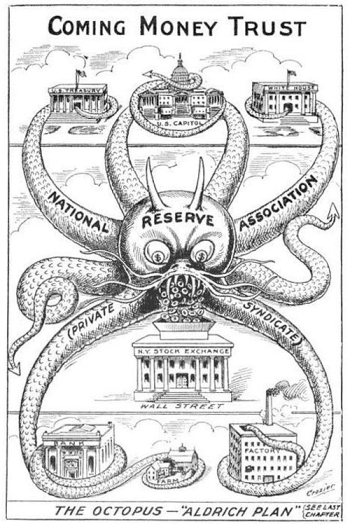
Alan Greenspan, former Chairman of the Federal Reserve of the United States from 1987-2006, even advocated for the gold standard as a young man. In his earlier days, before becoming subsumed by the inflationary Octopus, he was a thinker of notable repute and, in 1966, at age 40, Greenspan wrote a paper entitled “Gold and Economic Freedom”. From which we continue:
An almost hysterical antagonism toward the gold standard is one issue which unites statists of all persuasions. They seem to sense – perhaps more clearly and subtly than many consistent defenders of laissez-faire – that gold and economic freedom are inseparable, that the gold standard is an instrument of laissez-faire and that each implies and requires the other.
Exactly this. Statists of all persuasions – Conservatives, Liberals, Democrats, Republicans, it makes no difference what you call them – being confined to the braindamage that defines Revolutionary democracies, must categorically reject the gold standard. It’s too limiting for their “noble” needs. So they jam your dumb noodle with the insane narrative that their way is the only way and that your vote for the Candidate A is in any way different from a vote for Candidate B. And on it goes. Greenspan notes:
Under a gold standard, the amount of credit that an economy can support is determined by the economy’s tangible assets, since every credit instrument is ultimately a claim on some tangible asset. But government bonds are not backed by tangible wealth, only by the government’s promise to pay out of future tax revenues, and cannot easily be absorbed by the financial markets. A large volume of new government bonds can be sold to the public only at progressively higher interest rates. Thus, government deficit spending under a gold standard is severely limited. The abandonment of the gold standard made it possible for the welfare statists to use the banking system as a means to an unlimited expansion of credit. They have created paper reserves in the form of government bonds which-through a complex series of steps-the banks accept in place of tangible assets and treat as if they were an actual deposit, i.e., as the equivalent of what was formerly a deposit of gold. The holder of a government bond or of a bank deposit created by paper reserves believes that he has a valid claim on a real asset. But the fact is that there are now more claims outstanding than real assets.
The ability of nation states to make unfunded promises is underpinned by the necessity of nation states to make unfunded promises. This is how the incentives align. So it’s little wonder that, in the century since the The Federal Reserve stripped gold of its power, the US has accumulated hundreds of trillions of dollars of unfunded liabilities. This sounds like a lot, but the size of these claims no longer has any bearing on the real world (the real world being finite and all), making any economic or political arguments on the basis of these liabilities, and therefore on the continuation of the US as a going concern, entirely untenable.vii The US is financially bankrupt because it’s morally bankrupt. Not the reverse.viii Basically, the US is broke because the Revolutionaries broke it. First, they broke the culture, then they broke the money, and now, hyperinflation, the ass-fucking tax to end all ass-fucking taxes, inevitable.ix As Greenspan points out:
The law of supply and demand is not to be conned. As the supply of money (of claims) increases relative to the supply of tangible assets in the economy, prices must eventually rise. Thus the earnings saved by the productive members of the society lose value in terms of goods. When the economy’s books are finally balanced, one finds that this loss in value represents the goods purchased by the government for welfare or other purposes with the money proceeds of the government bonds financed by bank credit expansion.
The amount of debt in the highly interdependent global economy is only useful in terms of “$maxint” notation. It really doesn’t matter what the actual figure is any more than it matters how many planets and how many universes there are. What matters is that the debt is unrepayable. What matters is that there isn’t enough productive potential on the planet to cover the long-nosed promises of the Revolutionaries. So what’s a Revolutionary to do? Confiscate. Just like Stalin. Just like Hitler. Just like Obama and Bush and Clinton. Greenspan closes:
In the absence of the gold standard, there is no way to protect savings from confiscation through inflation. There is no safe store of value. If there were, the government would have to make its holding illegal, as was done in the case of gold. If everyone decided, for example, to convert all his bank deposits to silver or copper or any other good, and thereafter declined to accept checks as payment for goods, bank deposits would lose their purchasing power and government-created bank credit would be worthless as a claim on goods. The financial policy of the welfare state requires that there be no way for the owners of wealth to protect themselves.
This is the shabby secret of the welfare statists’ tirades against gold. Deficit spending is simply a scheme for the confiscation of wealth. Gold stands in the way of this insidious process. It stands as a protector of property rights. If one grasps this, one has no difficulty in understanding the statists’ antagonism toward the gold standard.
This is why the Revolutionaries will never in a million fucking years allow the gold standard to rise again. This is why the Revolutionaries will try to make Bitcoin illegal – only to fail utterly, publicly, and unforgivably – and only to end up on their knees sucking Bitcoin’s cock.x
This is why we, The Reaction, La Serenissima, have the Bitcoin Standard.
This is why we, not the Revolutionaries, have the power.
This is why.
- That is, sustainable, innovative, and a platform for art. You’ll notice that this is exactly the opposite of the braindead shit you “learned” in school. Oh, but somehow you think that democracy painted the Sistene Chapel, choreographed the mazurka, and built the Süleymaniye Mosque.↩
- “New” in the sense that mason jars are a “cool new thing.”↩
- Free “education” etc.↩
- This is the problem of giving a man a fish instead of beating him with a stick until he learns how to do it for himself.↩
- “Prior to World War I, the banking system in the United States (and in most of the world) was based on gold and even though governments intervened occasionally, banking was more free than controlled. Periodically, as a result of overly rapid credit expansion, banks became loaned up to the limit of their gold reserves, interest rates rose sharply, new credit was cut off, and the economy went into a sharp, but short-lived recession. (Compared with the depressions of 1920 and 1932, the pre-World War I business declines were mild indeed.) It was limited gold reserves that stopped the unbalanced expansions of business activity, before they could develop into the post-World Was I type of disaster. The readjustment periods were short and the economies quickly reestablished a sound basis to resume expansion. But the process of cure was misdiagnosed as the disease: if shortage of bank reserves was causing a business decline-argued economic interventionists-why not find a way of supplying increased reserves to the banks so they never need be short! If banks can continue to loan money indefinitely-it was claimed-there need never be any slumps in business. And so the Federal Reserve System was organized in 1913. It consisted of twelve regional Federal Reserve banks nominally owned by private bankers, but in fact government sponsored, controlled, and supported. Credit extended by these banks is in practice (though not legally) backed by the taxing power of the federal government. Technically, we remained on the gold standard; individuals were still free to own gold, and gold continued to be used as bank reserves. But now, in addition to gold, credit extended by the Federal Reserve banks (“paper reserves”) could serve as legal tender to pay depositors. When business in the United States underwent a mild contraction in 1927, the Federal Reserve created more paper reserves in the hope of forestalling any possible bank reserve shortage. More disastrous, however, was the Federal Reserve’s attempt to assist Great Britain who had been losing gold to us because the Bank of England refused to allow interest rates to rise when market forces dictated (it was politically unpalatable). The reasoning of the authorities involved was as follows: if the Federal Reserve pumped excessive paper reserves into American banks, interest rates in the United States would fall to a level comparable with those in Great Britain; this would act to stop Britain’s gold loss and avoid the political embarrassment of having to raise interest rates. The “Fed” succeeded; it stopped the gold loss, but it nearly destroyed the economies of the world, in the process. The excess credit which the Fed pumped into the economy spilled over into the stock market-triggering a fantastic speculative boom. Belatedly, Federal Reserve officials attempted to sop up the excess reserves and finally succeeded in braking the boom. But it was too late: by 1929 the speculative imbalances had become so overwhelming that the attempt precipitated a sharp retrenching and a consequent demoralizing of business confidence. As a result, the American economy collapsed. Great Britain fared even worse, and rather than absorb the full consequences of her previous folly, she abandoned the gold standard completely in 1931, tearing asunder what remained of the fabric of confidence and inducing a world-wide series of bank failures. The world economies plunged into the Great Depression of the 1930’s. With a logic reminiscent of a generation earlier, statists argued that the gold standard was largely to blame for the credit debacle which led to the Great Depression. If the gold standard had not existed, they argued, Britain’s abandonment of gold payments in 1931 would not have caused the failure of banks all over the world. (The irony was that since 1913, we had been, not on a gold standard, but on what may be termed “a mixed gold standard”; yet it is gold that took the blame.) But the opposition to the gold standard in any form-from a growing number of welfare-state advocates-was prompted by a much subtler insight: the realization that the gold standard is incompatible with chronic deficit spending (the hallmark of the welfare state). Stripped of its academic jargon, the welfare state is nothing more than a mechanism by which governments confiscate the wealth of the productive members of a society to support a wide variety of welfare schemes. A substantial part of the confiscation is effected by taxation. But the welfare statists were quick to recognize that if they wished to retain political power, the amount of taxation had to be limited and they had to resort to programs of massive deficit spending, i.e., they had to borrow money, by issuing government bonds, to finance welfare expenditures on a large scale.” – Alan Greenspan, Gold and Economic Freedom, 1966.↩
- James A. Garfield, 1831-1881, 20th President of the United States. He was assassinated after just 200 days in office.↩
- Any more than the USSR was a going concern in the 1980’s.↩
- Despite the reverse being regularly invoked by “journalists” to villainize bankers, jooz, etc.↩
- Inflation makes everything of quality more expensive and more expensive to the point where everything of quality is “optimal stocked” right out of the fucking market. So you start with good food from a local farmer and you end up with LMO poison from Monsanto’s factory in China. Not that you’d ever know it because “food” is food and you’re using CPI instead of art to measure inflation. Fucking Goodhart’s Law, y’know? Oh and don’t forget that just because your income is increasing to compensate, just because you’re young and on the up-and-up, without commensurate income tax bracket raises (which ain’t happenin’), you’ll be progressively fucked harder and harder in the shitter. Enjoy! Best democracy ever, right?↩
- This is why the Bitcoin-based Crypto Wars Redux will go exactly like the PGP-based Crypto Wars did. Tiz just maffs, after all.↩