
October 2013 Journal
WORDS is a monthly journal of Bitcoin commentary. This issue collects the October 2013 writing in the WORDS archive. For the uninitiated, getting up to speed on Bitcoin can seem daunting. Content is scattered across the internet, in some cases behind paywalls, and content has been lost forever. That’s why we made this journal, to preserve and further the understanding of Bitcoin.
Bitcoin and social theory reflections: A review essay between Amsterdam and Atlanta
By Konrad S. Graf
Posted October 3, 2013
POST HEADER
POST BODY
The German word Nachklang denotes what resonates after a sound has passed. It is the tune that still plays in one’s head after external sounds have faded. I have been listening to what stays with me in the few days after attending the Bitcoin Europe conference in Amsterdam September 26–28, prior to setting out toward the Crypto-Currency Conference in Atlanta, October 4–5.
Many conferences have a “keynote address.” I think Bitcoin Europe had more of a keynote moment on the final day that reflected the heart of the whole affair. This came when Bitcoin Magazineeditor and software developer Mihai Alisie punctuated his moving presentation with, “Bitcoin is here to serve humanity, not to rule it.”
Now that resonates.
Takeaway themes included 1) the need to keep developing more intuitive client software, 2) the desperate need to help improve the global remittance market, which Bitcoin is technically capable of revolutionizing rather quickly, and 3) the need to implement multiple-signature transactions in client software. While that last item may seem obscure, we will return below to its potentially immense long-term implications.
The conference was heavy on entrepreneurs and programmers, often combined into the same persons. Bitcoinj developer and smart contracts enthusiast Mike Hearn could usually be spotted in the lobby talking with someone while looking over a screenful of code on his laptop. Massive effort, energy, and ingenuity is in play, with untold separate projects underway. One person after another I talked to, or who was presenting, was working on some project to develop new wallets, improve existing wallets, develop new exchanges, develop new ways to do exchanging, offer new ways to do remittances and loans, incubate startups, and generally make payments easier and more accessible and secure for wider audiences. That most definitely includes all those underserved, mis-served, or not served at all by the world’s existing constellation of financial institutions.
The tragedy of international remittances
A key concept was that Bitcoin is likely to start meeting needs and expanding most quickly right where existing “points of pain” are most intense. Sure, Bitcoin is better for online payments than credit cards in almost every way, but the epitome of a global point of pain is international remittances.
Immigrants working in wealthier countries trying to send some of their hard-earned wealth back home to relatives in poorer countries face truly dismal options. For every dollar, euro, or yen earned, some portion ends up making its way back home, but conventional remittance services charge shockingly high fees, trimming large percentages off of the fruits of labors undertaken mainly for families elsewhere.
One could call this a scandal, but the scandal is not so much the practices of the visible companies that do manage to provide this service at all, but the Byzantine regulatory mesh behind the scenes that makes it so difficult to do so efficiently. This regulatory overgrowth chokes off this market to the authentically open competition that could lead to lower costs and improved services rather quickly.
Into this fray, Bitcoin technically already enables international remittances with basically no charge for those few (for now) who are able to use it directly at both ends. “Send value anywhere in the world instantly in any amount and essentially for free” is a bold claim. No company can make it, but the decentralized Bitcoin network can and does deliver on it already.
Still, companies still have many roles yet to fill by leveraging the Bitcoin network and connecting people to it in ways they are not yet able to do for themselves. For almost all those who want to do international remittances today, some additional services are required. A remittance provider leveraging Bitcoin in the back office for transfers, while providing cash or local bank integration at one or both ends could offer the same or better service as Western Union’s or MoneyGram’s current offerings at vastly lower fees.
End users need not even necessarily know anything about Bitcoin or realize that it is involved in aspects of international transfers between local offices. They only need recognize that a much higher percentage of their purchasing power actually makes it back home, faster.
To illustrate, Daumantas Dvilinskas, CEO of TransferGo, based in Lithuania, talked about how his company is working to provide faster and less expensive international transfers. He quipped, “It takes three days to send money from the UK to Lithuania. People went to the moon in three days.” I live-tweeted this and Twitter user Jacob Norup Pedersen added, “it takes two weeks from Denmark to Morocco.”
The ecosystem metaphor
In reflecting on the sheer number of business ideas and variations being developed—even just those visible at this conference—I had the image of an exploding Cambrian ecosystem with a large number of candidates for longer-term survival. Many seem promising. In the end, only a few will multiply and advance toward wider adoption. Knowing which ones will be which is an extraordinary challenge. Complicating this further, the “DNA” from one project can easily hop to another in this primordial open-source soup, remixing again and again until successful combinations are found and then built on further. An abundance of candidate code segments and strategies is right there in the open to be borrowed. It is only the process of doing, trying, and offering that will end up delivering the many new conveniences that even today’s skeptics will most likely be taking for granted in daily life in the near future.
BitPay CEO Toni Gallippi, whom I met for the first time on the last day, was on hand representing what a wildly successful Bitcoin business can already look like, having gone from a thousand merchant accounts to 10,000 in the past year. Not coincidentally, his presentation and informal comments off-stage were positive and constructive and showed how his company makes life easier for both merchants and buyers compared to conventional payment options.
This goes right down to the details. Even the Bitcoin to fiat-money exchange rate that pops up when a customer pays a merchant through BitPay is likely to be more favorable than the rate they would get by selling Bitcoin on an exchange for cash. This is due to the company’s use of a custom bid and ask book that integrates live data from across the major exchanges.[1]
Regulation is a much broader social problem
The conference was a microcosm of the true market spirit. On balance, this crowd seemed to view existing regulatory structures—always beloved of industry incumbents as a way to protect themselves against disruptive start-ups at the general expense of consumers—as fairly pointless obstacles, unfavorable environmental features that would-be surviving organisms must simply be able to deal with.
Bitcoin core developer Jeff Garzik, who joined the “Borderless Solutions” panel on the final day, commented that Bitcoin just isa borderless solution by nature. The only need for “borderless solutions” per se, is for particular Bitcoin-related entrepreneurs to try to function amid the various and mixed obstacles left in place by legacy nation-state barriers.
Still, the official presence at the conference went a long way toward confirming an impression I have had for some time. Most governmental officials around the world want to figure out how to perform their various jobs, which mostly consist of applying existing legislation and administrative codes to rapidly evolving market phenomena. They are not generally out to make up additional onerous regulations just for the sake of being troublesome.
There is no need for them to do so. This is because shelves of thick volumes of legislation, administrative code, and case interpretation are already available to guide the obstruction of hapless innovators. Such things already exist and are not being conjured up anew just to harass Bitcoin enthusiasts. Ambiguity about which regulations are to apply in particular cases is also already part of the structural problematic of the legislative law approach itself. Whether this approach is just or helpful to society is a much larger topic (hint: I think it is clearly neither just nor helpful to society). Bitcoin just provides some fresh (and perhaps embarrassing) contrasts with existing systems and practices that work especially poorly.
Wieske Ebben, from the Dutch central bank, joined the panel on regulation. She (being among the approximately 2% of conference attendees who were female) clarified several times that one of the bank’s central concerns in its role as national financial regulator is to make sure new payment systems are trustworthy in the interest of consumers.
Although somewhat at the expense of Ms. Ebben, who seemed a little taken aback, Berlin’s iconic Bitcoin-kiez promoter Jörg Platzer drew a round of applause with a comment made from the seat next to her on the panel. He pointed out that word on the street has it that the public does not now consider central banks and large commercial banks themselves as icons and worthy arbiters of trustworthiness in society.
Yet this understandable focus on assuring trustworthiness is potentially quite a positive sign in light of the reality of Bitcoin (as opposed to the typical media hype). As Toni Gallippi pointed out later, many Bitcoin users believe it is among the most trustworthy and secure payment systems ever devised.
First of all, Bitcoin is immune to certain inherent weaknesses in credit cards that give rise to massive ongoing fraud and identity theft (even after decades of expensive efforts to combat such problems). A Bitcoin payment is pushed by the user, not pulled by the receiver using sensitive information. Receiver-pull methods require the transmission of sensitive financial data, making such data vulnerable to interception or hacking right out of company databases. With Bitcoin, only a cryptographically signed transaction is sent, and, unlike with credit cards, this contains no data that can be used to create additional fraudulent transactions later. With Bitcoin, identity theft cannot be used as a basis for spending other people’s money.
Moreover, Bitcoin cannot be counterfeited, a problem that continues to plague physical cash, despite a centuries-long technical battle between official money printers and counterfeit money printers, a battle that has led up to the most advanced modern papers, inks, plates, and embedded features on one side—and ongoing successful counterfeiting on the other. And as for the real traditionalists, it should be noted that metallic coins and bars, especially gold ones, were ever plagued by reductions and dilutions to weight or purity from both criminals and kings. In contrast, Bitcoin cannot be clipped, sweated, embedded with tungsten, or mixed with just a tad more copper or silver with each new minting.
Niels Ploeger, from the Amsterdam police department, was also on the regulatory panel and attended much of the rest of the conference as well. He explained that he was tasked with researching and better understanding Bitcoin to provide insights that could be useful in informing criminal investigation procedures.
One key point for investigators is that Bitcoin leaves a permanent and unforgeable record of all transactions, with amounts, accounts and time stamps down to the second. This should, in principle, be much more useful and easier to track than cash in the course of specific criminal investigations. Each bitcoin unit has a permanent, public trail behind it. Even if it does go through a mixing service at some point, this fact too can be surmised to some degree, along with the timing of the mixing.
It is true that particular addresses are not directly linked to particular human or organizational identities within the Bitcoin block chain. This is a critical feature, as the presence of such linkages on a public ledger would obviously eliminate the possibility of any user privacy for anyone for any purpose (btw, destroying all privacy is ever the dream of totalitarians).
Still, for those legitimately investigating specific crimes, block chain clues combined with other evidence can lead investigators to insights unavailable from cash. In addition, conventional banking and accounting systems, despite untold piles of regulatory paperwork, should also not simply be assumed to be immune from all manner of forgeries, frauds, and misrepresentations. Comparing one real system against the imagined perfections sometimes tacitly assumed of incumbent systems should be studiously avoided.
A point raised at another time during the conference was that for Bitcoin to succeed in an enterprise context, it will be important for organizations to be able to keep sensitive information private (for example, from competitors) and to make other information publicly verifiable (raising confidence that, for example, reserves or bonding funds are actually present in a specified account). This means that the entire range of user-defined privacy options Bitcoin offers, from 1) high anonymity (possible but somewhat difficult to actually achieve in practice) to 2) pseudonymity (traceable with some specific investigative effort; the most common case) to 3) globally public auditability (for charities or public agencies, for example), are all important, just in different applications.
A quick interlude on privacy, anonymity, and today’s DPR arrest
Just as I was about to finalize this essay, the arrest of Silk Road operator Dread Pirate Roberts was announced. While the complaint seems generally reasonable-looking in terms of the chain of evidence presented, it repeats the usual dubious claim that Bitcoin “was designed to be anonymous.” It was actually designed, which is a matter of public record, to enable people to transact securely, relatively free of fraud or censorship, at any distance, and without the need to rely on (and pay) third parties that may or may not be trustworthy (see Bitcoin: A Peer-to-Peer Electronic Cash System(2008) by Sataoshi Nakamoto).
It should be noted that assessment of the complaint’s merits on its own terms, which must, given its nature as a positive law document, tacitly assume that the existing state of laws is as it should be, must be separated from normative views on the logic or net value of drug criminalization. For example, relevant to such assessment would be evidence that prohibition laws have a dramatic, consistent, and well-documented role in increasing violence in society, including precisely that sort of blackmail and retaliatory violence also alluded to in the complaint, violence that is typical of the operations of any market that is forced underground, such as the gang activity during alcohol prohibition in an earlier phase of US history.
Despite repeating the usual false claim that Bitcoin is inherently anonymous, the complaint then surprisingly goes into several details, each of which contradicts this claim. It discusses the public nature of the block chain and cites detailed sales data obtained from examining specific addresses. It then explains all the additional measures that the site’s operator put into place—beyond simply specifying Bitcoin as a payment method—to try to**make the transactions anonymous (which they already would have been to begin with if the misleading claim of inherent anonymity were true). In the event, the arrest was made largely on non-monetary lines of evidence, specifically items such as server trails and linkages among user names.
With all the repeated media-hype that the “main use” of Bitcoin is for illicit purchases (also a highly dubious and factually unsupported claim), it should be interesting to see how much the exchange value of Bitcoin reacts over the coming weeks and months—beyond the obvious short-term panic selling followed by opportunistic buying on the dip—to the shut down of the oft-referenced black marketplace.
To serve and to secure
The overwhelming spirit I sensed at the Bitcoin Europe conference was one of service to those who can benefit from these innovations next. Now that the relevant classes of geeks and early entrepreneurs get it, how can these new possibilities be brought rapidly to everyone else, starting with some of those who could benefit most?
While several speakers reiterated the lingering difficulties of “mom and dad” or “grandma” understanding and using Bitcoin, Willem van Rooyen of SC2BTC, who is working to integrate Bitcoin into eSports (high-skill online gaming matches as spectator entertainment), reported that his target customer demographic has no difficulty at all understanding and starting to use Bitcoin with existing solutions.
Yet the question remains: How can services be made that are easier for more people to benefit from and that will be more resilient and secure with minimal reliance on user savvy?
In this spirit, early entrepreneurs are working, each from slightly different angles, to bring the current and potential benefits of Bitcoin to more and more users around the world. They will do this no matter what obstacles may or may not be placed in their paths, because this is their dream, their vision, their mission, and their rightful role.
Bitcoin as foundation layer for new possibilities
I noticed a strong confluence between my most recent reading and some of the services and technologies featured at the conference. I have been researching and thinking about legal and economic theory and how they relate for some 25 years. It was in this context that I first began to take note of Bitcoin in mid-February of this year. Since then, I have been learning the essentials of the relevant principles in computer science and cryptography as fast as possible in order to make sense of Bitcoin by combining social theory and technical theory in appropriate ways. When it comes to Bitcoin, taking a strongly multi-disciplinary approach is not optional.
Bitcoin was a major breakthrough in the advancement of several much broader sets of ideas. It has created an infrastructure layer that can now greatly facilitate further developments based on those feed-in concepts. These include smart contracts, triple-entry bookkeeping, and additional applications for decentralized unforgeable ledgers such as securely recording titles to other kinds of property.
Michael Goldstein got me started recently going back and reading key works by Nick Szabo that substantially predate Bitcoin, but also contributed greatly to the intellectual milieu out of which it emerged. Michael, along with Daniel Krawisz, will be going into these concepts on October 5 in Atlanta on the “Cryptography and Contracts” panel, and I am greatly looking forward to hearing and discussing more.
As it was, next up in my queue prior to Bitcoin Europe was the seminal article, “Formalizing and Securing Relationships on Public Networks” (1997), which I assigned myself for the relevant flights. At the conference, then, it was striking when several different developers pleaded on stage for more end-user wallet software makers to add support for multi-signature transactions. The convergence is that it is just such transactions, already supported in the Bitcoin protocol, that can make possible not only increased layers of security, but also the next evolutions in smart contracting, including escrow and assurance contracts and the likes of decentralized peer-to-peer loans and verifiable-balance safe-keeping services.
Bitcoin’s functions as information-age payment method and unit of trade may only be the beginning. Deep transformations may also come in the fundamental ways that contracts and agreements come to be implemented, recorded, and performed.
As Szabo showed, the first phases of taking traditional accounting, fiscal controls, and contracting into the digital world mostly just copied traditional paper systems and digitized and networked them. That change had both advantages (speed and accuracy) and disadvantages (privacy and security) compared to the original paper-based systems. However, new technologies could also lead to new methods that were not possible at all on paper, but are enabled for the first time ever by advances in cryptography and related developments.
To get a better image for this distinction, imagine that when powered flight was first developed, pilots had only flown routes right above existing roads. This is better and faster than surface travel, but still not great. It is only when they start to do something that only the new technology allows at all—flying straight from point A to point B, that the more interesting possibilities actually begin to emerge.
Computerized accounting has, in this view, been using the new airplane simply to move much more quickly along above the same old surface routes. In contrast, brand new options built on decentralized financial cryptography, unforgeable hashed transaction chains, triple-entry accounting, and multi-signature and other smart contracting modalities—bigger idea sets that predated and contributed to the invention of Bitcoin—look a lot more like the beginnings of leaving the old surface routes and starting to fly as birds do.
The role of social theorists
It was a pleasure at this conference to finally meet Peter Šurda, a long-time Bitcoin researcher also influenced by the Austrian school approach to economics that began taking its modern forms at the University of Vienna in the 1870s. When I started researching Bitcoin, his was among the first names that began rising toward the top of the discussion forum soup as I began to think about the monetary nature of Bitcoin. He quickly made it into my initial “knows what he is talking about” short-list. Even better, it was a bit of a relief and encouragement to me working in early March to notice that he had independently arrived at some interpretations of the relationship between Bitcoin and traditional monetary classifications that were quite similar to the ones I was initially entertaining.
Peter also told a story about our meeting in his quick post of highlights from the conference. One of my favorite short books on monetary theory is The Ethics of Money Production (2008) by Jörg Guido Hülsmann. When I asked Peter if he had read it, he said, “yes, twice.” I laughed and said that I had also read it twice. What an unusual moment! The global population of people who have done this and attended a Bitcoin conference must still be rather small indeed.[2]
Another time, Peter and I were (half) joking about the proper role of economists in the cryptocurrency revolution. He said the first response of many economists to Bitcoin seems to be denial: Bitcoin is not real and it will fail shortly, just like other hair-brained funny-money schemes throughout history. We have seen plenty of that denial phase, mainly from people who do not seem to have investigated the technology all that much.
My informal empirical generalization is that knowledge of Bitcoin and fascination with or enthusiasm about Bitcoin tend to correlate strongly, as do technical ignorance of the subject and easy categorical dismissal. Notice that we expect matters to be exactly opposite to this when it comes to unsound schemes. In such cases, the more one investigates, the less there is to like, whereas most of the enthusiasts seem to have been swayed by hyped surface appearances, and may even be unwilling to actually look more deeply.
Opposite to denial, the main role of economists, and legal and other social theorists more generally, should be to carefully observe what is happening in the real world and seek to provide systematic theoretical interpretations. It is the entrepreneurs who rule (in service of consumers, who really rule through their buying choices). It is the economists who should be running along either behind or at best next to these real actors and trying to figure out what is happening in a theoretical or more systematic way, adding some insights when and if they can.
This is especially so when an economy is in the midst of an epoch-scale revolution (as in agricultural, industrial, informational). The Spanish late scholastics, observing economic transformations in trade and money, became among the first to start writing insightfully about specifically economic-theory and monetary-theory concepts some 500 years ago. Later, first-hand observers of, and participants in, the industrial revolution—most famously Smith, and more promisingly Say, Turgot, Bastiat, and others—began to make further advances (or sometimes regresses, but still) on top of their observations of new developments.
Economists do have their rightful places. This was evident during the conference, thankfully only a few times, when specialists in other fields edged over into the proper territory of economic theory and the average quality of their causal claims then declined precipitously compared to when they were discussing, say, business, contemporary positive law, or software. This is not a call to leave everything to specialists, but a call for everyone to take steps to advance and improve their own literacy in real economics. As Ludwig von Mises wrote near the end of his landmark Human Action: A Treatise on Economics ([1949] 1998, 875):
Economics cannot remain an esoteric branch of knowledge accessible only to small groups of scholars and specialists. Economics deals with society’s fundamental problems; it concerns everyone and belongs to all. It is the main and proper study of every citizen.
Let theorists theorize and doers do
The world is upside-down to the extent that so-called economists occupy positions of administrative power and influence over their fellows to “guide economies,” a euphemism for micromanaging and telling entrepreneurs and consumers what to do and what not to do. The result is the mixed(-up) economy world we inhabit, a world that is perhaps most mixed up of all when it comes to conventional financial systems.
The world becomes reoriented when economists are positioned as observers and theoreticians, helping people understand how it is that the uniquely human capabilities of voluntary social cooperation and mutual service make society possible. Economists can help clarify the puzzle of the world in unique ways. They should observe and bring clarity to what is otherwise a mysterious chaos of real-world progress as it unfolds at the hands of consumers, investors, and entrepreneurs. Economics is supposed to be a science, not a presumptive license to micromanage and direct those who are busy doing the actual work.
For those who do chose to specialize in economics and other aspects of social theory, today offers some amazing opportunities to occupy front-row seats to epoch-scale transformations of the technologies of market exchange. Previous epochal economic revolutions happened over centuries and decades, recognizable mostly only in retrospect. This one appears to be happening over a few years, with increments measured in months, weeks, and even days.
At Bitcoin Europe, the entrepreneurs and developers were the stars. This is the world as it should be. In roles as theorists, a few of us were observing in awe, wonder, and curiosity, following a major social evolution live as it unfolds. In that particular role (playing other roles in addition might double as good research), we operate first from curiosity—to understand for ourselves—and only then to see if we can help make it easier for others to do the same.
Atlanta promises to offer a slightly different mix, still with discussions of entrepreneurship and concrete innovations, but with a little more direct material on economic and contract theory in addition. Some of the original visions that helped give rise to Bitcoin have much more unrealized promise to bring for the benefit of us all.
For all the signs put up in gloomy dismay at the course of the conventional financial world, which effectively say, “the end is near,” we who track promising new innovations need to keep putting up other signs, in different places, that add a counterpoint: “the beginning is here.”
[1] For a recent theoretical discussion on the respective roles of unit of pricing and medium of payment, see my 14 September 2013 article: “Bitcoin as medium of exchange now and unit of account later: The inverse of Koning’s medieval coins.”
[2] For those interested, my article, “The sound of one Bitcoin: Tangibility, scarcity, and a ‘hard-money’ checklist” (19 March 2013), makes a step-by-step theoretical case as to why a hard-money position is fully compatible with a strange new currency that has no physical existence! If that seems impossibly counter-intuitive, you might understand why I spent about 9,000 words taking an initial shot at doing this. I have made a few refinements since then, not yet published, but the fundamentals remain the same.
POST FOOTER
/post
/content-wrapper
A network of your peers
By Mike Hearn
Posted October 4, 2013
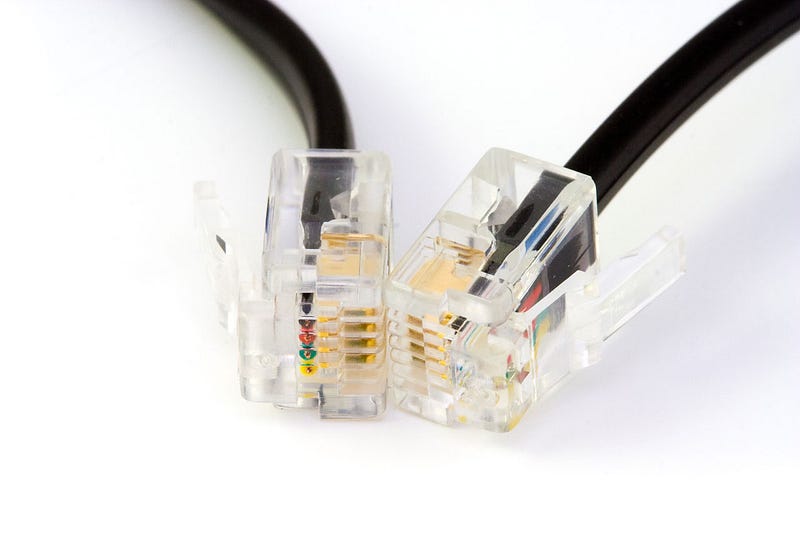
Photo by Petr Kratochvil
How P2P networks on the internet can define and shape their communities.
In the last few days two peer to peer systems have been making headlines: Tor and Bitcoin. Both of these networks are characterised by a lack of central control and the (optional) anonymity of their users. It is often assumed that networks such as these must inherently be free-for-alls, in which the lack of a central co-ordinator implies the lack of any kind of enforced ground rules.
In this article, I will argue that many P2P networks define and enforce particular rules upon their users. I will examine the case of Tor hidden services in particular. Finally, I will also explore how proofs of sacrifice can help create decentralised communities that nevertheless have working codes of conduct.
A brief history
The internet has always, at its core, been decentralised infrastructure. As a result, throughout its brief history, the people operating that infrastructure have had to find ways to define acceptable behaviour and enforce it despite the absence of any central, controlling authority.
Perhaps the best example of this is the SMTP protocol that powers email. Email is the original P2P network — relays talk directly to each other, with no central control. In the early days of the internet, email was run primarily by universities and governments. Good behaviour was defined by common sense, with the threat of being fired (and thus disconnected) providing the rarely needed stick.
Once the net opened up commercially enormous numbers of users started getting online and it rapidly became infeasible for ISPs to police their own user base. Spam was born. Whilst theoretically every email provider has an abuse@site.net address which other network admins can use, in practice they stopped working. The combination of millions of paying customers who might be considered abusive, along with a complete lack of any formal rulebook, meant ad-hoc enforcement rapidly became useless.

When governments are faced with such problems, their first reaction is to pass laws defining what seems like the consensus on reasonable behaviour, force service providers to ID their clients to ensure attribution and then punish people who break the rules.
But the early internet was largely unregulated, so the community came up with a different way to police itself: the spam filter.
What, exactly, is spam? The blunt reality is that there is no clear definition for spam. Gmail uses a definition that is simultaneously very clear and impossibly vague — spam is whatever the users say it is. If enough users push “Report spam” on a message, then it’s spam. In practice, users report mail for all kinds of reasons, like:
- it being old fashioned mail abuse such as bulk mailed adverts for generic Viagra
- they couldn’t figure out how to unsubscribe from a mailing list
- their uncle sends them unfunny jokes and they feel it’d be impolite to ask him to stop
- the mail is obnoxious and irritated them, like “newsletters” sent by legitimate companies with whom the user interacted once, 5 years ago.
Spam filters differ. The best ones don’t rely purely on rules of thumb but rather calculate reputations for senders based on whether people want to receive their mail. As we can see, the email community has learned to police itself without any kind of formal law making and without introducing centralisation. It can handle fuzzy grey areas by measuring the consensus of large populations of users.
Now let’s look at another example.

Example of a Tor network map, from Vidalia
Controlled chaos
Tor is one of the best known examples of a P2P network in which users are anonymous: anyone can use it, and no attribution of users to their traffic is possible by design. Tor is used to host drug markets, forums for trading child porn, and many other things. It would seem to be the canonical example of a network in which anything goes.
But this impression is misleading. Tor does have ways to impose rules upon its community. Here are some examples of the rules the Tor community has decided upon:
- Tor is not for BitTorrent users.
- Tor is not for spammers.
- Tor exits may not lie about their advertised bandwidth.
These rules may seem arbitrary and strange — why crack down on piracy and spamming but not drug trading sites? One reason is that the BitTorrent prohibition isn’t primarily about piracy but rather bandwidth. The Tor community has some shared goals, and file downloading takes up bandwidth that they’d rather be used for other things, like anonymous speech, communicating with journalists or just plain old surfing for porn. The DMCA complaints that inevitably follow allowing BitTorrent also don’t help.
Another reason is that the above rules can be enforced very easily using what are known as exit policies. Each Tor node that chooses to relay traffic onto the open internet (an exit node) is allowed to announce to the rest of the network what types of traffic it’s willing to accept. A default exit policy is used out of the box, thus all nodes have one, but the project provides an even more conservative policy for operators who desire that.
Exit policies are extremely simple and can only achieve a very limited set of things, as they’re expressed in terms of acceptable IP address ranges and ports (i.e. applications/services). Some apps like BitTorrent which are frequently blocked have code designed to evade these policies, which in turn simply makes them more aggressive — typically they now work by listing acceptable services, rather than forbidding unacceptable services.
Policing hidden services
Could Tor go further with these kinds of self enforced community rules? Arguably, yes.
The Tor network allows hidden services. A hidden service is a server that is identified by a public key rather than an IP address. The public key can be written down as characters, in which case it might look like this:
silkroadvb5piz3r.onion

Logo of a shop
In technical terms, that is the ASCII representation of an 80-bit hash of the public key of what was the Silk Road web server. The junk on the end is because you aren’t really supposed to be able to choose a name for your hidden service — they normally look entirely random. In this case Ulbricht ran a program that kept trying different random keys until he found one that started with the name of his site, but it would have taken a lot of computing power to generate such an address.
A hidden service still actually has an IP address of course, you can’t receive internet traffic without one, but it doesn’t advertise that address in DNS like a normal website would (or indeed anywhere at all). Instead a hidden service works by contacting some randomly selected Tor nodes via a regular Tor connection, so those nodes don’t find out the services IP address, and then it asks those nodes to act as introduction points. Once it found a bunch of introduction points, it uploads them along with its public key to a distributed hash table so other Tor users can find it.
Introduction points don’t actually relay traffic to the hidden service. That’s handled by randomly selected rendezvous points. However, they are still required for initiating connections.
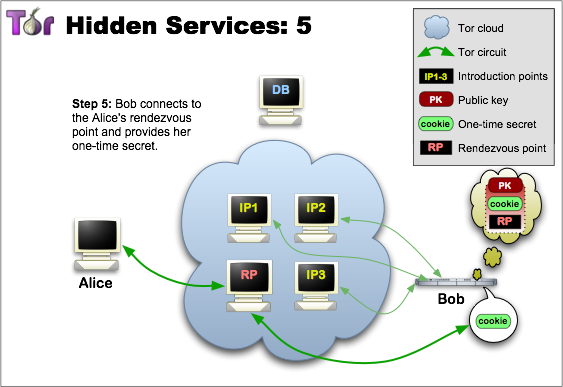
Because the introduction points find out the identity of the hidden service they are being asked to do work on the behalf of, there is no reason they could not simply refuse to help out hidden services which the node operator disagrees with. In the same way that exit nodes choose to allow or disallow certain services, other nodes could do the same for hidden services. Because a hidden service may change its public key (and therefore web address) from time to time, nodes could choose to subscribe to service policies that are updated by some third party.
In this way, the Tor community could collectively choose what kind of hidden services it wishes to provide shelter for. Does that make the feature pointless? No. Hidden services, contrary to initial appearances, actually have many uses beyond running illegal websites. Some examples:
- Security.They can make ordinary websites harder to hack, by running the most sensitive core on a hidden service separate from the primary website. As an example, Bitcoin pools have in the past been hacked and had money stolen not through any security failing of their own, but by through compromise of the entire datacenter that hosted the servers. By running the code that held the private keys and made payouts on a hidden service whose real location was known only the operator it would become much harder to pull off such attacks.
- Privacy from risky customers. Consider camgirls, who perform strip shows in front of web cams for money. Such shows are legal and frequently have thousands of viewers, but performers have to rely on expensive centralised sites that shield their identity from creepy customers who might try and track them down and make the show into reality. Tor and Bitcoin give them the tools they need to engage in their business without fear.
- Fighting totalitarian surveillance. It’s an open question what kind of capabilities the NSA and GCHQ have built against Tor. The latest leaks from Snowden are based on 6 year old presentations and provide little insight. But it is without a doubt that Tor makes their job significantly harder and raises the bar for engaging in pointless, global surveillance of ordinary citizens. Running more traffic over Tor is something everyone should do, even if that traffic is by itself quite harmless and uninteresting. By increasing the cost to watch people who are doing no wrong, we force the intelligence agencies to focus on the truly bad apples.
Nodes refusing to act as introduction points for a particular hidden service would not immediately shut down that service — as long as at least a few nodes are willing to do it, the site will remain operational. But typically the behaviour of other people is not what concerns a node operator; they care about how their own resources are used, and whether their expenditure is furthering their goals or acting against them.
Sacrifice and hard work
A proof of workis an answer to a difficult mathematical problem which can only be solved by brute force: trying lots of possible solutions until you find a working one by chance. Proofs of work are great because anyone can find one just by burning electricity, and they can be checked very quickly (checking does not require any significant effort).
It might seem like we could use these proofs to restrict abuse: I can anonymously create a new proof of work,and present it when I wish to do something abusable like sending a mail. And in fact that’s how they were first envisioned, by a cryptographer named Adam Back in 1997. He proposed that each mail sent could have an attached proof of work, thus stopping spam.
But unfortunately proofs of work are not by themselves enough to curb abuse. Back’s scheme was flawed because it mixed up “sending spam” with “sending lots of mail”, when in fact there are lots of legitimate reasons to do the latter.
Can a proof of work be used as an identity? That is, if I let my computer crunch for a week, can I use that proof of work as a bond against bad behaviour and risk it being blacklisted if I misbehave? The answer is yes: a simple approach is to require a public key that is/hashes to a value that is lower than a certain target value. The lower the value, the harder it is to find a qualifying key. Once a key has been found, it acts as a newly minted identity and if that identity breaks some community defined rules, it can be blacklisted.
But such a scheme is unsatisfying. People with powerful computers can generate new identities easier than people with cheap, slow computers. That would bias the system towards people with workstations or servers instead of tablets and phones. Worse, computing power can easily be stolen via botnets. In practice criminals would find it easier to mint new identities than law abiding people.
A better approach is called proof of sacrifice, and it became possible only recently due to the advent of Bitcoin. In a proof of sacrifice, some bitcoins that were obtained by the user are “sacrificed”, which means they are given to random users in a provable manner. In practice what this means is that a transaction is created that spends all of its money on miner fees — some miner claims the fees for itself, and as almost all miners are pools those fees will typically be split amongst all the users who are taking part in the pool. The user can prove that the all-fee transaction was accepted by the Bitcoin network and thus that they lost the money. Like all Bitcoin transactions, the sacrifice transaction contains a public key owned by the user. This key can then act as their new identity and loaded into a web browser or email client. If the user behind the key misbehaves, it can be blacklisted and the sacrifice becomes useless.
Proofs of sacrifice are just a theoretical idea today, nobody has implemented them. But by allowing anyone who is able to obtain some Bitcoins to create a new identity without needing any serious computing power, they create a new paradigm for distributed, anonymous communities that nevertheless have a coherent set of shared values.
Programmable Savings As Universal Insurance
By Oleg Andreev
Posted October 19, 2013
When the world starts using hard non-depreciating currency, people will keep savings in it instead of risky or non-liquid investments like jewelry, houses and stocks.
If the currency is programmable (Bitcoin), then the savings are programmable too.
Programmable savings can be used as a great collateral in all sorts of social interactions.
When two persons sign a contract they can mutually lock up some portion of their savings “in the air” as a collateral without using any third party for that and without relying on a powerful dispute mediator (maybe only for consultation, but not for enforcement). Each party can destroy both collateral deposits which creates an incentive to peacefully resolve disputes to mutual satisfaction.
In crowdfunded project every person on the receiving side can lock up part of his savings (that can be affected by stakeholders) before taking any amount from the fund. The collateral is released when it is “resold” to further party down the production chain.
Today directors, managers and presidents of publicly-traded companies and governments have control over not only their own money (salary and dividends), but also over someone else’s money insured only by reputation and highly inefficient government law enforcement. Programmable collateral makes it possible that every piece of resource controlled by non-owner is fully insured with real cash.
Programmable savings allow world to be much safer without any need for brutal violent intervention.
The Transaction Cost of Bitcoin
By BTCtheory
Posted October 21, 2013
Bitcoin and other cryptocurrencies have create a new monetary system that relies privacy and pseudonymity to conduct economic transactions, rather than governmental laws and regulations. This monetary structure has several distinct advantages over fiat money that makes cryptocurrencies fundamentally superior to all fiat money.
The current economic paradigm using fiat money creates a system in which transaction costsshall always be higher than those found within the bitcoin ecosystem. This is due to the costs that are associated with the creation, maintenance, and enforcement of laws within the fiat currency system that allows it to function. The privacy and anonymity functions of bitcoin allows for it to function as a money system, while not needing to pay for the legal structure, or enforcement cost of normal money systems.
**
What Creates Transaction Cost?**
According to Ron Coase, who originally theorize about transaction costs in his work the Theory of the Firm, there are three types of transaction cost:
1) Search and information cost
2) Bargaining and decision cost
3) Policing and enforcement cost
These are features that all transactions have and are built into the cost of the transaction. For example you want to buy a loaf of bread, first you need to know where to buy bread (search and information cost). Then you need to decided what a reasonable cost is, and to see if you can get bread at that cost (bargaining and decision cost). And finally you need something to pay for that loaf of bread (policing and enforcement).
Now all three of the above features are ‘cost’ that are associated with any kind of exchange; legal or illegal. The largest key difference with illegal transactions is that third type of transaction cost (policing and enforcement) is replaced with evasion and extralegal cost.
Evasion cost substitutes the policing and enforcement cost. So if one wanted to avoid paying $25,000 in taxes, they could pay a lawyer $10,000 to save $25,000 in taxes. So part of the $25,000 is going towards paying the policing and enforcement cost, where as $10,000 is the alternative evasion cost that one can pay to assure they get away with their full $25,000. So if one pays the evasion cost of $10,000, they will save $15,000 in total.
This $15,000 is a special type of profit because it is derived directly from NOT paying the full transaction cost. This is called risk profit and is only experienced when one takes on evasion cost, or the cost of doing illegal business.
All transactions consists of the three above associated cost. What crypto-currencies offer is a fundamentally different paradigm for how to deal with legal and enforcement cost. Instead of needing violence to enforce the rules of the money system (like fiat money), bitcoin embeds ‘the legal system’ directly in cryptography, merging law and mathematics. This allows for an economy to be built directly on top of the non-aggression principal. Cryptocurrencies have no policing and enforcement cost whatsoever, which shall always create a lower transaction cost.
**
The Law and what it offers**
Today, the law is what offers us financial protection within our current economic system. This is why you can challenge or dispute transactions that you do not recognize on your credit card or debit card. This is also why the Department of Homeland Security can seize your banking accounts and all of your money without notice. Both of these situations arise because of the laws that govern the current economic system. Though laws offer a distinct way of protecting actors within their economic system, and are sometimes of great necessity, it can also be at great expense to the general populous, and to the determent of the economy on a whole. Police stole more goods than all burglaries combine in 2014–if you haven’t already, it might be time to rethink the majesty of the law, and what it means to be governed.
Detriments of the Law
Utilizing laws as a bases to create an economy system has two distinct detriments: The cost that is needed to create and enforce laws, and biases of those involved in the legal system.
When we look at the cost of legal economic enforcement, we must look at all aspects of the law and the expenses associated with them. Breaking down these cost is almost impossible when we look at the breadth of lawsuits, permitting procedures, various licensing, taxation, and various government entities that are funded through taxation. These cost are rolled into all economic transactions that one does within a fiat economy, as the burden of police and enforcement cost are forced on to the consumer, producer, and the sum total of society. Thus, through simply having laws that must be enforced, the transaction cost associated with that money will increase.
Legal bias
Another hidden expense that comes from a economic legal system is the inherent bias that those involved within the legal and political system are going to have towards themselves. Or in another word, corruption.
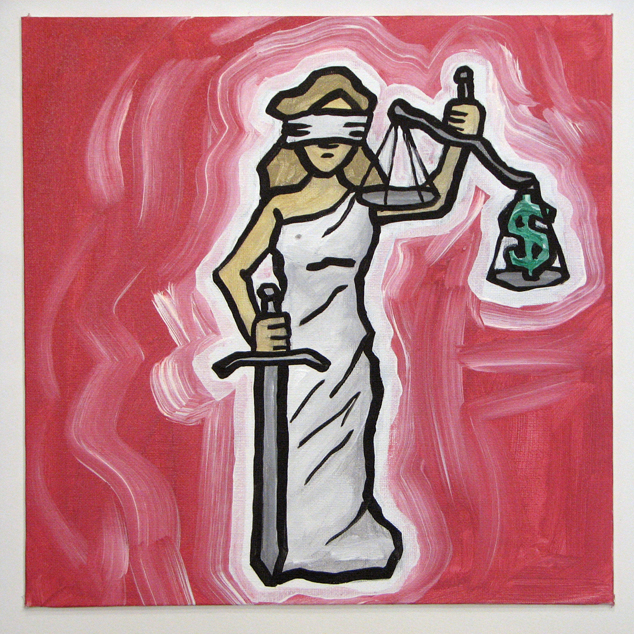
Those who are closes to the centers of power are the ones that will benefit the most from the law, or the corruption of the laws. This is why the most profitable investment that can be made is lobbying. This is also why no criminal charges have been brought to those responsible for the 2008 financial crisis, no charges for the NSA spying scandal, and why the average congressperson is a millionaire. This is because of the corruption of the legal framework that they operate within and control, and the way that they allow for the corruption of the legal system to favor themselves and their cronies.
The corruption of our legal system is not an error, but occurs by design. Those who are closest to the centers of power are also the ones with the most agency within this system. They have varying degrees of control within the legal system that correlates with how close to the center of power they are. Thus, the closer to the center of power, the higher degree of agency they have within this legal system, which creates the conditions for manipulation and corruption of the legal system. This creates a two-tiered legal system in which those who are closer to the center of power shall have more economic opportunity than those more removed from it.
Over the last century, the corruption of the legal, economic, and political system has resulted in the economic state we are in today: a broken political system that is beholden to the interest of bankers, oligarchs, capitalist, and members of the legal system before all others. This not only is unethical and morally reprehensible, it is also very, very expensive.
Free Markets and Their Functions
People enter into economic agreements because they are just that: agreements. These are natural transactions that occur because of our own subjective interests for ourselves. This is why we enter into social contracts in the first place; because we freely and naturally agree with the stipulations of the contract and proactively make the choice to be part of the contract. A transaction like this does not need anyone to enforce anything–both parties are willingly entering into a transaction because they both are getting something they desire from the transaction. Both actors have utilized free-choice to choose to enter into this agreement. This is the natural state of economic affairs, and there is no actual need for policing and enforcement cost in transactions that are entered into within free agreements. Thus, for voluntary agreements, there is not need to pay for policing and enforcement cost, which in turns creates a lower total transaction cost within a monetary system.
With bitcoin, people are making exchanges via the internet where there is no need for a legal enforcer to ensure that transactions are conducted fairly–that is what the bitcoin software does. Because of this feature–where bitcoin can allow for private individuals to preform economic transactions without needing a centralized enforcer–means that bitcoin does not have to pay policing and enforcement cost. This means that if we are to look at the economic cost of transactions within a monetary system, fiat currencies will always have a higher total transaction cost because of the need to pay for a policing and enforcement cost.
Conclusion
When observing any contemporary economy system we can see that there are three types of transaction cost: search and information cost, bargaining and decision cost, policing and enforcement cost. Because bitcoin uses software to create a secure form of money, there is no policing and enforcement cost that are associated with bitcoin. This means that when we look at the total transaction cost across an economy, an economy using bitcoin (or another digital currency) will alwayshave a lower transaction cost than a fiat economy that must pay for policing and enforcement cost.
—
Next: Bitcoin and Liquidity Preference